1. Introduction
The global sustainable consumption wave presents a critical challenge for brands, especially in emerging markets, where the pro-environmental behaviors of young consumers (e.g., Generation Z) are driven not only by rational considerations but also by deeply rooted socio-cultural values (K. Sharma et al., 2023; Tran et al., 2022). This shift has led to a notable increase in demand for environmentally responsible products, encouraging brands to adopt sustainable practices to meet consumer expectations, gain competitive advantages, and ensure long-term growth (Ali et al., 2020; Khare et al., 2020).
Studies have mainly explored the decision to purchase eco-friendly products in green buying behavior (Pham et al., 2024). As market volatility rises and green claims face scrutiny, consumer behavior in defending brands against negative publicity remains under-researched (Roy et al., 2023; Vredenburg et al., 2020). The development of strong consumer-brand relationships, especially with eco-conscious consumers, is considered an essential strategy for reducing reputational risks and strengthening brand resilience (Dalman et al., 2019).
Furthermore, studies have explored what motivates green consumption, such as health concerns, environmental protection, and social norms (K. Sharma et al., 2023). However, the existing literature tends to examine either social or cultural norms in isolation. Research lacks integration of social and cultural factors in understanding their impact on consumer behavior related to green consumption, particularly in collectivist cultures where social norms and identity are key (Tran et al., 2022). Altruism and consumer ethnocentrism play a crucial role in shaping how consumers make sustainability-related choices (Ali et al., 2020; Nguyen et al., 2023). Altruism reflects a commitment to others and the environment, motivating people to make sacrifices for the good of society (Guiao & Lacap, 2022). Ethnocentrism indicates a focus on local goods and values linked to cultural loyalty and national pride (Shimp & Sharma, 1987). This study endeavors to empirically analyze the effect of these values on green purchase intentions as well as brand advocacy and defense.
Additionally, the rising recognition of Perceived Marketplace Influence (PMI) illustrates its importance as a psychological mechanism influencing green behaviors, emphasizing consumers’ belief in their ability to impact market outcomes (Leary et al., 2014). PMI is essential in bridging personal values with sustainable actions by highlighting how consumers think they can impact change via their decisions (Mourali & Nagpal, 2013). Few empirical studies exist combining PMI with behavioral and socio-cultural aspects, notably in brand defense. The study aims to examine the mediating role of PMI in translating personal values into behavioral intentions, presenting it as an important mediator that links socio-cultural values to key behavioral outcomes.
Previous studies reveal the importance of ethnocentrism and altruism in influencing customer purchase intentions; however, there is a notable lack of research that thoroughly examines these aspects through the perspective of the theory of planned behavior (TPB) (Chaturvedi et al., 2024; Tiwari, 2023). Hence, this study seeks to explore how socio-cultural foundational beliefs influence green buying behaviors, focusing on how altruism and ethnocentrism affect young consumers’ intentions to purchase green products and defend green brands through the mediating role of the Theory of Planned Behavior.
This research employs the mixed-methods approach, comprising statistical and deep-interview techniques, to explore the research findings. First, the study extends the existing literature by integrating the Theory of Planned Behavior (TPB) framework with psychological and culturally relevant antecedents, such as altruism and ethnocentrism, which significantly affect consumer green consumption. Second, it emphasizes the crucial mediating influence of personal moral identity (PMI) on the relationship between personal socio-cultural values and behavioral intentions. Third, it establishes a link between green purchase intentions and brand equity, directing attention from mere purchase behavior to brand defense within sustainable branding discourse.
2. Literature review
2.1. Green marketing
In the span of the last decade, green marketing has developed from a communication-centered approach into a multifaceted strategy that integrates sustainability into core marketing functions, including product design, packaging, pricing, and distribution (Kar & Harichandan, 2022). Green marketing serves as a mechanism for companies to align environmental goals with long-term marketing strategies (Kar & Harichandan, 2022). However, the success of these strategies hinges on how consumers perceive them. Credible and transparent green marketing not only boosts brand authenticity but also diminishes skepticism and encourages positive attitudes and behaviors towards the brand (Ewe & Tjiptono, 2023). For young consumers, these practices resonate not only with utilitarian concerns about health and environmental impact, but also with deeply-rooted socio-cultural values. When customers perceive the value of the brand’s green practices on the market, they enhance their attitude toward the brand, perceived behavioral control, and social norm, leading to stronger brand equity and their purchasing intentions toward green.
2.2. Socio-cultural factors
Previous studies on green initiatives mostly investigated the broad cultural or social level (e.g., collectivism, patriotism), making their influence diffuse and context-dependent, rather than focusing on specific individual beliefs. Hence, this study aims to analyze the significant individuals’ socio-cultural beliefs, including altruism and ethnocentrism, on navigating and shaping customer attitudes and actions, especially toward the green.
In the micro-level context, cultural factors such as altruism and ethnocentrism vary from social norms, which are behavioral rules based on societal expectations and consequences (Bicchieri, 2006). Altruism emphasizes caring for others’ welfare, while ethnocentrism focuses on favoring one’s community. These factors play a pivotal role in determining consumer behavior and social dynamics, highlighting their importance in research on ethical consumption, sustainable consumption, and green marketing.
2.2.1. Altruism
Altruism is defined as the pleasure and willingness to give, which enhances psychological well-being, promotes harmony, derives satisfaction, and provides a sense of ethical fulfilment (Ali et al., 2020; Panda et al., 2020). It involves values and actions directed towards improving the welfare of others (Jiang & Gao, 2019). In the context of sustainable consumption, green altruism represents a selfless desire to benefit the environment and support others, demonstrating a significant correlation with perceived values (Papista & Krystallis, 2013). Altruistic consumers place environmental advantages above personal interests (Grunert & Juhl, 1995; Steg et al., 2014) and cultivate an awareness of the societal advantages of engaging in pro-environmental practices (Lee et al., 2014; Schultz et al., 2005).
2.2.2. Ethnocentrism
Ethnocentrism refers to the tendency of individuals to view their own cultural group as superior (Shimp & Sharma, 1987), which significantly influences consumer choices, encouraging individuals to choose options that align with their values while disregarding external pressures. In emerging markets, the influence of local businesses and community expectations is vital for advancing environmentally sustainable practices (N. Sharma et al., 2020). Ethnocentrism drives consumers to prefer green products produced locally, fostering a connection to environmental stewardship (Shimp & Sharma, 1987). Studies indicate that ethnocentric consumers associate local products with sustainable practices (Kumar & Singh, 2023) and promote eco-friendly purchasing decisions (Chaturvedi et al., 2024). This illustrates a dedication to support the environment while fulfilling community responsibilities.
2.3. Theory of planned behavior (TPB)
Fishbein and Ajzen (1975) developed the Theory of Reasoned Action (TRA) to shed light on the psychological and cognitive mechanisms that influence decision-making processes in different contexts. The central tenet is the intention of an individual’s willingness or readiness to engage in a specific behavior under consideration (Ajzen, 1985; Han & Kim, 2010). To the extends, the TPB posits that individuals are more inclined to engage in a particular behavior when they believe it will bring them positive outcomes (favorable attitudes), social endorsement (subjective norms), and a sense of control over the behavior (perceived behavioral control). These beliefs are influenced by indirect antecedents of behavioral beliefs, normative beliefs, and control beliefs, respectively (Ajzen, 1991). Regardless of how behavioral, normative, and control beliefs are developed, attitudes toward behavior, subjective norms, and perceptions of behavioral control consistently stem from these foundational beliefs. Hence, this study focuses on the values and beliefs serving as motives or drivers for their pro-environment behaviors.
In the environmental domain, as antecedents of pro-environmental intentions and behaviors (Batool et al., 2024; Maulana et al., 2025), the TPB model has been applied and validated in several studies investigating green purchase intentions (M. F. Chen & Tung, 2014; Mostafa, 2007; Paul et al., 2016). However, recent studies highlight the role of ethnocentrism and altruism in customer purchase intention, but limited studies focus on investigating these factors through the TPB mediating factors and provide the general view of customer purchase journey from their beliefs to behavioral intention in the pro-environmental context (Chaturvedi et al., 2024; Tiwari, 2023).
2.4. The mediating role of PMI
When an individual believe in their ability to influence others plays a significant role in transforming values into action, as those who feel confident in their impact on others are more likely to act in accordance with their values (Kim & Choi, 2005). Emerging markets are experiencing a shift toward green consumption due to rising environmental consciousness. Perceived marketplace influence (PMI) shapes individuals’ beliefs in their ability to address societal issues (Ellen et al., 1991). PMI suggests that eco-friendly purchases can impact market trends and promote environmental changes (Leary et al., 2014). This belief drives consumers to engage in socially responsible behaviors, like choosing sustainable products.
Altruism cultivates moral responsibility, enhancing PMI and the conviction that individual choices fuel sustainability efforts. Consumers with strong PMI see their choices as supporting societal goals, reinforcing their sustainability commitment (Mourali & Nagpal, 2013). Prior studies show that green altruism and self-efficacy significantly predict eco-friendly product purchasing behavior (Tiwari, 2023).
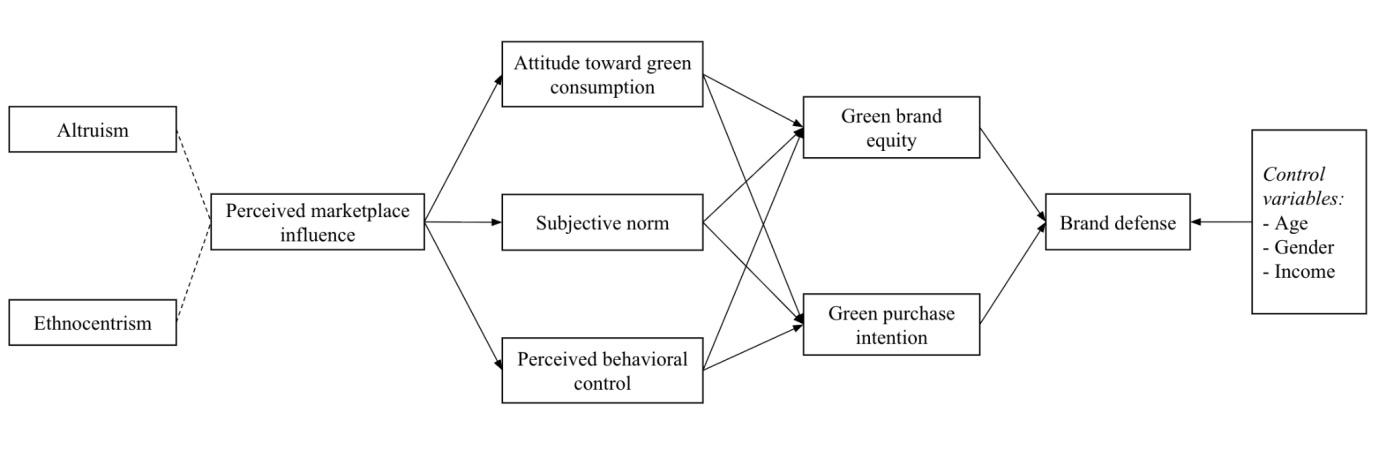
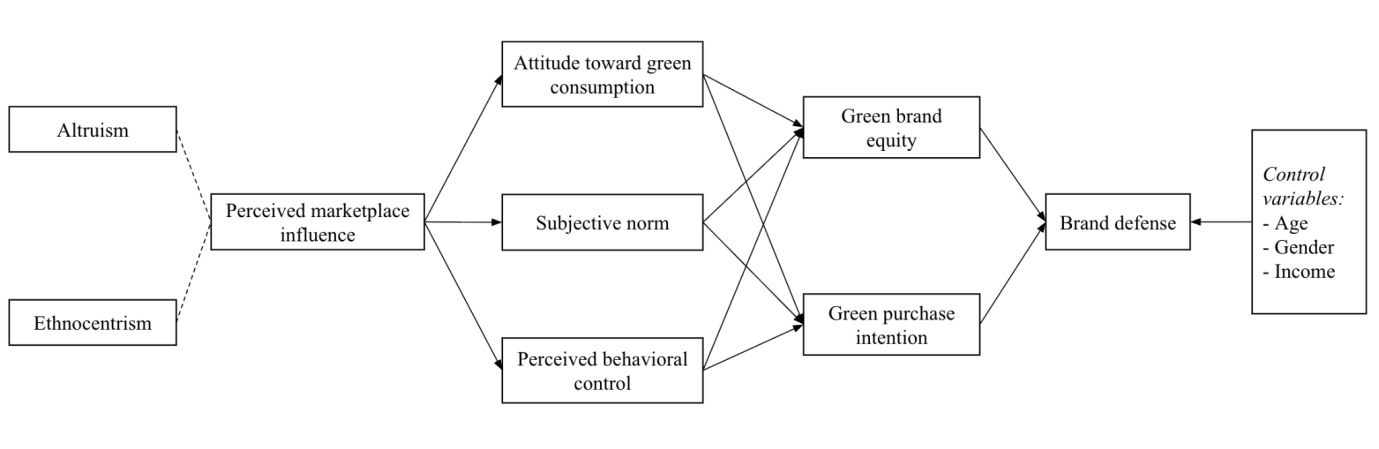
H1: Perceived market influence mediates the positive relationship between a customer’s social value, indicated by altruism, and the customer’s (a) attitude toward green consumption, (b) subjective norms, and (c) perceived behavioral control.
Ethnocentrism encourages in-group favoritism and cooperation, triggered by minor differences (Hammond & Axelrod, 2006). It’s connected to perceived market influence, where prioritizing cultural values leads consumers to believe their choices benefit society (Steg et al., 2005). Ethnocentric buyers tend to choose local green products to help economies and sustainability, enhancing their perceived market influence. Additionally, it is highly probable that PMI plays a mediating role in the relationship between ethnocentrism and various components of the Theory of Planned Behavior, such as attitudes toward green consumerism, perceived behavioral control, and subjective norms (Hoang & Tung, 2024). PMI reinforces the connection between ethnocentrism and positive green purchasing attitudes by aligning sustainability with cultural values and empowering consumers. It influences subjective norms, positioning green purchases as socially acceptable. Thus, we argue that PMI mediates the relationship between ethnocentrism and the three TPB components in green consumerism.
H2: Perceived market influence mediates the positive relationship between a customer’s cultural value, indicated by ethnocentrism, and the customer’s (a) attitude toward green consumption, (b) subjective norms, and (c) perceived behavioral control.
2.5. Green brand equity and brand defense
The perception of brand value has shifted beyond the quality of products or services to include a brand’s commitment to social responsibility (Gálvez-Sánchez et al., 2024) and environmental sustainability (Rahman et al., 2021). As a result, the concept of green brand equity has emerged, attracting considerable interest among researchers. Green brand equity is expanded based on the concept of brand equity (Keller, 1998), which refers to the value that customers perceive and associate with a brand, encompassing two primary dimensions: the influence of marketing programs (e.g., brand image) and the impact on consumer responses (e.g., brand attitudes). Green brand equity is defined as the assets or liabilities associated with a brand name, logo or symbol that can increase or decrease the value of eco-friendly goods or services (Chen, 2012). It goes beyond offering environmentally friendly products and extends to shaping consumer perceptions, building trust, and fostering positive attitudes toward a brand’s environmental commitments. For green brands, this requires demonstrating transparency in their sustainability efforts and implementing clear strategies to address crises or criticism effectively.
Previous studies have identified several antecedents of green brand equity, including green brand image, green satisfaction, and green trust (Y. S. Chen, 2010). Brands that align with these values not only enhance their appeal to consumers but also foster positive word-of-mouth communication between customers and the brand (Bekk et al., 2016). Javed et al. (2015) argue that consumers’ efforts to protect a brand from criticism, through positive word-of-mouth, characterize brand defense. In line with the earlier research, according to Dalman et al. (2019), brand defense is characterized as a state of positive word-of-mouth (WOM) communication that emerges within the context of deeply-rooted consumer-brand relationships, such as brand love. This phenomenon manifests as consumers proactively defending the brand from any form of criticism. Hence, this study proposes that strong green brand equity promotes brand advocacy, wherein loyal customers actively defend and promote the brand within their networks. This interplay between green brand equity and brand defense underscores the importance of sustainability-oriented strategies in cultivating both customer loyalty and long-term competitive advantage as follow:
H3: Green brand equity has a positive effect on brand defense.
2.6. Green Purchase Intention and brand defense
Emerging evidence suggests that the intention to purchase green products may affect wider consumer behaviors. For instance, when consumers choose eco-friendly products, they often perceive their actions as supporting a larger cause - namely, environmental preservation (Carrete et al., 2012). This alignment can strengthen emotional attachment and foster a sense of shared identity with the brand. As a result, they are more likely to become vocal supporters and defenders of green brands that align with their environmental beliefs. (Guiao & Lacap, 2022). Such consumers are more likely to engage in brand-protective behaviors, including defending the brand against criticism, promoting it within their social networks, and remaining loyal even during times of reputation challenge. This relationship underscores the importance for brands to not only adopt sustainable practices but also effectively communicate these efforts, as doing so can foster a loyal and protective consumer base. Therefore, we proposed that green purchase intention has a significant and positive impact on brand defense.
H4: Green purchase intention has a positive effect on brand defense.
2.7. TPB, green purchase intention, and green brand equity
A brand is considered “green” if it significantly influences the environmental attitudes and practices of customers (Y. S. Chen, 2010). Prior studies emphasized the role of values as antecedents of green purchase behavior in typically shaping behavior in an indirect manner, operating through more specific attitudes or belief systems to (Kim & Choi, 2005). Favorable attitudes towards green consumption increase brand trust and perceived environmental credibility (Y. S. Chen, 2010; Gálvez-Sánchez et al., 2024), while social endorsement enhances perceived credibility of sustainability claims (Rahman et al., 2021). Moreover, when consumers feel empowered to adopt environmentally friendly behavior, they are more likely to attribute higher value to brands that support such behavior, for instance through green trust and satisfaction (Bekk et al., 2016). Hence, we propose hypothesis as follow:
H5: The customer’s (a) attitude toward green consumption, (b) subjective norms, and (c) perceived behavioral control has the positive effects on green brand equity.
In light with the TPB, attitudes, subjective norms and perceived behavioral control are also the immediate predictors of behavioral intention (Ajzen, 1991). Some empirical evidences confirm that positive attitude towards green products, supportive social norms and high perceived control significantly increase consumers’ willingness to purchase green products (M. F. Chen & Tung, 2014; Paul et al., 2016). In emerging markets, altruistic and ethnocentric values strengthen these TPB components by fostering a sense of responsibility and perceived marketplace influence, which links values to action (Leary et al., 2014; Tiwari, 2023). Thus, H6 argues that if consumers have a positive green attitude, perceive a trong social commitment and feel empowered to act in a sustainable way, they will show more green purchasing intentions.
H6: The customer’s (a) attitude toward green consumption, (b) subjective norms, and (c) perceived behavioral control has the positive effects on green purchase intention.
3. Method
3.1. Data collection
This study adopted a mixed-technique approach to analyze the proposed research model. In the first phase, an administrative survey gathered quantitative data, while the second phase used in-depth interviews to enrich and elaborate on the statistical results. Both stages focused on young Vietnamese consumers who are already familiar with green products, ensuring consistent insight across methods. Data was gathered over a two-month period, from September to October 2024 by using a hybrid approach that allowed participants to complete the survey either online questionnaire (via social media platforms, green consumer communities, and mailing lists) or paper form (paper-based surveys distributed to young green consumers in Ho Chi Minh City), thereby improving response rates and removing concerns about inadequate participation. The sampling strategy followed a non-probability convenience method. To ensure respondent validity, two screening questions were included: “Have you frequently purchased green products in the past year?” and “Are you familiar with environmentally friendly or green products?”. Those who failed these screening questions were excluded.
The initial dataset comprised 522 responses, of which 42 were excluded due to straight-lining behavior or incomplete answers. The final sample included 480 valid responses with the demographic characteristics showed that 98.8% of respondents were aged between 18 and 22. Participants were primarily in early adulthood and broadly consistent with Gen Z profiles in Vietnam. This generation has been shown to be more environmentally conscious, making them a relevant and influential group for examining green consumer behavior in emerging markets (Choudhary & Singh, 2023). Additionally, female respondents accounted for 73.5% of the sample, which aligns with the product category distribution, where 76.5% of the total products were green cosmetics, green fashion, and green food and beverages in Table 1. It also represents gender gap regarding green consumerism with female respondents assessing most sustainable attributes as more important than male respondents do (Rausch et al., 2021).
Before distributing the main survey, a pilot test with 30 respondents was conducted to assess the clarity and understandability of the items. Minor modifications in wording were made to enhance clarity and contextual relevance.
In addition, to minimize potential common method bias (CMB), procedural remedies were implemented. These include assuring respondents of anonymity, randomizing the order of items, and using validated scales from prior literature. Moreover, a full collinearity test was conducted, and all variance inflation factor (VIF) values were below the conservative cut-off of 3.3 (Kock, 2015), confirming that CMB was not a serious threat in this study.
3.2. Measurement
The measurement items utilized in this study were adopted from established scales in previous research. Specifically, altruism (AL) comprised four items, which were adopted from Ali et al. (2020), while ethnocentrism (ETH) consisted of six items adapted from Nguyen et al. (2023). Perceived marketplace influence (PMP) included three items adopted from Leary et al. (2014). Subjective norms (SN) and perceived behavioral control (PBC) were measured using four and five items, respectively, both adopted from Paul et al. (2016). Attitude toward green consumption (ATGC) was assessed using items adopted from Duarte et al. (2024). Additionally, five items measuring green purchase intention (GPI) were adopted from Ali et al. (2020), while two items of green brand equity (GBE) were adapted from Bekk et al. (2016). Lastly, brand defense (BD) was measured using nine items adopted from Harrigan et al. (2021). All items were evaluated on a seven-point Likert scale, ranging from 1 (“Totally disagree”) to 7 (“Totally agree”). Appendix 1 provides the full item list, descriptive statistics, and factor loadings.
4. Empirical results
4.1. Measurement model
All indicators of the convergent validity met the necessary criteria for convergent validity, such as loading values and all of Cronbach’s alpha (CA) were above 0.7; the AVE values were above 0.5 (Hair et al., 2017). The Heterotrait-Monotrait Ratio (HTMT) test indicates that most of the ratios between independent and dependent variables were less than 0.90 (Appendix), which confirms the discriminant of all latent variables (Henseler et al., 2015), except for the ratio between PMI and PBC is over 0.9.
4.2. Structural model
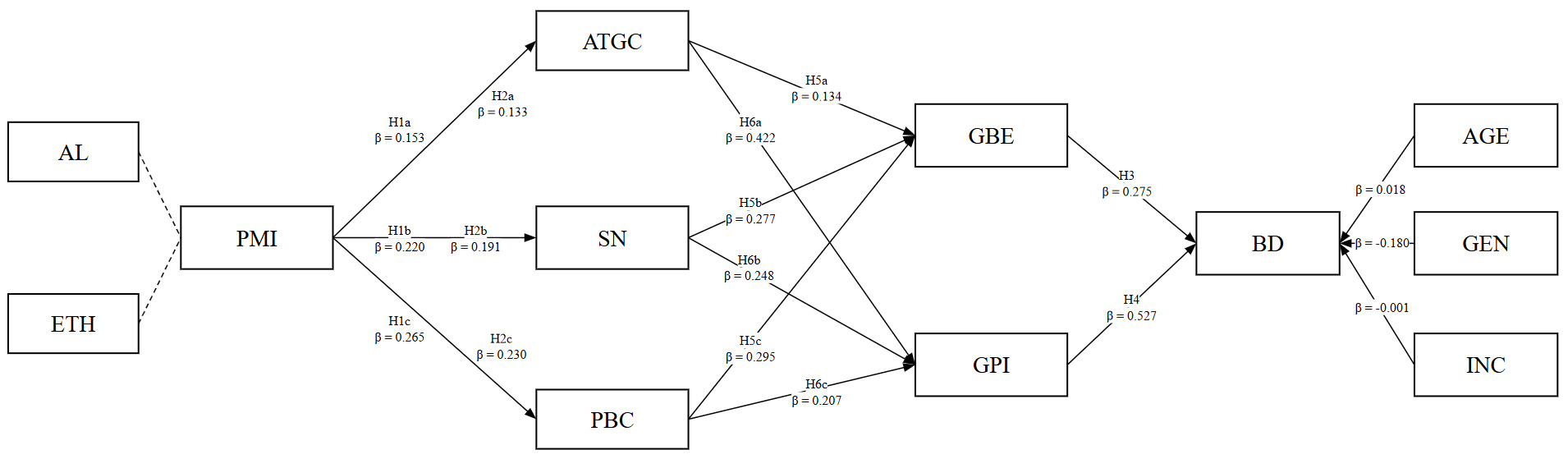
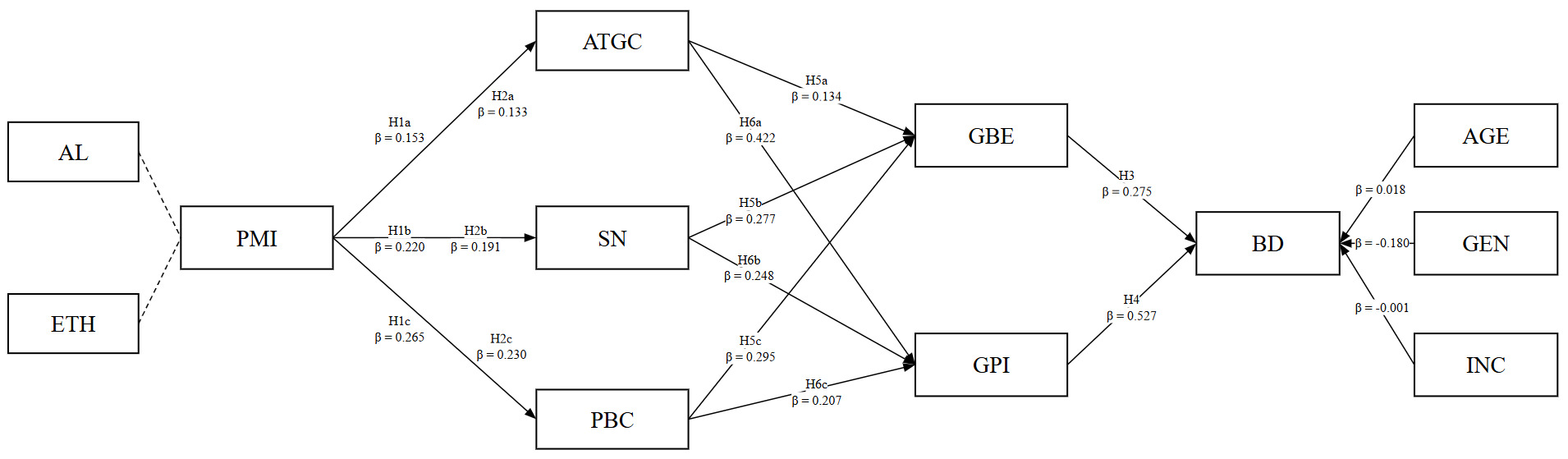
The statistical results indicate that GBE has a significant positive impact on BD (H3: β = 0.275, t = 5.891, p < 0.001), suggesting that businesses actively engaged in green practices experience enhanced business growth. Similarly, GPI demonstrates a strong positive influence on BD (H4: β = 0.527, t = 11.397, p < 0.001), emphasizing the importance of green purchase intention for brand defense.
ATGC has a significantly impact GBE (H5a: β = 0.134, t = 2.030, p = 0.042), suggesting that positive attitudes toward green consumption contribute to a positive perception of the green label. Similarly, SN exerts a strong positive effect on GBE (H5b: β = 0.277, t = 4.178, p < 0.001), indicating that social pressures or norms can encourage businesses to engage in green initiatives. Lastly, PBC also shows a positive correlation with GBE (H5c: β = 0.295, t = 3.625, p < 0.001), implying that when consumers feel more in control of their own sustainability choices, this self-confidence is translated into a stronger perception of the equity of the green brand.
Furthermore, ATGC significantly influences GPI (H6a: β = 0.422, t = 8.750, p < 0.001), highlighting that favorable attitudes toward green consumption drive innovation in green products. SN also has a significant positive effect on GPI (H6b: β = 0.248, t = 4.766, p < 0.001), reinforcing the role of social influence in shaping green innovation strategies. PBC, albeit with a lower effect size, still significantly affects GPI (H6c: β = 0.207, t = 3.082, p = 0.002), indicating that individuals with greater perceived control over green product innovation are more likely to engage in it.
The indirect effects analysis showed in table 3 further sheds light on the mediating role of PMI in shaping attitudes and behavioral intentions. AL and ETH both exhibited significant indirect effects on ATGC, PBC and SN through PMI, confirming their influence on sustainable consumer behavior. Specifically, AL → PMI → ATGC (H1a: β = 0.153, t = 6.027, p < 0.001) and ETH → PMI → ATGC (H2a: β = 0.183, t = 2.548, p = 0.011) highlight the importance of intrinsic and cultural values in shaping attitudes toward green consumption. Similarly, significant effects of AL on SN through PMI (H1b: β = 0.220, t = 7.923, p < 0.001) and ETH on SN through PMI (H2b: β = 0.191, t = 5.402, p < 0.001) confirm that subjective norms are also a factor in the setting of sustainable consumption. Finally, AL → PMI → PBC (H1c: β = 0.265, t = 7.206, p < 0.001) and ETH → PMI → PBC (H2c: β = 0.289, t = 4.642, p < 0.001) suggest that these values positively influence consumers’ perceived control over green purchasing decisions. Collectively, these results demonstrate that PMI serves as a robust mediator linking altruism and ethnocentrism to all three dimensions of the TPB, thereby reinforcing the centrality of socio-cultural values in explaining green consumption.
In sum, the findings highlight the critical role of altruism, perceived marketplace influence (PMI), and subjective norms (SN) in shaping sustainable consumer behavior. Altruism significantly enhances attitudes toward green consumption (ATGC), PMI, and SN, suggesting that ethical motivations drive positive perceptions and social conformity.
Furthermore, PMI strongly influences ATGC and PBC, reinforcing the notion that consumer empowerment drives both positive attitudes and perceived control. Notably, SN significantly impacts both green purchasing intention (GPI) and green brand equity (GBE), underscoring the power of social influence in sustainability adoption. The results show that ATGC and PBC positively influence GBE, indicating that favorable green attitudes and perceived behavioral control strengthen not only purchase intentions but also consumers’ perceptions of green brand equity. Finally, GPI and GBE both strongly predict brand defense (BD), affirming that consumer commitment to sustainability fosters brand loyalty and advocacy. These results emphasize the interplay between ethical values, market influence, and social norms in driving sustainable consumer engagement.
Control variables such as gender, age, and income were used to assess their influence on the relationships studied. The control variables did not significantly alter the endogenous variables, indicating they exerted a negligible influence on the correlations investigated in this research.
4.3. Post-hoc analysis
Following Denzin (1978) and Siamagka et al. (2015), the study further bolstered and validated the survey findings through the triangulation method. After participants completed the main part of the survey, which included the questionnaires of the proposed framework model, they were asked to participate in the next phase, designed to allow them to express their opinions and thoughts. This phase aimed to explore information about customers’ green consumerism and their actions toward green brands through their answers to three questions: (1) Why do you believe that using green products will protect the environment? (2) Why do you consume green products? (3) Why are you willing to defend a green brand (especially if the brand is criticized or faces negative information)?
Participants were asked to freely express their ideas and opinions in writing. All participants were asked whether they volunteered for this step. Their answers were recorded and transcribed. Transcripts were analyzed using template analysis (King, 1998). What follows is an integrated discussion that draws on findings from both the quantitative survey and the follow-up qualitative responses. After excluding inappropriate responses (e.g., participants who only answered “yes/no” to the questions or failed to address all three questionnaires), 275 qualified answers were received in this qualitative phase. The demographics of the qualitative respondents were consistent with the quantitative data.
Regarding the first question, respondents provided several reasons for believing that green products protect the environment. The analysis followed each respondent’s answers and used specific keywords to describe their responses. After removing nonsensical or inadequate answers, the remaining 265 responses highlighted key themes that participants associate with green products and their environmental impact: Environmental Protection emerged as the most frequently mentioned theme, with participants believing that green products directly protect the environment; Quality and Effectiveness were emphasized by several respondents, who pointed to the superior quality and performance of green products; Environmental Friendliness was specifically mentioned in responses highlighting the eco-friendly nature of these products; Advertising and Branding were noted as crucial for building belief in green products, with brand messaging and campaigns playing a significant role; and Recycling and Sustainability, where participants underscored the use of recyclable and sustainable materials as vital factors.
The results of the qualitative study further expand on the findings from the statistical analysis. These responses emphasize protecting the local environment and reducing pollution, reflecting respondents’ concerns about environmental protection. Their trust in local or well-known brands suggests ethnocentrism, as they value brands that align with local or national values. Moreover, their support for sustainable practices, such as using locally produced green products, reflects a preference for products that benefit the home environment. Respondents’ belief that green products are safer for others and the environment, along with individual actions (e.g., purchasing green products) contributing to a healthier future, highlights a sense of social responsibility.
The second question aimed to further explore whether customers’ beliefs about the benefits of green products influence their purchasing decisions. Environmental protection emerged as the most significant driver, with emphasizing their commitment to reducing pollution and protecting the environment. However, the effectiveness and quality of green products were equally important, as consumers expect these products to perform on par with conventional alternatives. Price sensitivity also plays a crucial role, as affordability and reasonable costs determine whether consumers can sustain green purchasing behaviors.
Health and safety benefits further reinforce green product adoption, especially for families prioritizing non-toxic and natural ingredients. Additionally, the brand’s reputation and commitment to sustainability were repeatedly mentioned, showcasing the critical role of transparent branding and credible certifications in building consumer trust. Recycling and sustainability, including the use of environmentally friendly materials, added another layer of motivation for eco-conscious consumers.
Finally, the third question explored the causes of customers’ willingness to defend green brands in negative scenarios. The quantitative results revealed some differences, but both analyses emphasized the importance of brand reputation and trust as critical drivers. The quantitative analysis highlighted that customer marketplace influence mediates the relationship between perceived ethnocentrism and altruism, shaping beliefs (e.g., subjective norms, perceived behavioral control, attitudes) that ultimately encourage brand defense. Similarly, qualitative responses frequently cited reputation, trust, and a brand’s history of environmentally responsible actions as key motivators for defending the brand.
Additionally, the qualitative data aligns with the quantitative findings on the role of altruism in fostering customer loyalty and defense. Respondents noted that brands with transparent processes and tangible environmental actions build confidence, reinforcing altruistic values consistent with the quantitative framework. Normative influences, such as recommendations from others, also appeared in both analyses, reflecting the importance of subjective norms in shaping brand defense intentions.
However, qualitative responses highlighted additional factors less emphasized in the quantitative results. For instance, tangible product aspects, such as eco-friendly packaging and visible evidence of environmental commitment, were significant motivators for brand defense. These findings suggest that the quantitative model could be enhanced by incorporating concrete product-specific factors. Furthermore, qualitative responses revealed the emotional connection customers feel toward brands with strong environmental commitments, an element not fully captured in the quantitative model.
Since altruism involves selfless concern for the welfare of others, respondents’ answers focused on the broader impact of green products on the community and raising awareness about sustainability. These responses reflect altruistic beliefs, emphasizing community awareness and environmental friendliness, which relate to reducing waste, pollution, and conserving natural resources for collective benefits, all of which align with altruism.
5. Implications and Conclusions
5.1. Theoretical implications
This study provides a comprehensive understanding of green purchasing by integrating socio-cultural constructs (ethnocentrism) and psychological drivers (altruism) based on the theory of planned behavior. It expands the scope of green consumer behavior research, particularly in the context of young consumers in emerging markets, where cultural and societal dynamics strongly influence sustainability-related decisions. Thus, the results of the current study enrich the current literature by several contributions as follows:
First, by extending the Theory of Planned Behavior (TPB) in the context of green consumerism among Gen Z consumers in emerging markets, the results demonstrate that three dimensions including customer’s attitude toward green products, subjective norms, and perceived behavioral control, significantly predict green purchasing intention (Hoang & Tung, 2024). Notably, attitude toward green purchasing and subjective norms play a crucial role, highlighting the influence of cultural and social expectations on Gen Z’s eco-conscious behaviors. Moreover, the significant role of perceived behavioral control underscores the importance of empowering consumers to feel confident in their ability to make sustainable choices.
Second, the current findings extent the study of Leary et al. (2014) which highlight the mediating role of perceived Marketplace Influence (PMI) on the relationship between ethnocentrism and critical dimensions such as attitude toward green purchasing and perceived behavioral control, emphasizing its pivotal role in linking cultural identity to pro-environmental behaviors. These results mean that PMI reflects consumers’ belief that their purchasing decisions can create societal and environmental change. Thus, gen Z consumers in emerging markets are more likely to act sustainably when they perceive their choices as impact.
Third, different from Siamagka and Balabanis (2015), the current study establishes ethnocentrism as a cultural determinant of green purchasing. Ethnocentric consumers, who prioritize local cultural and environmental values, are more inclined to support sustainable products. Ethnocentrism significantly influences subjective norms and PMI, reinforcing the idea that cultural attachment can shape green purchasing behaviors. This finding is particularly relevant in emerging markets, where protecting local economies and promoting sustainability align with broader societal goals.
Fourth, altruism is identified as a significant psychological driver of green purchasing behaviors. Altruistic values positively impact attitudes, subjective norms, and PMI, indicating that Gen Z consumers are driven by not only self-beneficial motives but also a desire to contribute to societal well-being. This finding enriches traditional green purchasing theories by incorporating the moral and emotional dimensions of sustainability (Wang et al., 2020).
Finally, the study highlights the impact of green purchasing intentions on brand defense (BD) and green brand equity (BE) which lack of attention in literature (Aljarah et al., 2023). Young consumers who engage in eco-conscious behaviors are more likely to defend green brands and perceive them positively. Subjective norms also play a crucial role in enhancing green brand equity, demonstrating that socially endorsed sustainable behaviors can strengthen consumer-brand relationships.
5.2. Managerial implications
First, brands can reinforce consumer consciousness through ethnocentric and altruistic appeals. Instead of treating them separately, campaigns should combine both by emphasizing certified local sourcing, weaving national symbols and narratives into packaging and advertising, and framing green purchases as a way to stimulate the domestic economy and support local communities, while also highlighting eco-labels, recycle materials, and tangible social or environmental benefits, all anchor sustainability in patriotic pride. Community-focused campaigns that celebrate shared heritage can further mobilize customer advocacy.
Second, empowering customers as co-creators strengthens engagement. Inviting input on product design, distribution, or sustainability initiatives and recognising active contributors as brand ambassadors signals that individual choices drive meaningful environmental and social change. Incentive schemes (e.g. recycling rewards or sustainability challenges) can amplify this participatory ethos.
Third, credibility is critical in an era of heightened scepticism about “greenwashing.” Firms must introduce genuinely eco-friendly products that offer clear personal advantages, especially around health, safety, and family welfare and communicate these benefits (e.g. non-toxic ingredients, allergy-safe materials) with transparent evidence. Ensuring consistency and verification strengthens trust and protects brands against negative perceptions.
Finally, to shield the brand from negative perceptions, marketers should cultivate robust customer-based brand equity by embedding sustainability as a core brand attribute. Clear differentiation around environmental and local impact, consistent sustainability messaging, and alignment with consumers’ altruistic, ethnocentric, and marketplace-influence values foster not only positive purchase intentions but also consumer-based brand defense when the brand is challenged.
5.3. Conclusions and limitations
This study provides a comprehensive understanding of green purchasing by integrating socio-cultural (ethnocentrism) and psychological (altruism) drivers in the context of young consumers in emerging markets. Drawing upon the extended TPB model, the study reinforces the role and mechanism on how individual’s beliefs on altruism and ethnocentrism through the perceived marketplace influence and TPB factors (attitude, subjective norm, perceived behavioral control) toward the green purchase intention, green brand equity, and green brand defend. In practical practices, the brands should reinforce consumer consciousness through ethnocentric and altruistic appeals. Additionally, the manager should focus on enhancing the customer value co-creation and the brand credibility.
Although the current findings provide significant contributions to the current literature, there are several limitations that could be addressed in the future research. First, future research should approach the demographics of gender and age in balance and investigate differences among each. The future research also should extend to incorporate longitudinal studies or cross-cultural factors in order to gain a deeper understanding of how behaviour changes over time and across different countries. Second, while the study considers ethnocentrism and altruism, other cultural and psychological drivers (e.g., environmental awareness, personal norms, or collectivism) might also significantly influence green purchasing behavior but were not examined. This limits a more holistic understanding of consumer motivation. Third, the current study emphasizes individual beliefs and psychological factors, but external factors such as government regulations, economic conditions, or corporate greenwashing may also significantly impact green purchasing behavior. Including these external factors could provide a more comprehensive analysis.
Finally, while perceived marketplace influence is examined, actual market conditions (e.g., availability, affordability, and accessibility of green products) were not directly analyzed. This could limit insights into whether perceived influence translates into actual purchasing behavior.