Introduction
Microenterprises represent over 80% of all businesses in the U.S. The challenges faced by these types of firms range from poor knowledge of strategy and competition, to limited financial and human resources. In this paper, we adopt the U.S. Small Business Administration definition of a microenterprise or microbusiness, as an employer with fewer than 9 employees (Headd, 2017). The aim of this paper is to explore some of the main challenges faced by microenterprises and how consultants, or business support services, can create value for and with them.
Many microenterprises fail over time or never embark upon a growth path (e.g., including expansion, impact, or market share) because they cannot independently overcome the challenges they face of limited resources, capacity constraints, and access to external support. These challenges represent gaps in the infrastructure and systems needed for business development, especially in rural regions (Servon, 2006). Most microenterprises are reluctant to engage the support of consulting firms. They either find them too costly, or do not necessarily believe in the value the consultants can help them create (Grabowski & Stawasz, 2017).
This research took a deep dive into the consulting practices and tools used in interventions with four microenterprises across diverse industries and sectors, both for-profit and not-for-profit. Drawing from practitioners’ own consulting experiences, it explores lessons learned from these engagements, highlights the most relevant and applicable consulting practices and tools that shape outcomes and identifies how these practices and tools may differ or be like the approaches used in larger scale interventions (e.g., with large MNCs). It also outlines the critical considerations associated with working in resource-constrained contexts.
The guiding research question explored in this paper is:
How do consultants co-create value with resource-constrained microenterprises through context-sensitive consulting approaches, practices, and tools?
To provide transferable value for both scholars and practitioners, the paper concludes by offering a guiding framework, The 4-Phase Microenterprise Consulting Framework, as an adaptable tool for navigating similar contexts. The following literature review establishes the theoretical foundations for this inquiry.
Literature Review
The research question seeks to highlight a fundamental gap in the support system available to microenterprises. Even when they recognize the need for strategic guidance, microenterprises often struggle to translate knowledge into actionable steps due to limited financial capital, human capacity, and strategic infrastructure. As a result, traditional consulting models often fall short in delivering meaningful, implementable value. This paper aims to address these gaps by examining consulting approaches that are accessible, impactful, and contextualized for microenterprises, identifying best practices that align with their specific needs, and exploring how these practices compare to those used with larger firms. To structure this review, we begin with an overview of relevant consulting theory and praxis, then explore the nuanced nature of microenterprises, and conclude with a review of current strategy development and implementation practices.
A Review of Relevant Consulting Theory & Praxis
Consulting includes a wide spectrum of approaches that can vary in focus, scope, application, and methodology, ranging from predominantly large-scale strategic advising for multinational corporations to ground-level responsive support geared toward microenterprises. The greatest focus of consulting has typically been on middle to large-scale organizations, not microenterprises. Additionally, the implementation phase of the post-consultation process within the context of larger organizations is typically well-resourced and well-supported with the human capital necessary to implement the recommended strategies and practices.
Traditional consulting models, such as expert or ‘Taylorism’ (Taylor, 1911) and diagnostic consulting (Boreham, 1986), often emphasize data-driven analysis, structured problem identification, and prescriptive solutions, making them well-suited for complex organizational structures with established hierarchies (Drucker, 2012; Porter, 1980). To be data-driven as an organization or data-reliant as a consultant, it is critical to have access to extant data in the first place – historical and real-time – particularly when projecting a future vision for a client. In contrast, microenterprises, particularly those operating in rural or resource-constrained environments, often lack access to formalized systems, historical data, and institutional infrastructure (Klofsten et al., 2020; Rupasingha & Contreras, 2014). While startups and new ventures often engage in data-driven experimentation, as exemplified by the Lean Startup Methodology (Jantunen et al., 2023; York et al., 2020), our specific focus is microenterprises, which may not have the same access to data or capacity, therefore requiring consulting approaches that are more adaptive, relational, and context-sensitive.
Process consulting and dialogic consulting, on the other hand, take a more participatory approach, facilitating problem-solving through collaborative, appreciative (e.g., asset, strength, and supportive focused) and ongoing dialogue rather than imposing external, top-down oriented expertise (Cooperrider & Whitney, 2005; Schein, 1969). This requires a special approach to develop rapport and trust to empower the organization to serve as the solver, arbiter, and implementor of the plan (Tunwall & Busbin, 1991). Action research and organizational development consulting focus on iterative, research-driven interventions that integrate learning with change management, drawing from foundational work in participatory inquiry and organizational learning (Argyris, 1971; Lewin, 1946). While much of the existing consulting literature is centered on large organizations (Collins, 2001; Mintzberg, 1994), we believe microenterprise consulting presents unique challenges and opportunities, requiring more agile, context-sensitive, and relationship-driven approaches.
Given the resource constraints faced by microenterprises such as limited human capital bandwidth for implementation (Starr & MacMillan, 1990), financial resources, and strategic infrastructure, consulting approaches must be adapted to fit their specific contexts. While some microenterprises may operate in relatively stable, geographically-constrained service environments, others face shifting market conditions, regulatory changes, or evolving customer expectations that require agility. However, rather than assuming environmental dynamism as a universal challenge, we recognize that its impact varies by industry, geography, and market exposure. Additionally, the “personal nature” of microenterprise operations closely intertwines with the owner’s personal values, relationships, and lived experiences (e.g. see Business-Person’s Burden in Perry & Woolard, 2023), which can influence strategic priorities and implementation capacity. These conditions call for consulting models that are flexible, relational, and responsive to the unique realities of each microenterprise (Tunwall & Busbin, 1991). This could include an integration of problem-solving, mentorship, capacity-building, and empowerment to create a sustainable impact. Understanding these distinctions is essential for developing consulting approaches that are not only theoretically robust but also practically relevant to the unique challenges faced by microenterprises.
Traditional consulting models, such as expert-driven approaches, offer structured methodologies, but they often assume access to robust data and implementation capacity – conditions rarely present in SME’s and microenterprises (Grabowski & Stawasz, 2017, 2023; Zamani et al., 2022). This mismatch highlights the need for more adaptive, participatory models that integrate co-discovery and co-creation in the process (see Table 3), which are better suited for the realities faced by microenterprises.
Exploring the Context of Microenterprises: Challenges and Opportunities
Global market complexity and the COVID-19 pandemic have urged organizations of all types to lift the bell jar that limits their perspectives and keeps them from seeing all the possibilities and opportunities. It also encouraged organizations to be brave enough to challenge the status quo in a way that they may have never done before, breaking habits that may be keeping them stuck and unable to move forward into new growth. This disruption of the status quo, and societal disruption in general, can lead to a reframing of engagement and informing of decisions and responses at both individual and communal levels (Fritz, 1996).
Microenterprises are situated within the broader category of small businesses. Therefore, meaningful analysis of microenterprises requires an understanding of small businesses, especially considering recent disruptions, which have challenged traditional assumptions. Microenterprises are a distinct yet deeply connected subset of small businesses. They often respond to these changes in amplified ways, making it essential to view their challenges and opportunities within the broader small business landscape (McKernan & Chen, 2005).
While nimble, small businesses, especially microenterprises, tend to be rather conservative (Achtenhagen et al., 2017) or risk-averse and, therefore, usually find the idea of breaking out of habitual ways of doing business challenging. To this point, it is important to clarify that microenterprises can be agile and responsive because of their small size, adaptable culture, and proximity to customer connections, yet conservative and risk-averse due to limited resources (e.g., financing, human capital, etc.) that make them cautious about decisions that threaten survival. Simply observing monthly cash flow could keep a microenterprise cautious and yet responsive. They are the economic foundation leading to job creation, encouraging innovation, and fostering competitiveness to stimulate economic growth. Small businesses in the U.S., during and post-COVID (from 2020-2023), have continued to grow at a faster rate than pre-pandemic, and small businesses (alongside no-propensity businesses) represent the source of the most accelerated growth (Lahm & Perry, 2023). Although small businesses are thought to be nimble and adaptive to changes, global competition continues to exert pressure on them (Moutray, 2008). Technology advancements are shifting the economic structure, innovation, governance, and trade, thus giving new meaning to terms such as “global village” and “global competition” (Markman et al., 2016).
Therefore, more than ever, small businesses need to have a clear understanding of the competitive environment in which they operate and develop strategies for navigating these conditions. However, with scarce marketing budgets, dated marketing techniques (Jelfs & Thomson, 2016), and limited time, resources, and expertise, small businesses cannot afford competitive intelligence programs for long-term strategic planning (Prescott & Miree, 1998). Thus, a lack of a strategic plan becomes one of the crucial weaknesses of small businesses (Ward, 2016).
So, what qualifies as a microenterprise? This paper adopts the U.S. Small Business Administration definition of a microenterprise or microbusiness, as an employer with fewer than nine employees (Headd, 2017). Today, according to Census 2021 Statistics of US Businesses (SUSB) on economic distribution by industry and enterprise size, 99.66% of all firms in the U.S. are considered small businesses (with < 500 employees) employing 45.92% of the total U.S. workforce. Of which, 78.97% of these firms (82.73% of the total # of firms) are microenterprises (with 1-9 employees) employing 20.51% of all small businesses’ workforce in the U.S.
The Role of Consulting in Microenterprise Strategy Work
Research into the impact of strategy development and implementation in terms of consulting interventions with microenterprises is limited. A study by Adero (2012) involving 89 small and microenterprises in the Central Business District Kisumu, Kenya, found that while managers were identified as being responsible for strategic planning, external consultants contributed to nearly 25% of the process and handled 27% of strategy formulation for those microenterprises surveyed. These consulting opportunities are being facilitated to support strategy development for microenterprises, and it is critical that we understand the conditions, tools, and throughline connecting strategy formulation to tactical implementation for these organizations.
Grabowski and Stawasz (2017) investigated the role of business consulting in knowledge creation and formulation for microenterprises in Poland and suggested that “using efficient business consulting and possessing an appropriate development strategy are crucial for the survival of microenterprises and their achieving market success” (p. 376). It was determined that the effectiveness of business consulting in microenterprises was contingent upon the knowledge base of the managers responsible for implementing strategy. In a recent follow-up study of microenterprises in Poland, Grabowski and Stawasz (2023) determined that “cooperation between a consultant and a manager may help reduce differences of opinion and internal conflicts. A higher propensity to cooperate may significantly improve the functioning of an enterprise (p. 7).” Sabel et al. (2024) identified network coopetition as a key factor in microenterprise robustness in times of crisis and disruption. Internal cooperation between consultants and managers of microenterprises (Grabowski & Stawasz, 2023) and external coopetition with actors can strengthen microenterprises. The idea of cooperation or co-creation between the consultant and microenterprise representatives is an area worth investigating further.
In summary, consulting not only directly improves knowledge and strategy in the context of microenterprises but also enhances the effectiveness of how knowledge translates into strategy (Grabowski & Stawasz, 2017). Meaning, the effectiveness of consulting efforts is heavily influenced by the level of knowledge possessed by managers, as this knowledge significantly supports the overall usefulness of the consulting process and results. Simply stated, a well-crafted strategy is only as effective (or useful) as its implementation.
The Strategy-Execution Gap in Consulting
While consulting efforts can help reduce the knowledge and strategy gaps in businesses (Grabowski & Stawasz, 2017), a more significant and relatively untapped challenge is known as the implementation gap or strategy-execution gap. This gap represents the disconnect between a company’s strategic goals and efforts to practically implement them (Leinwand & Mainardi, 2016; Reynolds & Lewis, 2017). This has been qualified by Bonchek (2017) with the provocative question, “is execution where good strategies go to die?” This gap (or grave, if adopting Bonchek’s terminal perspective) identifies the failure to translate strategic aims into actionable steps and then implement those steps into practice. As discussed, this implementation process is directly connected to and dependent on the knowledge of the manager responsible for operationalizing the consultant’s recommendations (Grabowski & Stawasz, 2017).
Multiple factors may contribute to the disconnect between strategic formulation and implementation, as well as inconsistencies in execution. These factors include, for example, misunderstanding of strategic objectives (Mintzberg, 1994), misalignment between resource allocation and strategic plans (Kaplan & Norton, 1996), resistance to change and poor leadership (Collins, 2001; Kotter, 2007), managers’ level of knowledge regarding how to operationalize strategy (Grabowski & Stawasz, 2017), and the lack of measurability of the process and performance (Drucker, 2012). Addressing this execution gap is necessary for firms, specifically microenterprises, to implement the developed strategies, and consultants add significant value to addressing this. In the context of microenterprises and consulting efforts, specific emphasis on this phase of the consulting cycle (strategy to execution) has been relatively untapped.
Microenterprise Challenges and the role of Consulting
Microenterprise entrepreneurs often identify a strong national economy and their enterprise’s ability to penetrate new markets as the top two most important success factors, but they can also represent major challenges (Partala et al., 2024; Urban & Sefalafala, 2015). To succeed, microenterprises need to fully understand their organizational resources, bandwidth, and capabilities while cultivating both internal and external strategic focus to improve performance (Harris et al., 2014). For example, having a trained workforce, product diversification, internet access and digital skills, and the ability to manage healthcare costs, tax burdens, and state/federal regulations are critical organizational capabilities (Monahan et al., 2011).
Although digital innovation has created opportunities for microenterprises, especially for rural microenterprises, a lack of digital competencies prevented entrepreneurs from taking advantage of this digital competitiveness (Räisänen & Tuovinen, 2020). In addition, microenterprises generally lack systems and routines, use non-formalized methods, rely on a one-person-centered organizational structure, and have limited financial and human resources (Achtenhagen et al., 2017), among other factors, all of which represent great challenges for them to be able to define and drive their strategic agendas.
Recognizing these challenges, do consultants have a valid role to play in support of microenterprises’ future success? Could they serve as valuable assets in strengthening areas such as competitive knowledge and organizational capabilities?
The role of consulting firms in supporting small firm’s competitiveness and success continues to be a controversial topic (Christensen & Klyver, 2016; Whittle, 2006). On one hand, small firms rarely use consulting services due to a perception of high cost, as well as their limited understanding of their specific challenges and lack of internal resources to drive strategy implementation, leading to advice of little to no use to them in practice (Grabowski & Stawasz, 2017). On the other hand, some consultants argue that small firms usually lack strategic focus and are managed in an unprofessional manner (Stevenson & Sahlman, 1988). This clearly represents another disconnect worth exploring.
While most consulting services are considered primarily geared toward large organizations, there is sufficient evidence to support that these services can also be extremely valuable for microenterprises (Bathgate, 2013; Grabowski & Stawasz, 2017, 2023) to help them overcome some of the challenges highlighted in this research. The consulting practices commonly used in the practitioner world originated from experiences with large corporations (Christensen & Klyver, 2016). This could represent a challenge if they were to be applied “as is” to different contexts like microenterprises. In this regard, respect for the heterogeneity of microenterprises must be considered and is the key focus of this investigation. Therefore, it is necessary to critically assess the validity of such practices, as well as develop approaches conducive to supporting the specific needs of microenterprises (Salvador, 2017).
Research Methodology
Guided by a research question that focuses on the co-creation of value between consultants and microenterprises, this paper uses a multi-case study design to explore the main challenges faced by microenterprises and the ways in which consultants can create value for and with them. Case studies are particularly well-suited for investigating real-life research contexts and exploring complex phenomena (Yin, 2002). The strengths of the multi-case study method include its ability to generate comparative, in-depth, and detailed insights, as well as its potential for theory development and transferability. Informed by the Case Study Evaluation Template (CASET) by Goffin et al. (2019), this multi-case study applied theoretical sampling, used multiple data sources, conducted transparent analysis, provided insightful interpretations beyond description, and ensured comprehensive and clear reporting.
The four cases were purposefully selected to capture a spectrum of microenterprise contexts across industries, organizational maturity, and the degree of prior experience with consulting processes. This balance enabled both intra-case depth and inter-case comparison, providing opportunities to identify common patterns as well as context-specific challenges. Four cases also offered an analytically sufficient number to enhance transferability of insights without diluting the richness of each case. Importantly, selecting cases where strong access, trust, and rapport were established ensured authentic engagement and rich data, strengthening the credibility and applicability of the findings. These cases include two for-profit and two not-for-profit organizations to provide as much variability as possible regarding the research contexts. The criteria for case selection included organization size, past experiences with consulting initiatives, willingness to commit as a consultation site, and stage of development (Case 1 & Case 3 < 6 years old; Case 2 & Case 4 > 6 years old) to ensure relevancy and richness of the dataset for this exploratory research. The selected cases allowed us to gain insights from various microenterprises and their diverse experiences with consulting. Case 1 had a high-degree (3-4 experiences) of past consulting experiences, Case 2 had a moderate-degree (1-2 consulting experiences) and Cases 3 & 4 were experiencing their first formalized consulting experience.
Data were gathered through multiple sources: conversations/meetings with the microenterprise personnel, reflections from consultants, consulting project reports, and feedback from microenterprise participants. The process involved capturing written notes, taking pictures of processes and tools, and recording conversations for analysis. Follow-up emails were sent for clarification, corroboration, and/or submission of additional materials. Meetings were held to reflect on client interactions, discuss insights, and identify gaps. Post-project communication included client feedback and potential future collaborations. This triangulation strengthened the validity of the findings. Data was then analyzed using narrative analysis (Bruner, 1991; Ghasarian, 1996) to understand how microenterprises and consultants made sense of their journey together and how this contributed to microenterprises’ experiences and consulting outcomes. This was done by analyzing written notes to identify themes, using tools like Excel and NVivo to organize and analyze ideas, and transcribing meeting recordings for thematic analysis. Lessons learned from reflection sessions were also captured and internalized to refine the consulting approach over time. Case presentations were then formulated based on emergent themes and concepts developed through content analysis (Bryman & Bell, 2011).
To strengthen dependability, each researcher reviewed each case and data set to ensure consistent analysis, interpretation, and trustworthiness of the data (Lincoln & Guba, 1985). To shape the analysis a coding framework was used to support each case. The cases were preliminarily presented through common prompts as we worked to make sense of the cases in relation to the others, ensuring consistency and depth in our examination. Each researcher cross-checked each case through the following factors: Industry, Location, Organization Brief History, Main Challenges Voiced by the Client, Project/Intervention Objectives, How Value Was Created for & with the Client, Pluses of Management Consulting Practices Used During the Project/Intervention, Minuses of Management Consulting Practices Used During the Project/Intervention, Ways to Improve Management Consulting Practices & Praxis with Microenterprises, and Concluding Remarks/Notes. These prompts helped frame and structure the cases.
It is important to acknowledge that a multi-case study is time and resource-intensive regarding data collection and analysis. While this method provided rich contextual insights, it may also be limited in terms of generalizability. Additionally, self-reported reflections and feedback may introduce the potential for bias.
Multi-Case Analysis Results
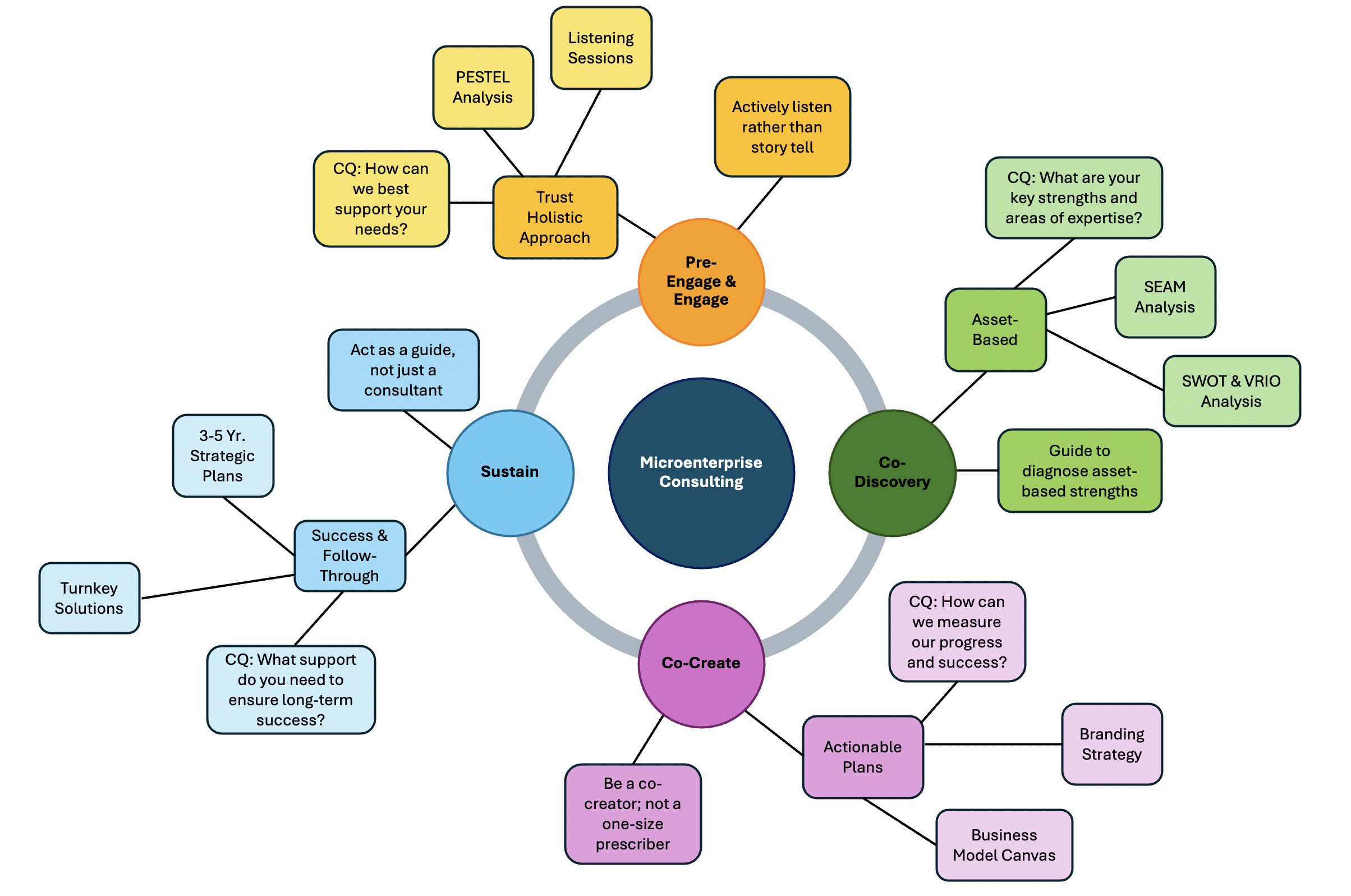
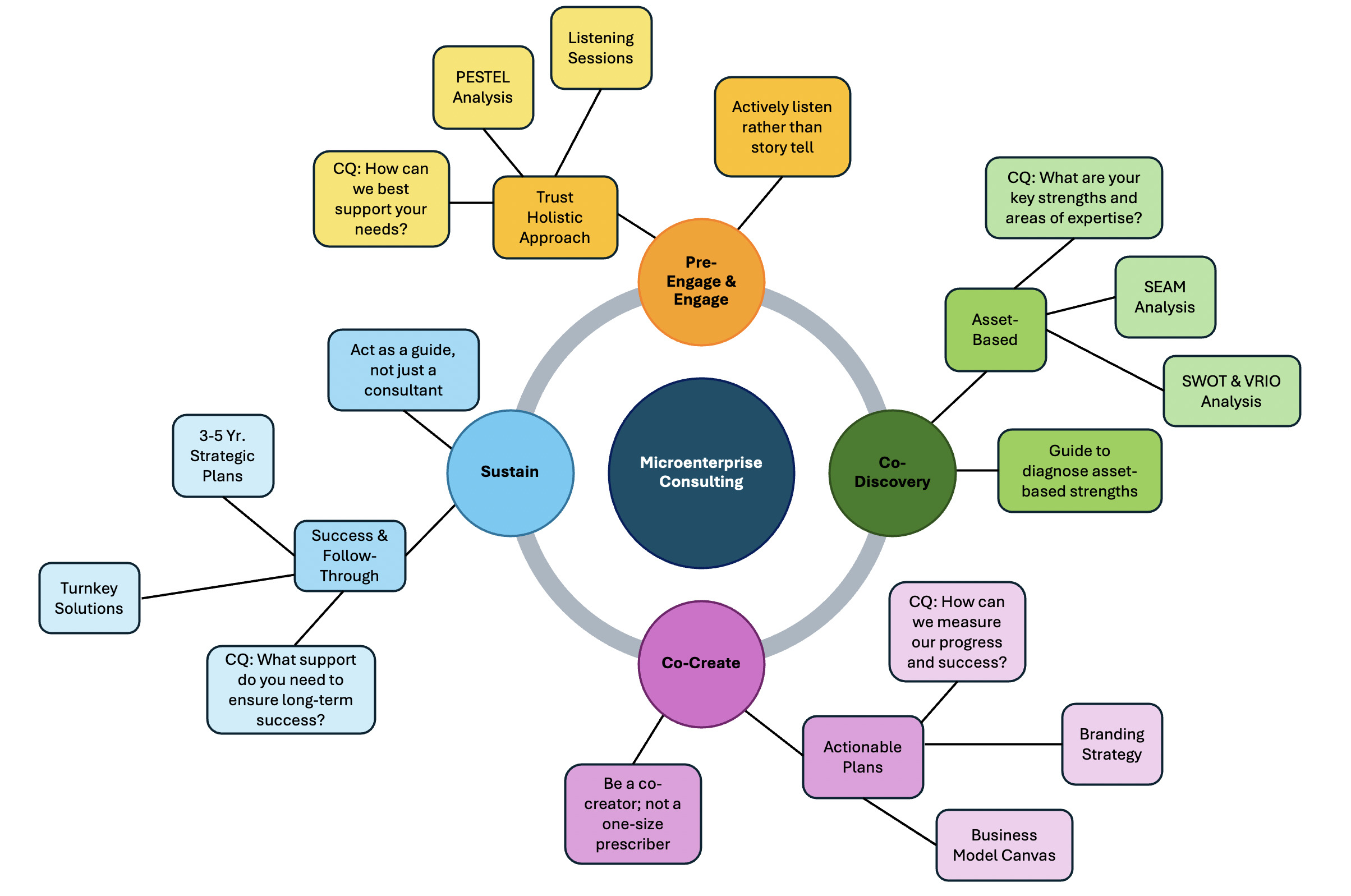
In the following section, four case studies discussing microenterprises are presented. These microenterprises are situated in various industries/sectors (e.g., not-for-profit/for-profit, human services, biological sciences, brewing/manufacturing, transportation) and located in the same rural region in the Southeastern part of the U.S. Each case is briefly framed, and an emphasis is placed on the consulting techniques and tools that were leveraged to help each organization address a real-time pressing need or opportunity. Please see Table 1, located in the section titled Emergent Themes and Implications, for a cross-case analysis of the tools and practices adopted to facilitate consultations with microenterprises, and Table 3 and Figure 1 for insights into a guiding framework for navigating microenterprise consulting initiatives.
Case 1: Nonprofit Microenterprise Strategic Planning, Goal Setting, & Staffing Plan
This nonprofit microenterprise was incorporated in 2017 with the goal of ending interpersonal abuse in the community. The nonprofit is focused on prevention, intervention, and educational services addressing household/family violence. The main challenges voiced by the organization included strategic planning, organizational development, coaching, and staffing. Thus, the project objectives included:
-
Evaluating past achievements and actions to identify impact after 6 years of work.
-
Reimagining mission, goals, purpose, and next steps.
-
Developing a roadmap charting key focus areas for the future using the SOAR Strategic Planning Model (strengths, opportunities, aspirations, and results) and framing results using SMART Goal method.
-
Developing formalized position descriptions for current and future staffing roles within the organization, along with identifying viable funding sources.
A strategic planning workshop was facilitated over a 2-day period. Over several weeks of preparation, organization documents and assessments were shared with the facilitator (consultant) to provide context of the organization’s history and impact. The director explicitly noted that a critical “contextualizing approach” that set the tone for the consultation was that the facilitator, “…got to know me first. We met to understand the depth and breadth of what our organization was able to take on… and we are not even going to touch beyond that capacity through the process.”
It was evident that the organization’s human capacity, and in particular, director capacity, was the key focus for establishing a realistic plan. Anything less than a realistic – implementable under the circumstances – plan was not “success.” The director recognized that, “This early meeting also served to identify organizational context both internally and externally. This ensured the best use of time during the actual consulting process.” At the retreat, all board members, staff members, and team members were present. Value was co-created through the process leading to the refinement of the organization’s mission, core values, staffing and associated funding needs, and next steps roadmap built on the organization’s strengths to chart what success looks like over the next 3+ years.
The pluses of the consulting practices used during project/intervention included: providing a needed space to reflect on program effectiveness, a chance to celebrate strengths, recognize opportunities, clarify aspirations, and convert aspirations into measurable goals. Facilitated space for collective visioning and meaning-making helps clarify purpose and refine the organization’s identity. Again, the director was hyperaware of the value created from the process and it was associated with the opportunity to “stand on Everest.” They noted:
“…when you’re a small organization you rarely have the chance to get to the 30,000-foot view of your organization in the community [or market] you are serving. Having the time… and guided third party expertise… for everyone to get that perspective… is important. If it was just me, I would have stopped 15 times and got caught up in the 50 details that needed to be cleared up before we could move on… and that’s not very helpful in that scenario.”
In this case, that seemed to be impactful. Through this process, over 50 actionable “next steps” across 5 aspirational directions helped reinforce the nonprofit’s mission and vision. This reinforced the analysis through to the formulation phases. Due to this co-creation approach, every effort was made to set the firm and staff up for success in the subsequent phases of implementation/execution, quite intentionally from the beginning. Expertly crafted staff position descriptions, an implementation roadmap, a complementary funding strategy plan, and post-consultation check-ins promoted accountability and continuity and underscored the importance of co-creation over several months. It seemed the most influential aspect of the consulting process in this case was about the preparation, framing, time, space, and facilitated guidance. As the director stated:
“I think it’s just about what the facilitator [does] to prime you, to get your brain out of the weeds and up. That’s just hard for small organizations… we are so busy putting out fires it is hard to think about the vision for rebuilding.”
In reflection, nonprofit microenterprises are unique as they typically have 1) limited resources in the form of infrastructure (e.g., tech systems, space acquisition, location, built improvements), funding, human capital, access to consultants, a specific/localized geographic service area which narrows reach, and a social mission that can narrow their focus and scope. Concomitantly, 2) consulting practices that are tailored to nonprofit microenterprises must be responsive to the exogenous impacts associated with sustainable funding, a focused social mission, and an alternative to the one-and-done consulting model. Consultants should have appropriately 3) developed a follow-up protocol in place to check in with their clients through a formalized quarterly review process. 4) Intentionally focusing on strengths through an asset-based approach can keep the consultation positive and productive. Balanced with a well-prepared organization, tailored consultation efforts for nonprofit microenterprises can be effective.
Case 2: Biological Field Station Strategic Repositioning
Located in the Southern United States, the field station was established in 1927 as a museum for public natural history education. Taking advantage of regional biodiversity, it stimulates place-based teaching/learning and serves as an outpost for biological science education, research, and training. It also provides diverse outreach programming for K-12 schools and local community life-long learners. As a research nonprofit, it is supported by the foundation and a consortium of regional universities.
As the field station continued to grow, the organization encountered growing pains: 1) administrative shifts created new complexities, and 2) core proposition disagreements among key constituents. The foundation desired more outward-facing activities, while the scientific board desired increased research capabilities, and the university administration expected an increase in educational activities. However, the field station lacked adequate resources to accommodate the multitude of needs. As a board member stated:
“We don’t have a clear long-term direction…. too many different groups with different interests, activities, and authority. It is like we are in a bit of an identity crisis. We need to do some work to establish what our core goals are…what is our foundation? To do that, we need help…can’t do it alone.”
To help the field station craft a sustainable strategic plan, the consulting engagement’s main objectives included: 1) find common grounds across diverse perspectives; 2) reevaluate core propositions; 3) define strategic priorities (immediate-, short-, and long-term) that best reflect these core propositions; 4) explore challenges prohibiting strategic momentum; and 5) develop an actionable roadmap.
It was a journey of collective learning: environmental scan and industry analysis to identify opportunities and threats, and socio-economic learning of organizational dynamics using the Socio-Economic Approach to Management (SEAM) methodology (Savall & Zardet, 2008). Unique to a micro-nonprofit, the consulting team was able to document every constituent’s voice, where only a small percentage can be heard in large corporations. A staff member shared during a follow-up meeting: “The process intrigued me… To be totally honest, I wasn’t so sure at first…I had my doubts and suspicions… but really appreciated being heard and involved from the start and not told what to do afterward…”
Collective learning and the practice of “together telling” (Rosile et al., 2016) empowered the staff and fostered a sense of ownership in the results, which not only highlighted organizational strengths but also revealed, more importantly, the embedded hidden challenges and potential. This collective knowledge led to a strategic planning retreat that brought together individuals with a common vested interest and diverse experiences and, ultimately, better awareness of organizational dynamics, core values, and renewed strategic priorities.
Traditional organizational learning often concludes with an analysis of the most frequently communicated experiences. A process that might overlook the fact that these experiences are, in fact, symptoms of something deeper and more fundamental. In the case of the field station, through a series of story mapping sessions of the diverse organizational challenges, the consulting team was able to uncover the root causes of many of the embedded issues, namely, unclear long-term direction and a lack of an effective personnel management system. These represent common underlying challenges for microenterprises. The field station director shared during a check-in meeting:
“Too many recipes and taste buds…all important but can’t satisfy them all. The past three months brought folks together and made them listen to each other and the data… data is also key; we don’t know what we don’t know…this made a huge difference in determining our future.”
This case illustrates the importance of collective learning and the development of a strategic roadmap that is genuinely owned and vested by the organization rather than the consultants. The strategic processes and tailored tools created during the engagement can be leveraged in future initiatives and implementation efforts, addressing a common challenge and alleviating the apprehension businesses may have toward strategy work.
In conclusion, when working with microenterprises, it is important for management consultants to recognize that 1) rather than expert telling, value creation is more meaningful and impactful through learning together; 2) consultants are companions to the life of the organization with a great deal of influence, not the directors; 3) tools and processes are used to help add value, they are not the value themselves, and 4) agility is built on socially responsible improvements to the bottom line.
Case 3: Consultancy as a Vehicle to Move a Microenterprise Forward
This case involved a recreational vehicle rental company that primarily serviced visitors to the Smoky/Blue Ridge Mountain area. Employees included the owner/founder, who had extensive subject-area experience as a user entrepreneur (Shah & Tripsas, 2007), but lacked formal business education and direct experience, and a part-time employee assisting with vehicle pickups/drop-offs and turnover. The fleet included two firm-owned vehicles, and three vehicles owned by contracting third parties. The firm did well during the COVID-era, where excessive demand from macro-environmental factors drove revenue, but post-COVID realities were less conducive to success. The founder stated, “I realized something that is…embarrassing to admit that maybe I was just a little lazy in my first couple of years of business, because I just had so much business, I didn’t have to try very hard.”
This points to one of the roles that emerged for the consultants, providing security and reassurance to the soundness of decisions by microenterprise leadership when size constraints limit the availability of proper decision-making techniques. Thus, outside consultants can help supplement the lack of managerial capital by endorsing and attributing causality to management decisions to this point and going forward.
The need for the reassurance of outside perspectives in the microenterprise context was further reinforced by another emergent issue, that microenterprises may not be on an even playing field with larger firms when it comes to risk-tolerance. Financing through debt is a rational approach when firms can improve revenue above the costs to service debts, yet a lack of internal validation for decisions can make the prospect of additional debt more daunting. Continuing, the founder noted:
“Part of this goes to my risk tolerance, and maybe I need to get over that! I’m tentative to make big investments because I do have competition, and I can’t afford to sustain big mistakes… [I want to] see how you see my business, check my blind spots, and help me sort through my growth decisions, because I’m a little scared!”
The approach of the intervention consisted of conducting a broad internal/external analysis, applying frameworks such as PESTLE, 5 Forces, 3 Circles, Business Model Analysis, SWOT, and VRIO to guide the scope of data acquisition and analysis. Primary research included semi-structured interviews with the owner and netnography for customer sentiment and competitor benchmarking purposes. Secondary research involved accessing data and reports that were cost and time-prohibitive to the firm to access and assimilate. Client discussions included preliminary conclusions, and the narrowing of project scope to six additional areas to audit and provide recommendations. Foci included operations, additional revenue streams, marketing, website/social media strategy, and fleet management. One of these foci, social media, an important aspect of marketing for resource-deficient microenterprises, revealed an additional challenge to the microenterprise in finding a way to satisfice essential activities when no internal personnel are intrinsically motivated to do so. For example, the founder learned: “Turns out social media wasn’t as easy as I thought it would be…I know that I need to invest more energy into marketing and social media, which is something I thought I would love, but I don’t.”
The approach to surmounting this gap included a prescribed, routinized approach to updating social media content, both to improve the effectiveness of their marketing and to reduce the cognitive burden of deciding when, as well as what, to post to their social media accounts. Each area of focus provided some suggestions that confirmed the client’s priors and some that the client described as “wouldn’t have thought of that!”. One recommendation involved a shift in framing the new platform as a competitor instead of viewing it as a source for identifying potential partners. Thus, the client could grow their fleet by contracting with vehicle owners instead of assuming the risks and costs associated with growth through ownership. This highlights a primary issue with microenterprises that may be addressed by consultants: myopia and the lack of bandwidth afforded to microenterprises perpetuating that myopia. Consultants offering an outsider perspective can help frame the organization’s problems differently and systematically discover solutions otherwise missed.
Recurring issues cited by the entrepreneur were an inability to assess whether purchasing a given vehicle or seeking out additional contracting partners were sensible methods for fleet growth, and whether purchase decisions warranted debt-based financing. Consultants designed a tailored Excel-based tool for conducting break-even analysis with clearly marked fields where the relevant variables (upfront cost, expected revenue, etc.) would be input by the entrepreneur to evaluate future investment decisions. For this case, the Excel-based tool to project the financial impact of fleet additions included minimal variables and clear instructions on how to plug in the numbers. This allowed the microenterprise to benefit from a rational approach to decision-making without the need for ongoing consultant engagement.
In summary, this microenterprise benefitted from the application of frameworks and research from data sources that are typified with a standard consulting approach, with some adaptation. The absence of in-house expertise and personnel bandwidth placed an emphasis on low-complexity, turnkey solutions. Also, while MNCs typically have the capabilities to understand recommendations and develop and implement proprietary tools required to carry out the recommendations, for this client, solutions had to be in a form that was (at least partially) applicable out-of-the-box with clear instructions on how to implement them. Aside from expertise, smaller management teams within microenterprises reduce the ability to engage in systematic decision-making processes, which outside consultants can help supplement. Myopia was a significant issue given the lack of internal capacity and perspectives, though the low number of internal stakeholders also made the recommendations provided easier for the organization to adopt.
Case 4: A Micro-Brewery Journey
The last case focuses on a micro-brewery located in the heart of the WNC mountains. The business has been in operation since 2016 and is on track to a million dollars in sales. Beyond the financial challenges faced (i.e., to support growth), the case company lacked a formalized vision, mission, and core values statements. Since its inception, the brewery has grown organically; its owner lacked the necessary business know-how to effectively grow the organization, which continued to represent a challenge. Other challenges contributing to many operational inefficiencies included the brewery’s lack of a formalized strategic plan, rudimentary and disjointed marketing tactics, and lack of foundational infrastructure capabilities.
“We started this business because we love craft beer and the community around it,” the brewery founder and co-owner shared. “But as we grew, I realized that passion alone wasn’t enough to sustain and scale the business. We were running into the same problems over and over again, and I knew we needed a more structured approach to running the brewery.”
The micro-brewery engaged the support of a team of consultants to help them address some of the critical challenges, as well as develop a strategic growth plan for the organization. The consulting team created value for the brewery by conducting a comprehensive strategic analysis of the organization, applying several key strategic practices and tools designed to assess its external and internal environments. The team also facilitated the development of the top priorities for the next 3-5 years, articulated in a strategic action plan and roadmap, with clearly defined objectives, strategies, and measures. Additionally, the team conducted numerous deep dives into top priority areas identified through this process (e.g., conducted extensive market research, developed a digital marketing strategy and plan, created a master production plan, etc.).
“It was eye-opening to see the business through a different lens,” the second co-owner reflected. “Through a series of working sessions with our team, the consultants helped us better understand our market and worked with us to build a strategy that wasn’t just about brewing great beer, but also about creating a sustainable business model to help us grow.”
The consulting team leveraged consulting practices that are commonly used with organizations of all sizes, including MNCs, but tailored them to the context and idiosyncrasies of the client organization. Both primary and secondary research methods were used to support this process (e.g., review of organization documents, semi-structured interviews with multiple stakeholders, employee and customer surveys). Operational process walkthroughs were also done, to better understand the day-to-day operations of the micro-brewery. Key financial, customer, process, and employee data were gathered to assess current performance.
“One of the biggest takeaways for me was understanding how important it is to align our day-to-day operations with our goals,” the Head Brewer said. “Before, we were just trying to keep up with demand. Now, we have a clear plan and the tools to measure our progress.”
In summary, beyond developing a strategic growth roadmap for the brewery, the other main (unspoken) goal of this engagement focused on knowledge transfer / competency development and capability building, so that the client organization can continue to use these new practices and tools with minimal to no support. The consultants brought their expertise to the table (including best practices) and facilitated the knowledge transfer process and capability buildout with client support. There was more listening involved than telling, to allow for the tailoring of practices and tools to the client’s context and specific needs.
“What impressed me most was how the consultants really took the time to understand our business,” the co-owner remarked. “They didn’t just come in with a cookie-cutter plan – they worked with us to create a strategy that reflects our unique challenges and strengths.”
As a result of this engagement, several playbooks (e.g., strategic planning process, branding guidelines, …), dashboards and other assets were built together with the client that have now become a part of the micro-brewery’s core (infrastructure) capabilities. During the final stages of the consulting engagement, the consulting team provided support with the implementation of the newly created assets, thus facilitating their use and adoption by the microenterprise personnel. “We’ve got now a solid roadmap and a process we can actually use moving forward,” the founder and co-owner said. “It’s not just about keeping the lights on anymore – we’re ready to grow the right way.” This was a perfect example of harmonious value co-creation!
Emergent Themes and Implications
Cross-case analysis of the four microenterprises illuminates commonalities and idiographic conditions contributing to how consultants co-create value with microenterprises. It is evident that many of the tools typically found in the toolbox of a consultant were leveraged to support the microenterprises’ needs (e.g., tools for internal/external analyses, strategic planning/doing processes, forecasting/near-future focused planning, etc.), though upon further analysis it becomes apparent that their disposition, approach, and the deployment of these tools was entrepreneurial rather than prescriptive. Additionally, the application of proven consultancy practices and tools was also shared in praxis (e.g., strategic planning retreats, virtual/in-person meetings, facilitation, current state assessment, future state visioning, etc.). Rather than addressing these as separate research questions, we present them as interconnected dimensions of the overarching inquiry into effective and sustainable consulting approaches. This structure provides a clear throughline for understanding how consultants engage with microenterprises to co-create value.
In Table 1, the main practices and tools adopted in the cases are presented. These highlight how consultants supported microenterprises in their development and which approaches proved most effective. While Table 1 illustrates the diverse applications across the four microenterprises in this study, a brief explanation of the effectiveness of the consulting interventions offers essential insight into the ubiquitous aspects of the adopted approaches. It should be noted that these shared practices and tools are intended to be descriptive rather than prescriptive. These themes also foreshadow broader insights that will be unpacked later in the paper (see the 4-Phase Microenterprise Consulting Framework). Further analysis showed that many of the practices and tools adopted at the microenterprise level are in alignment with what is found on larger-scale consultations, highlighting a shared foundation despite differences in scale and application. However, there are critical caveats such as the pre-engagement consultation preparations, the focus on co-creation (in the analysis and formulation phases) and iterative follow-up (during the implementation phase) by the consultant within the context of microenterprise consultations (see Table 2 for a review of key differences) (Grabowski & Stawasz, 2023; Leinwald & Mainardi, 2016).
Albeit limited in scope, commonality in the application of the most effective practices and tools for microenterprise consulting was found across the cases. These shared components focused on:
-
The extent of preparation and motivation of the microenterprise to engage consulting support.
-
A primary focus of the consultants on listening/learning with the clients (instead of telling or directing) to be able to effectively co-create value with them.
-
The adoption of an established strategic framework that offers a structured approach to guide the engagement (e.g., Analysis, Formulation, and Implementation – AFI; Rothaermel, 2023) (Ward, 2016).
-
A commitment to accountability and follow-up by the consultant to ensure continuity of effort in the execution phase (Achtenhagen et al., 2017).
We now turn to a discussion of the shared components, addressed one by one.
Motivation and Preparation to Engage Consulting Support
The consultancy experience, to be effective, must be a two-way street that is collaborative and dialogical; in other words, for consulting efforts to be beneficial for the microenterprise, the firm must be prepared and invested in the process from the beginning (Grabowski & Stawasz, 2023). This was the case with the four organizations highlighted in this paper; not only did they seek support from consulting firms, but they also opened their doors and worked closely with the consulting teams throughout the engagement. Advancing the conceptualization, this theme (client-to-consultant) could be framed as the TIE Assertion, which describes the importance of the client (microenterprise) being prepared for the consultancy experience by ensuring they are able to dedicate the Time & Space, Information & Data, and Energy & Effort to ensure that the consultancy experience is effective. These components of the TIE Assertion are also associated with challenges observed in and experienced by microenterprises within the consulting process. Microenterprise staff were limited on time, accessible information, and the energy to invest in the process. These cases demonstrated the value – and criticality – of client preparedness.
Consultant-to-Client Collaborative Co-Creation of Value
Another shared emergent theme codified across the cross-case analysis demonstrated an appreciative approach by the consultant team that was constructive, collaborative, and listening-centered (consultant-to-client) (Grabowski & Stawasz, 2017). This theme also captures the interplay between microenterprises and the consultations regarding the value created and how value is created. The main motivation of the consulting teams providing support to the four case microenterprises was to equip them with the know-why, know-what, and know-how (the capabilities (e.g., tools and practices) for sustainable success). The consultation process with microenterprises seems more about showing (educating and guiding) than telling (directing or dictating). Consultants brought strategic management subject matter expertise and best practices, to help uncover and address the main challenges hindering strategic momentum. Additionally, the consulting practices and tools were not applied “as is”, but rather tailored to address the specific needs, contexts, and commitment of the client. As a result, user-friendly tools, turn-key solutions, and plug-and-play assets and plans were intentionally co-created with the clients, thus enhancing the ownership and successful adoption of the solutions by the clients. This approach was adopted to help support the transition from strategy formulation to implementation and mitigate the strategy-to-execution gap (Leinwand & Mainardi, 2016; Reynolds & Lewis, 2017).
Adapting Established Strategic Frameworks to Customize Microenterprise Consulting
The consulting engagements of the four case microenterprises are characterized by the application of practices and tools that are commonly used in large-scale strategic management engagements in MNCs (Srinivasan, 2014; Wright et al., 2012). Each consulting team adopted an established strategic management framework to provide the needed structure to effectively guide the engagement (e.g., AFI, SEAM). Different practices and tools were applied across the continuum of the strategy framework used, and in most cases, customized (and even simplified) to better serve the microenterprise organization.
This represents a key difference between consulting engagements in larger organizations (e.g., MNCs) and in microenterprises. Consulting engagements with larger organizations tend to be rather top-down, with consultants providing leadership with ready-made plans where there is little customization (Srinivasan, 2014; Tunwall & Busbin, 1991; Wright et al., 2012). However, as can be seen in the four cases with the microenterprises presented, the consultants involved usually tailored the practices and tools used to better facilitate client competency development and capability buildout (e.g., by systematically exploring together with the client the challenges they were facing, designing solutions to address those challenges that require minimum investment – money, personnel, etc.). Their approaches were collaborative and interactive, where all organizational stakeholders had a voice (Grabowski & Stawasz, 2023).
The four cases also revealed the dexterity, skill, and attitude required of consultants when working with microenterprises. In these types of engagements, consultants typically have access to imperfect information and data, and they must figure out how to best use what is available to create value for and with the organization. Many microenterprises, often founded and led by entrepreneurs, do not have access to historical data, institutional records, or established decision-making matrices and are often operating in completely uncharted territory. These conditions call for an approach that deviates from typical, causal logic where a clear goal is established and extensive data exists to help you get there, to an approach to decision-making that is more fluid, iterative, and experimental, as strategies are implemented. This condition helps describe why microenterprise consultants must be flexible and “nimble” to the observed needs.
Driving Continuity Through Follow-Up
The fourth shared observation across the four cases was the importance of ensuring continuity of effort and support from the consultant into and through the implementation phase. The perspective on this theme was multi-faceted. This continuity pipeline included consideration of manageable turn-key solutions, cross-training for decision makers and staff on the proposed solutions, and follow-up check-ins with the firms to resolve any post-departure confusion and offer sustained accountability. The expectations from the firms seemed to suggest at least quarterly follow-ups, with monthly follow-up viewed as being the best for maintaining consistent support over time. The accountability embedded in the consultant’s follow-up was interpreted by firms as a value-added component, extending the perceived value created through the consultant’s approach, follow-through, and ongoing engagement with the microenterprise.
Interestingly, Karlan, Knight, and Udry (2015) provide supporting evidence in their study of 160 Ghanian microenterprise entrepreneurs. They offered three interventions (e.g., consulting only, small grant only, consulting & small grant) alongside a control group, and found no differences in business practices or profits across the four groups within 12 months of completing the interventions. Although hands-on consulting initially improved business practices and knowledge, without sustained follow-up, participants gradually reverted to their prior behaviors and operations. This suggests that while microentrepreneurs were receptive to personalized advice, its impact quickly faded once the consulting ended. Sustained engagement, particularly in the context of microenterprises, may therefore be a critical component for achieving long-term success and ensuring a lasting impact.
Table 1 shows examples of practices and tools used across the four case microenterprise (ME) organizations, along with the phases of the engagement in which they were applied. We decided to use the AFI framework to depict the engagement phases (i.e., Analysis, Formulation, Implementation) since they are self-explanatory and applicable to all four case microenterprises. As discussed, all case organizations utilized a consulting framework to guide the engagement; however, where the cases tended to differ was in how they deployed domain-specific tools and techniques to support the firms with capability building in areas where they had gaps (e.g., Master Production Plan, Branding Strategy, etc.). The customization of consulting practices and tools, especially during the implementation phase, required the use of experimental, non-linear approaches to achieve the goals of the organization (e.g., research, design, apply, learn, adjust, etc.). It was evident that the process can be as much an “art” as a “science”!
The study does not seek to directly compare microenterprise and MNC consulting practices but offers reflections on how consulting roles and approaches differ based on evidence-based analysis on microenterprises (the 4 cases of this study) and extant literature on MNCs. Many of the practices and tools used in consulting engagements with microenterprises correspond with those seen in consultations with large organizations (e.g., MNCs). Moreover, we also noted certain differences in the way they are applied across the AFI continuum, such as the emphasis on co-creation during the “A” & “F” stages, as well as the need for follow-up during the “I” phase. However, what are the main differences between the role that consultants play in both types of implementations? Table 2 summarizes them.
Finally, to address the research question and as a guide for navigating consulting praxis in the context of microenterprises, the 4-Phase Microenterprise Consulting Framework was developed based on cross-case analysis. While the consulting practices and tools used in the four cases are applicable to organizations of any size, the framework offers particular value to microenterprises due to their limited resources and unique operational contexts. These cases emphasize the importance of a holistic, collaborative approach, where consultants prioritize listening, empower organizational ownership of change, and use integrated data (qualitative, quantitative, and financial) to uncover root issues. Effective consulting also involves fostering long-term sustainability, reducing isolation, and supporting microenterprises in building internal capacity for socially responsible growth. These practices helped bring strategic clarity, fostered organizational ownership, and supported sustained implementation.
The proposed 4-Phase Microenterprise Consulting Framework (see Table 3 and Figure 1) is designed to be both participatory and capacity-building, offering a structured series of steps that result in implementable strategies grounded in microenterprises’ available resources – such as leadership, human, social, financial capital, knowledge, and time. Reflecting the iterative and collaborative nature of consulting in resource-constrained environments, the framework serves as the backbone of our findings and invites further conversation and exploration into more effective, context-sensitive approaches to microenterprise consulting.
Conclusions and Future Areas of Research
The adage, “if you’ve seen one, you’ve seen them all” is not in alignment with what has been observed here. A more fitting expression might be, “if you’ve seen one, you’ve seen one,” especially when considering the nature of microenterprise consulting. Yet, despite this diversity in the consulting projects and organizational contexts of the four cases presented, as well as the varied practices and tools each of the consultants deployed, one common theme emerged as the consultants reflected on their collective experiences. It became apparent that a strategic framework is necessary in steering consulting engagements (see Table 1 for general a priori frameworks and Table 3 for an emergent, a posteriori framework). It is not merely about deploying a repertoire of tools, although at times, that might be the client’s immediate preference; rather it is about fostering deeper understanding to enable long-term solutions tailored to the microenterprise’s unique challenges as well as the support and development of the microenterprises to be prepared to implement the solutions themselves. Furthermore, it is essential to help microenterprises focus on long-range planning by employing a clear implementation plan coupled with efforts to educate those who are implementing the strategies and deploying strategic tools at the right moment to support this critical activity (i.e., strategic analysis, strategy formulation, and implementation).
To ensure the effectiveness of the consultancy interventions, the microenterprise must be genuinely vested in the engagement and demonstrate dedication (TIE Assertion including Time & Space, Information & Data, and Energy & Effort). This preparedness creates a channel for open dialogue between the microenterprise personnel and the consultant and motivates the microenterprise to work closely with the consultants. During the engagement, the consultant needs to exercise a listening-centered approach to effectively co-create value with the microenterprise to ensure the firms’ ownership of the results. It is not about telling (directing or dictating); it is the consultant’s responsibility to coach/educate/guide using subject matter expertise to help the microenterprise build sustainable capabilities for success. This includes empowering managers to recognize and respond to the economic impact of both internal and external decisions, strengthening their ability to drive the business’s success. Finally, a commitment to accountability and follow-up outreach was also emphasized as being key to the success of the plans designed together with the microenterprise.
Access to sustained funding and availability from personnel to support implementation were recognized as being critical to success. This is particularly crucial for microenterprises, which often operate with limited time, financial resources, human capacity, and expertise to grow the business. These constraints can make it challenging for microenterprises to implement the recommendations proposed by the consultants (Achtenhagen et al., 2017; Prescott & Miree, 1998), particularly given that the strategy-execution gap is a prevalent challenge among microenterprises (and organizations of any size, for that matter). Therefore, to succeed, the relationship between a microenterprise and the consultants should extend beyond a one-time engagement. Ideally, it should evolve into a long-term partnership, where the consulting firm is available to the microentrepreneur as a guide, as needed, through their entrepreneurial journey.
While all the consulting practices and tools utilized in the four case microenterprises are effective for all types of organizations, including large corporations, they are particularly critical for microenterprises. Table 4 summarizes key guidelines that consultants can embrace to enhance consulting engagements with microenterprises, highlighting effective strategies for meaningful collaboration and long-term success. These approaches bring to life the four common components presented at the beginning of the Emergent Themes and Implications section, demonstrating their applied value in consulting contexts.
In addition, the underlined areas in Table 4 represent the keywords/phrases that repeatedly echoed throughout and across the four case consulting projects. It is our hope that these additional insights will provide some overarching guidelines to improve consulting praxis with microenterprises. Looking ahead, addressing persistent resource constraints faced by microenterprises may require innovative solutions beyond traditional consulting models. With the rapid advent of technology tools available to the public, such as Artificial Intelligence (AI), new opportunities are emerging.
Future areas for research on consulting practices for microenterprises could include the exploration of the integration of digital transformation tools, such as AI, to help overcome resource limitations and effectively tackle market opportunities. These technologies may assist microentrepreneurs in addressing some of the typical limitations (e.g., human capital, financial constraints, time management, data acquisition and analysis, etc.). Recent studies suggest that leveraging AI could help automate routine tasks, support strategic decision making (and execution), curate and leverage customer insights, positively impact innovation and operational efficiencies, and optimize business performance through marketing strategies within SME (Bąk et al., 2023; Mendoza Arce et al., 2024; Rajaram & Tinguely, 2024). To date there is a dearth of research focused on the impact AI is having on microenterprises. Given the strategic importance of microenterprises to the economy and their limited resources, a better understanding of how to effectively leverage digital transformation tools, such as AI, is essential for their future success.
As noted previously, the goal of this study is not to be prescriptive – although we have offered a preliminary guiding 4-Phase Microenterprise Consulting Framework to inform theory and support praxis – but to be descriptive of the types of experiences had by various consultation-based efforts with microenterprises and to determine transferable concepts and practices/tools. The four cases, although representing a range of both for-profit and nonprofit sectors and industries, are drawn from a specific rural region in the southeastern U.S. Thus, they do not present an exhaustive picture of all conditions impacting these phenomena, which may continue to emerge through future case-based inquiry like that conducted here.
The notable ways to improve consulting praxis with microenterprises warrant future research (e.g., to better flesh out transferrable “how-to” questions). In addition to exploring the integration of digital transformation tools such as AI in the context of microenterprise consulting, future research could also limit cases to shared sector and/or industry membership to control for factors not shared across the clients featured in our study. Finally, further inquiry could define the scope of case-study clients by certain relevant attributes, such as size, to see if further distinctions can be made within the microenterprise classification.
A particularly promising direction for future research involves piloting the 4-Phase Microenterprise Consulting Framework introduced in this study. While the framework is grounded in cross-case analysis and practical insights, its effectiveness and adaptability across various microenterprise contexts remain to be explored. Pilot studies could help evaluate the framework’s utility in guiding real-world consulting engagements, assess its strengths and limitations, and inform refinements that support the development of implementable strategies and long-term capacity-building among microentrepreneurs.