Introduction
In the digital age, the business environment has experienced profound changes driven by widespread Internet adoption (Berisha-Shaqiri, 2014; Caniëls et al., 2015). An especially critical development for small businesses is the growing influence of online reviews. Recent data indicate that 76% of consumers seek out online reviews when assessing local businesses, and nearly half view these reviews as equally trustworthy as personal endorsements from friends or family (Paget, 2023). In other words, the voice of a stranger online can carry the same persuasive weight as a close acquaintance’s recommendation.
Platforms like Google, Yelp, and Facebook have transformed private word-of-mouth into a global forum accessible to many potential customers. This transition presents both opportunities and risks for small businesses, whose limited resources make managing their online reputations more pressing (Forsey, 2023). The ability of online reviews to shape perceptions—either positively or negatively—underscores the need for a strategic approach to online reputation management (ORM), defined as actively shaping a business’s online image (Forsey, 2023). For small businesses, these evolving dynamics necessitate increased vigilance in fostering trust and credibility among potential customers, who frequently refer to online reviews prior to engaging with a business.
Given that online reviews significantly affect consumers’ purchase intentions (Jiménez & Mendoza, 2013), it is unsurprising that small businesses are increasingly concerned about ORM. Yet, many fail to take advantage of available tools: nearly half (53%) do not actively manage their online reputations, and 60% do not encourage customers to leave reviews (Cox, 2019). These figures suggest that while many small business owners recognize the importance of online reviews, they do not always implement concrete strategies to cultivate stronger reputations.
Extensive research has explored the effects of online reviews on consumer purchase intentions (Jiménez & Mendoza, 2013; Zhu et al., 2020), consumer trust (Cheng et al., 2015; M. Kim & Kim, 2020), consumer satisfaction (Changchit & Klaus, 2020; Zhao et al., 2019), and brand image perceptions (Chakraborty & Bhat, 2018; Gensler et al., 2015). However, there remains a distinct gap in our understanding of how small businesses themselves utilize ORM to leverage these consumer perceptions, and how those efforts relate to performance. This shortfall is particularly significant given that small businesses account for nearly half of U.S. employment and GDP (U.S. Chamber of Commerce, 2023).
Accordingly, this study investigates how small business owners integrate ORM practices into their overall strategies and examines the effects on business performance. The research offers three key contributions. First, it explores how customer orientation and Internet self-efficacy drive ORM efforts, revealing the tactics that small businesses employ. Second, it evaluates ORM’s direct impact on small business performance, encompassing star ratings and broader success metrics. Third, it probes the moderating role of competitive intensity, illustrating how different market conditions may strengthen or weaken ORM’s influence. By highlighting these factors, the study enriches the theoretical framework of ORM for small businesses and offers practical guidance for owners striving to remain competitive in the marketplace. Ultimately, understanding how ORM can bolster small business performance is increasingly vital in today’s economy.
Theoretical Background
Resource Advantage (RA) theory (Hunt & Morgan, 1995) serves as the theoretical framework for this study. RA theory posits that firms achieve a competitive advantage through the effective utilization and management of their resources. This theory, which grew out of insights from economics, the Resource-Based View (RBV), and Industrial Organization (IO) theory, offers a comprehensive view of how firms can develop and sustain competitive advantage in competitive markets (Hunt, 2013; Hunt & Morgan, 1995). RA theory has nine foundational premises that build on the principles of the RBV, which emphasizes the importance of firm-specific resources and capabilities in achieving competitive advantage. According to RBV (Barney, 1991), resources that are valuable, rare, inimitable, and non-substitutable (VRIN) are critical for sustaining a competitive advantage. However, RA theory extends this view by incorporating the competitive position of firms vis-à-vis their competitors, thereby taking into account the external market environment and competitive forces. R-A theory argues that firms can achieve superior financial performance through innovation, efficient use of resources, and adaptive strategies in response to market changes. Hence, RA theory provides a more holistic understanding of how firms can leverage both internal resources and external market conditions to achieve superior performance (Hunt & Morgan, 1995, 2017).
RA theory is particularly relevant for small businesses, which often operate with limited resources. Small businesses, despite limited resources, can still achieve competitive advantage through strategic resource management. Small businesses can leverage their unique resources, such as specialized knowledge of their local areas, intimate knowledge of and relationships with customers, to create value and differentiate themselves from other local competitors and larger firms. For example, studies have shown that small businesses can gain a competitive advantage through product/service differentiation (Bressler, 2012), sustainability (Cantele & Zardini, 2018), market orientation and innovation (Udriyah et al., 2019), and entrepreneurial and learning orientation (Lonial & Carter, 2015). These studies are consistent with the RA theory’s assertion that both internal capabilities and external market dynamics are essential for achieving competitive advantage. In the area of online marketing, a firm’s online reputation is a resource that can be leveraged for competitive advantage. Hence, RA theory provides a robust framework for examining how small businesses can proactively manage their online reputations as a resource for competitive advantage, which can lead to superior business performance.
Hypotheses Development
Customer Orientation and Online Reputation Management
Customer orientation is a business approach that focuses on the needs, preferences, and satisfaction of customers of the firm. Customer orientation has been defined as “the set of beliefs that puts the customers’ interests first, while not excluding those of all other stakeholders … in order to develop a long-term profitable (viable) enterprise” (Deshpandé et al., 1993, p. 27). Hence, customer-oriented small business owners place an emphasis on ensuring their business and its employees are focused on understanding and meeting customer needs. In the literature, it is well established that customer orientation leads to favorable outcomes for businesses of all sizes. In small businesses, customer orientation has been shown to positively affect customer satisfaction (Aburayya et al., 2020; Khan et al., 2022), customer loyalty (Ismail, 2023), brand image (Khan et al., 2022), and performance (Neneh, 2019). These studies illustrate that customer orientation enhances customer satisfaction, loyalty, and brand image, which are essential elements of a business’s online reputation management practice. Therefore, when a small business is customer-oriented and has a customer-centric approach to understanding and responding to customer needs, it is likely to be motivated to practice online reputation management, which is the process of managing public perceptions of a business online. (Forsey, 2023; Peco-Torres et al., 2023). According to RA theory (Hunt, 2013), information (e.g. information from consumers such as online reviews) can be a source of competitive advantage. Hence, customer-oriented small business owners are likely to encourage satisfied customers to leave positive reviews on platforms, such as Google, Yelp, and Facebook. By engaging with customers, these interactions can serve as a valuable resource that enhances a business’s credibility and attractiveness to potential customers. Additionally, customer-oriented small businesses actively respond to customer feedback and address any customer concerns or negative reviews that can potentially have a negative impact on the business’s reputation online. Hence, it is hypothesized that
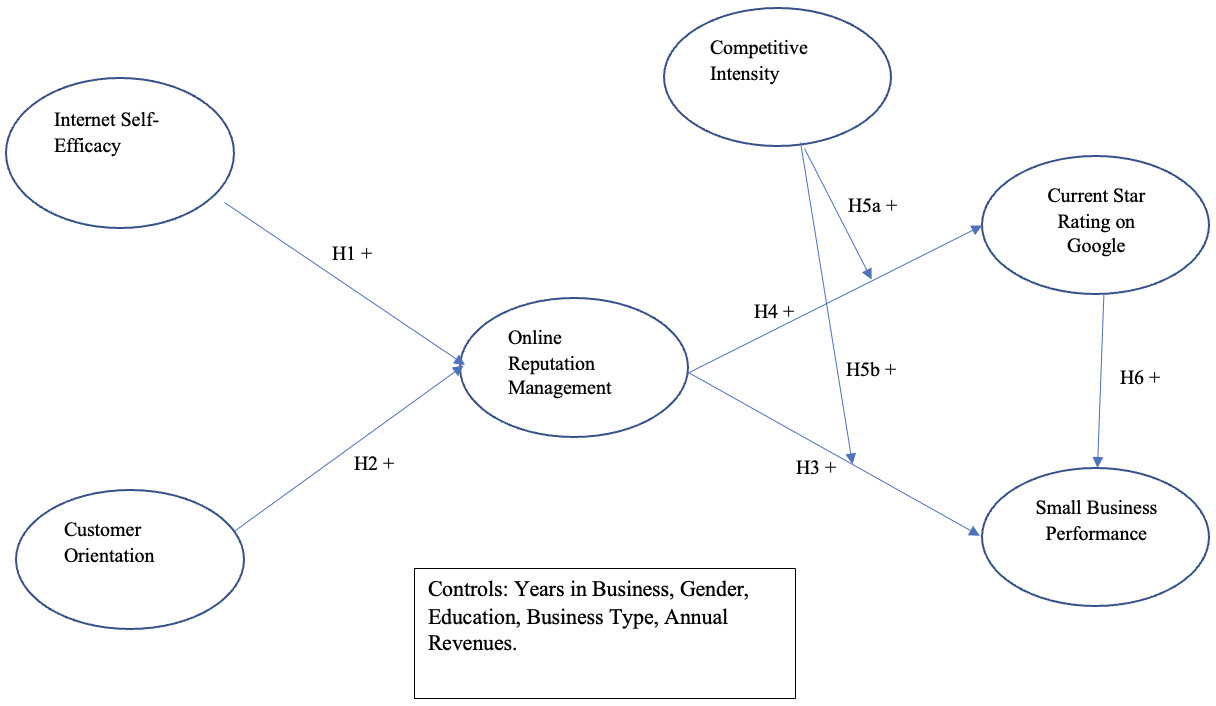
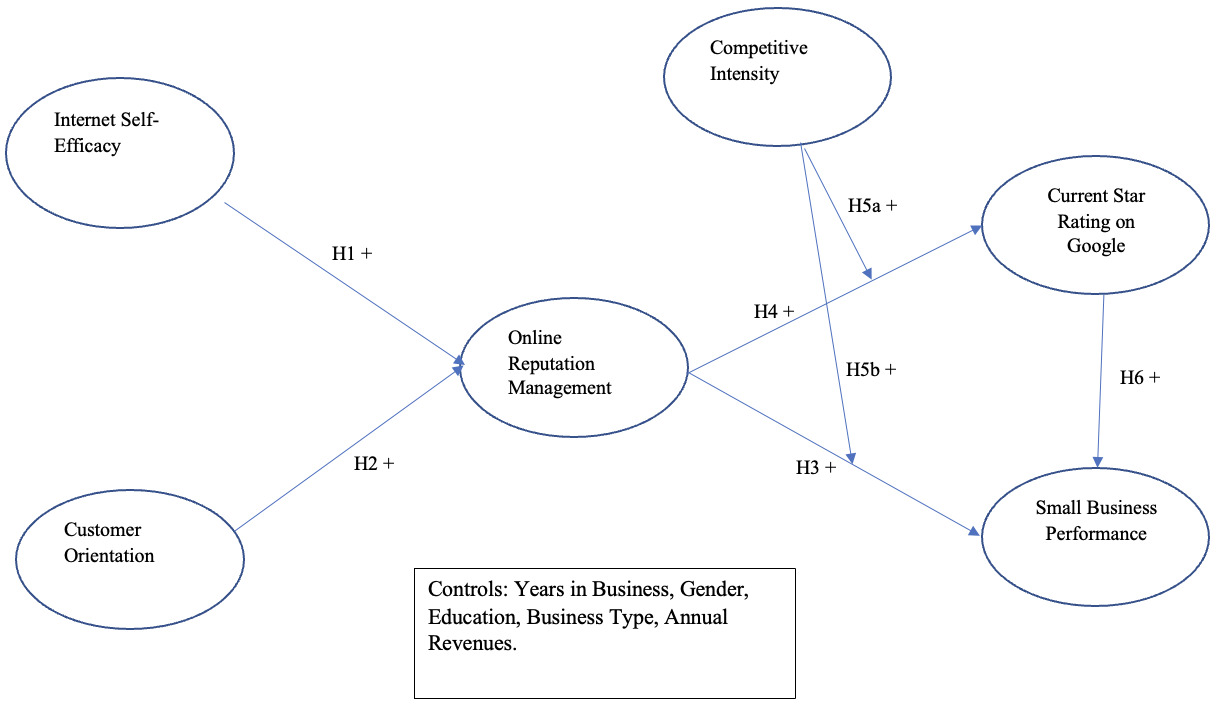
H1: Customer orientation in small businesses is positively associated with online reputation management.
Internet Self-Efficacy and Online Reputation Management
The Internet has become essential to small businesses globally, as it allows businesses to market to a wider audience, improve business operations, and engage with customers on various platforms. For a small business to be able to utilize the Internet effectively in their business, the business owner or other employees within the business should be proficient in utilizing various Internet tools and software available to small businesses. Internet self-efficacy (ISE) has been defined as “individuals’ perceptions that they can successfully use the World Wide Web, the Internet’s most pervasive and important application, as a problem-solving tool” (Y. Kim & Glassman, 2013, p. 1421).
Previous research on Internet self-efficacy has shown that it has a positive impact on various online behaviors and outcomes. In a study by Zarei and her colleagues (2019), they found that higher Internet self-efficacy among university students led to better use of online information services among university students. In another research study, (Srivastava & Dhar, 2016), the authors show that Internet self-efficacy led to improved job performance among travel agents. ISE enabled travel agents to effectively use online resources, tools, and platforms, which led to improved job performance by enabling travel agents to effectively use Internet-based technologies to gather and disseminate information, solve customer issues, and communicate with clients. The findings from these studies highlight the potential of Internet self-efficacy to positively influence online reputation management by enabling small business owners or those working for them to utilize online tools and platforms for reputation management more effectively. RA theory (Hunt, 2013; Hunt & Morgan, 1995) suggests that the skills of individuals within an organization can serve as a basis for competitive advantage, enabling firms to differentiate from competitors. Hence, business owners and employees with strong Internet self-efficacy are more likely to proactively manage the business’ online profiles, monitor reviews, and respond to customer feedback—key aspects of effective online reputation management. Therefore, we hypothesize the following:
H2: Internet self-efficacy in small businesses is positively associated with online reputation management.
Online Reputation Management and Small Business Performance
Online reputation management is the process by which a business proactively manages its online reputation, with the goal of influencing consumers’ perceptions of the business. It is vital for small businesses to maintain a positive online presence because online reviews play an important role in establishing trust and influencing consumers’ purchase intentions (De Pelsmacker et al., 2018; Zhu et al., 2020). Consistent with the RA theory, the online reputation of a small business is a valuable asset that enhances consumer trust and helps small businesses gain a competitive advantage in the marketplace (De Pelsmacker et al., 2018; Perez-Aranda et al., 2019). It is also a unique and non-substitutable resource, as positive online reviews reflect consumer experiences with the business, which are difficult for others to duplicate and are perceived as more credible than traditional advertising. Hence, online reputation is a critical resource under RA theory that drives competitive advantage but also requires strategic ongoing management to maintain its effectiveness. A business’ online reputation as evidenced by their star ratings and the valence of their text reviews has been found to have a positive effect on sales, customer satisfaction and customer loyalty (Engler et al., 2015). In one study examining strategic online reputation management in the hotel industry, Peco-Torres and his colleagues (2023) examined how hotel firms can improve their online reputation through strategic online reputation management practices. They found that hotel managers’strategic online reputation management had a positive effect on perceived value. In another study by Pérez-Aranda et al. (2019), the authors developed a comprehensive measurement model to aid hotels in ORM and evaluated the perceived benefits of ORM from the perspective of hotel managers. They demonstrate that online reputation management positively impacts financial performance, customer relationships, and brand perception. Hence, empirical evidence from the hotel industry in the aforementioned studies by Peco-Torres et al. (2023) and Pérez-Aranda et al. (2019), reinforces the positive correlation between strategic ORM and enhanced firm performance. Therefore it is hypothesized that:
H3: Online reputation management is positively associated with small business performance.
Online Reputation Management and Google Star Rating
The widespread adoption of online review platforms and the creation of user-generated content by consumers have been well documented in the extant literature. Consumers increasingly rely on online reviews to inform their purchasing decisions, particularly for small local businesses. Of the many online review sites available, Google has emerged as the most popular review platform, with 57.5% of business reviews being made on the platform, and 81% of consumers using Google to look up reviews (Vaghasiya, 2024). making it an essential platform for small businesses to manage their online reputations effectively. With the increasing prevalence of fake online reviews of businesses and products (He et al., 2022), source credibility is increasingly playing an important role in influencing consumers’ perceptions of review credibility and subsequent behavioral intentions (Roy et al., 2024). Hence, the ongoing monitoring of reviews on Google is important for effective online reputation management by small businesses as it is the most used and trusted review platform. Jung et al. (2023) found that when businesses are proactive in asking for reviews and not too soon after a purchase, consumers are more likely to leave a review. Moreover, when customers are satisfied with the product or service they have purchased, they are likely to leave a positive review (Delgado, 2017). Therefore, it is hypothesized that being proactive in asking for reviews and ensuring customer satisfaction are essential components of online reputation management. Hence,
H4: Online reputation management is positively associated with higher Google star ratings.
The moderating effect of Competitive Intensity
Despite the well-documented importance and utilization of online review platforms by consumers and businesses alike (Vaghasiya, 2024), unique industry characteristics such as competitive intensity are still believed to affect the efficacy and impact of online reputation management practices. As firms increasingly strive to sustain competitive advantage in their respective markets, unfavorable market conditions may emerge in the form of intensified competition (Dess & Beard, 1984; Zahra & Covin, 1995). Competitive intensity has been previously defined in academic literature as the degree to which competition is heightened due to the presence of many competing firms and the dearth of opportunities for future growth in a specific market (Auh & Menguc, 2005). Because the small business owners who comprise the sample of this research occupy a wide variety of industries and marketplaces, there are substantial differences in the degree of competitive intensity faced by the focal firms. The pronounced differences in competitive intensity allow for a more nuanced exploration of how this phenomenon may impact Google Star ratings and overall small-business performance.
Competitive intensity is particularly relevant to the study, as this external factor may play a substantial role in determining how effective organizational reputation management practices may be in both fiercely competitive and less competitive markets. In fiercely competitive markets, firms face a business environment in which competitors’ actions and practices play a major role in shaping and influencing managerial decision making (Auh & Menguc, 2005), and the necessity to innovate and uncover novel ways to remain vigilant and differentiate their business from competitors becomes more pressing (Zahra, 1993). When competitive intensity is low, firms may be less beholden to contingencies undertaken by competing firms, and may find a lessened need to engage in novel innovation and differentiation practices seen in markets with a higher degree of competitive intensity (Zahra, 1993; Zahra & Covin, 1995).
Following the RA theoretical framework, the unique assets and skills that a firm possesses become valuable tools for differentiating it from another (Hunt, 2013; Hunt & Morgan, 1995). In markets characterized by a high degree of competitive intensity, these unique differentiating features of a business may be demonstrably more valuable, leading to pronounced impacts on outcome variables, such as Google Star Rating and overall Small Business Performance. Therefore, it is hypothesized that:
H5a: Competitive intensity positively moderates the relationship between online reputation management and Google star ratings.
H5b: Competitive intensity positively moderates the relationship between online reputation management and small business performance.
Google Star Rating and Small Business Performance
The current popularity of review platforms such as Google Reviews is indisputable (Vaghasiya, 2024), but questions remain about the tangible impacts of Google Star Ratings on overall business performance. Due to the heightened pressure on some small business owners to adopt a customer-oriented approach to managing online reputation by proactively responding to customer reviews, assuaging concerns, and addressing negative feedback, it is essential to understand whether the overall Google Star Rating has a pronounced effect on small business performance. Previous research has demonstrated that online reputation management has a measured impact on small business success by increasing customer trust, firm differentiation, and enhancing customer loyalty (De Pelsmacker et al., 2018). In a study by Kemp and her colleagues (2020), webcare—defined as “searching the web to address customer feedback” (Kemp et al., 2020, p. 257)—was found to enhance engagement, mitigate negative e-WOM, and foster positive customer interactions when used proactively by businesses. These effects ultimately support improved online reputation management and customer satisfaction. Hence, the overall quantifiable outcome of such online reputation management practices often results in the quantitative and objective metrics of a cumulative Google Star Rating, calculated by averaging all reviews that a business has received. Due to the prevalence of online reputation management practices and the increasing tendency for consumers to seek secondary information about a business online prior to patronizing it, it is hypothesized that:
H6: Google star ratings are positively associated with small business performance.
Method
Sample and data collection
To empirically examine the relationships between the constructs in our model, we collected data from small business owners in the United States using the SurveyMonkey Audience Panel. An online survey was sent to a randomly selected sample of 264 small business owners who were part of this panel. The sample size of 264 was deemed adequate based on both methodological guidelines and prior literature. Specifically, using the “10-times rule” for partial least squares structural equation modeling (PLS-SEM) and a priori power analysis (Cohen, 1992; Hair et al., 2022), the minimum required sample size to detect medium effect sizes (f² = 0.15) at 80% power and α = .05 was well below 264 respondents. Furthermore, our sample size surpasses the 150–200 cases that Guenther et al. (2023) identify as sufficient to yield precise parameter estimates in PLS-SEM analyses. Informed consent was obtained from participants through an online page that provided a detailed description of the study, and participants indicated their consent by checking a box before proceeding to complete the survey. Of the 264 survey respondents who accessed the survey, 13 did not complete the entire survey questionnaire and were dropped before data analysis, leaving a final sample size of 251 small business owners.
The demographic characteristics of the small business owners who completed the survey were as follows: males (49.5%) and females (50.5%). Their age distribution was 18-29 years old (19%), 30 – 44 years (30%), 45 – 60 years (35%), and over 60 years (15%). The educational attainment of small business owners in the sample was high school (19%), some college (21%), associate’s degree (10%), bachelor’s degree (27.4%), and master’s degree or higher (22.6%). The sample had a wide range of years in business: 0 – 2 years (13.7%), 2 – 5 years (26.4%), 6 – 10 years (26.2%), 10 – 15 years (12.1%), and over 15 years in business (21.6%). Small business owners in the sample came from a wide variety of industries, including consumer services (15.8%), financial services (5.8%), construction/home services (7.9%), healthcare (9%), retail (15.3%), food services (7.9%), computer services (6.8%), business services (5.3%), online services/e-commerce (2.6%), real estate (7.9%), and others (15.7%)
Measures
All scale items used in this study were adapted from scales established in the extant literature (Appendix A which can be found in the online supplement here: https://bit.ly/4b8taGu). Customer orientation was measured using five items adapted from Brockman et al. (2012), and Internet self-efficacy was measured using five items adapted from Kim and Glassman (2013). To measure business owners’ use of online reputation management in their businesses, 14 items were adapted from Perez-Aranda et al. (2019). Business owners’ perceptions of the competitive intensity of their respective markets are measured using five items adapted from Auh and Menguc (2005). Small business performance was measured using six items adapted from Williams et al. (2018), and each business owner respondent was asked to report their business star rating on Google at the time of the data collection.
Measurement Model
Several methodological criteria were used to evaluate the reliability and validity of the constructs. First, indicator loadings were evaluated to determine whether they met or exceeded the recommended threshold of 0.70 for their respective constructs. All indicators successfully loaded onto their respective constructs, with the majority surpassing the 0.70 threshold at a significance level of p < 0.01 (refer to Appendix A). These findings validated the reliability of the constructs, as suggested by Hair et al. (2019). Additionally, composite reliability (CR) and Cronbach’s alpha (CA) for each construct were calculated. The CR and CA values for all constructs in the model exceeded the recommended threshold of 0.70, which further confirmed construct reliability (Hair et al., 2019). Convergent validity was evaluated by examining the average variance extracted (AVE). The AVE values for all constructs exceeded the recommended 0.50 benchmark, thereby confirming the convergent validity of the measures (Hair et al., 2019). Discriminant validity was assessed using two methods. First, the square root of each construct’s AVE was greater than its correlation with any other construct within the model, consistent with the criteria established by Fornell and Larcker (1981), thus supporting discriminant validity. Second, we employed the heterotrait-monotrait (HTMT) ratio method, with all reflectively measured constructs yielding HTMT ratios below 0.85, providing further evidence of discriminant validity (Hair et al., 2019). The correlations between the constructs and the outcomes of the reliability and validity assessments are presented in Table 2.
To determine whether collinearity exists among the constructs in the model, the variance inflation factors (VIF) for each pair of constructs linked in the model were analyzed. The highest VIF was recorded at 2.07, well below the critical threshold of five, indicating that collinearity is unlikely to be an issue (Hair et al., 2019). In addition, as this study is based on self-reported data collected from a single source, there is the possibility of common method bias. A full collinearity test was used to determine whether a common method bias exists. In the full collinearity test, common method bias exists if the VIF for any pair of constructs in the model exceeds 3.3 (Kock, 2015). The VIFs in the model ranged from 1.09 to 2.07, indicating that common method bias is not a factor in the model.
Structural model
PLS-SEM was used to test the hypothesized relationships in the model. PLS-SEM was chosen to analyze the relationships in the model because the focus of the study was on prediction, with the goal of providing actionable recommendations for small business owners (Hair et al., 2019), and the data had a non-normal distribution. PLS-SEM analysis was conducted using WarpPLS 8.0 (Kock, 2022), using the PLS regression setting and the Stable 3 resampling method. Stable 3 is a resampling method that uses exponential adjustments to determine path coefficient p-values and yields p-value estimates that are often more precise than bootstrapping (Kock, 2018). In the model, the business owner’s gender, education level, industry, years in business, and annual revenues were used as control variables.
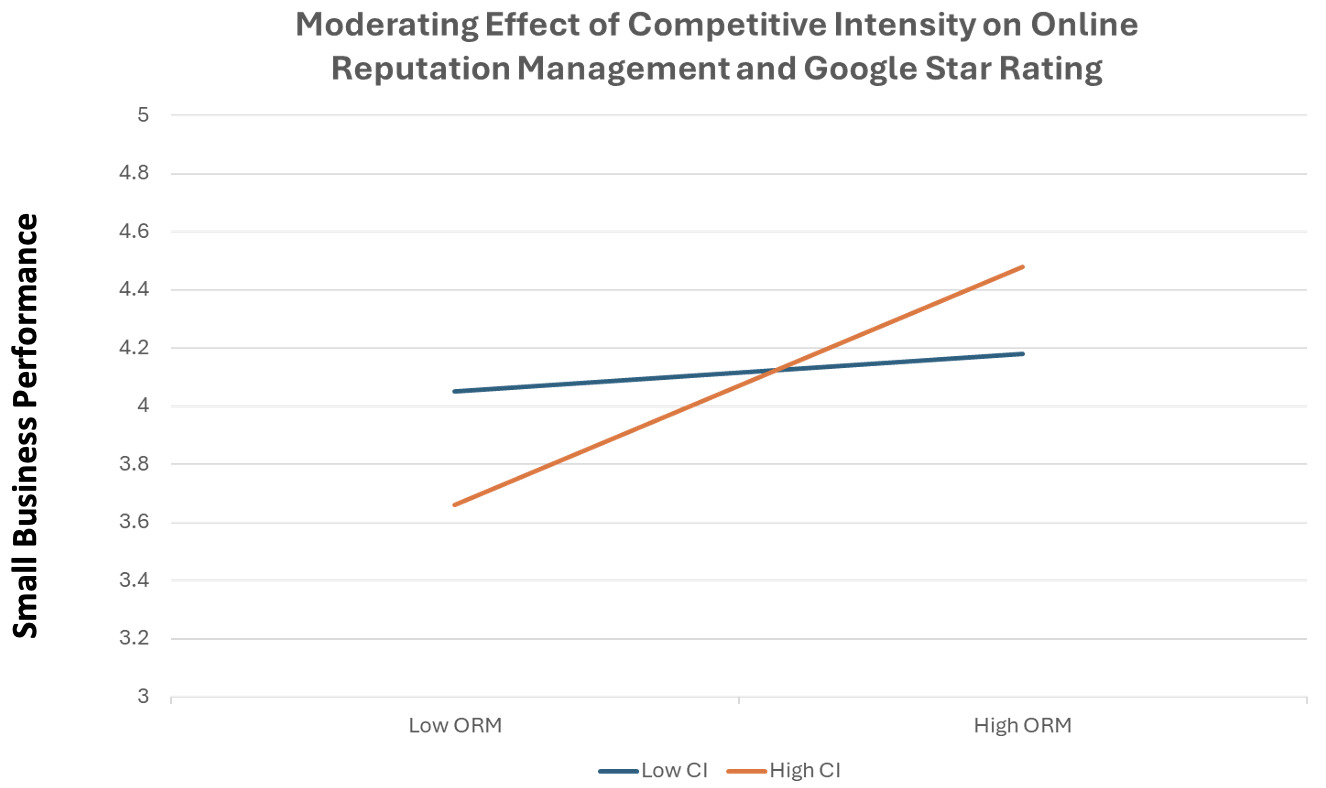
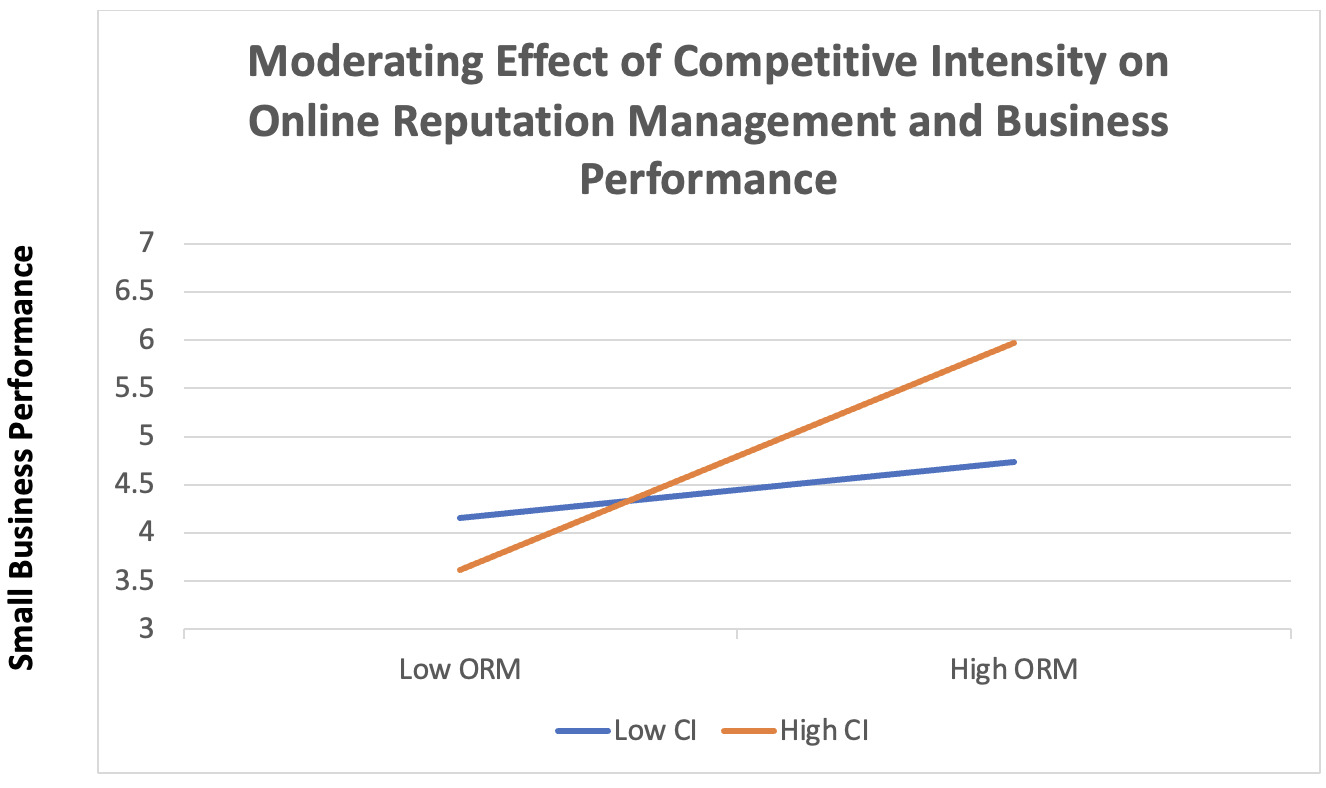
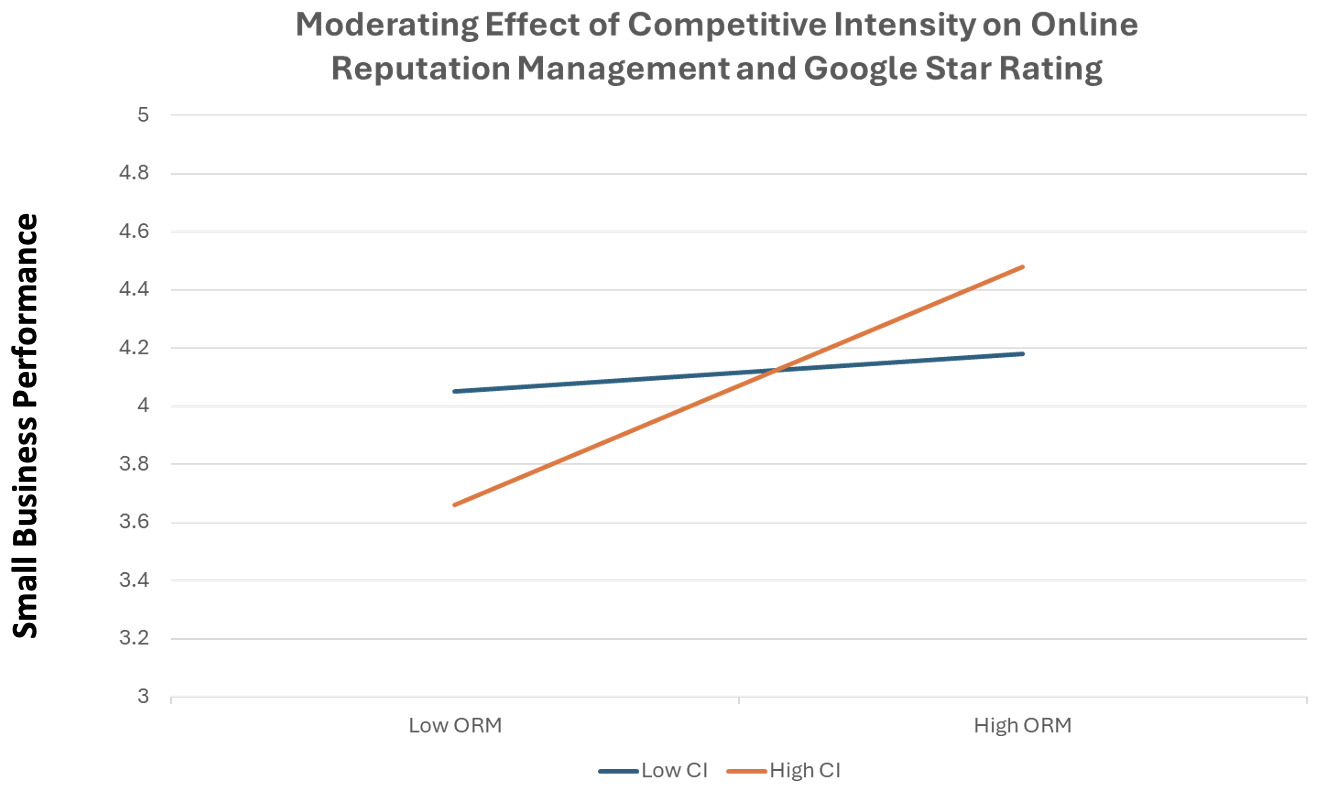
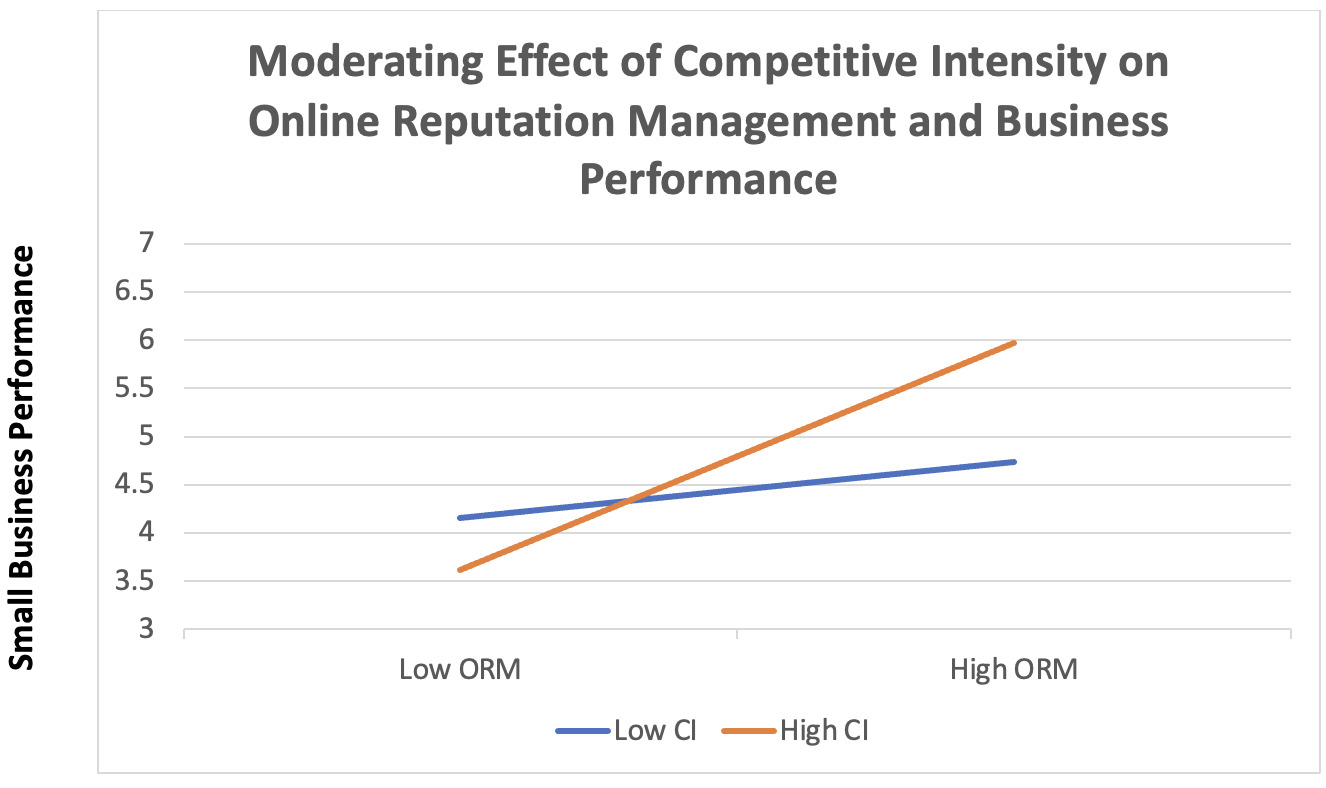
In the model, H1 hypothesized a positive relationship between customer orientation and online reputation management, and the results showed a path coefficient of (β = 0.14, p = 0.013) in support of H1. Additionally, Internet self-efficacy had a positive effect on online reputation management (β = 0.50, p < 0.001), validating H2. H3 hypothesized that online reputation management (ORM) has a positive effect on small business performance. The results support this hypothesis with a significant path coefficient (β = 0.53, p < 0.001). H4 posited a positive effect of ORM on Google Star ratings. The analysis revealed a significant positive relationship (β = 0.32, p < 0.001), supporting H4. To examine the contextual factors of the competitive environment, H5a evaluated the moderating effect of competitive intensity on the relationship between ORM and Google star rating. The results indicate that competitive intensity significantly moderates this relationship (β = 0.22, p < 0.001). Specifically, in more competitive markets, ORM practices lead to higher Google star ratings. Hypothesis H5b proposed that the interaction between competitive intensity and ORM would positively influence small business performance. The findings indicate that competitive intensity significantly moderates this relationship (β = 0.31, p < 0.001), supporting H5b. Finally, H6 proposes that Google Star ratings have a positive effect on small business performance. The results do not support our hypothesis, showing an insignificant effect (β = 0.01, p = 0.56). See Figures 2 and 3 for graphs of the moderating effects. The model offers a substantial explanation for the variance in the endogenous variables of ORM, Google Star ratings, and small business performance. Customer orientation and Internet self-efficacy explained 44% of the variance in online reputation management. Online reputation management explained 35% of the variance in small business performance and 9% of the variance in Google Star ratings. The results of the model are listed in Table 3.
Discussion
The objective of this study was to determine the performance outcomes of online reputation management by business owners. As consumers increasingly rely on online reviews to make purchase decisions (Peco-Torres et al., 2023), it is vital for business owners to understand how effective reputation management strategies can influence consumer perceptions, trust, and, ultimately, business performance. The findings of this study empirically validate the positive relationships among customer orientation, Internet self-efficacy, and ORM, thereby providing evidence that small businesses can leverage online reputation as a resource to achieve competitive advantage. Moreover, our findings align with Jorgensen et al. (2022), who reported that perceived usefulness of communication technologies—rather than mere usage—was positively associated with small business success. In the context of ORM, this highlights the importance of not merely adopting digital tools or review platforms, but of deliberately incorporating them into the business’s overall marketing and customer service strategies. This involves setting clear objectives for how these tools will be used, ensuring alignment with the business’s values, training staff to respond consistently and professionally to reviews, and actively monitoring and adapting engagement tactics to reinforce positive consumer perceptions and strengthen trust over time. The results also demonstrate the positive effects of ORM on Google Star ratings and business performance. This shows that ORM is not merely a nice-to-have tool for businesses, but also a strategic resource that can significantly influence key business outcomes, including performance and online reputation, as evidenced by Google star ratings. These insights contribute to a deeper understanding of how small businesses can navigate the challenges of competitive markets by strategically managing their online reputation.
Theoretical contribution
An extensive body of research has explored the impact of online reviews on consumer attitudes and behaviors such as consumer trust (M. Kim & Kim, 2020), satisfaction (Zhao et al., 2019), brand image (Chakraborty & Bhat, 2018), and purchase intentions (Zhu et al., 2020). Hence, most previous studies have examined online reviews from the consumers’ perspective. However, this study makes a theoretical contribution by shifting the focus to the business perspective, particularly that of small businesses, and examining how these businesses manage their online reputations as a strategic resource. By utilizing Resource-Advantage (RA) Theory as a theoretical framework, this research extends the role of online reputation management (ORM) as a critical resource for achieving competitive advantage by small businesses. Specifically, this study demonstrates that customer orientation and Internet self-efficacy are essential internal resources that small businesses can leverage to enhance their ORM practices, thereby influencing their Google Star ratings and overall business performance. Additionally, exploring competitive intensity as a moderating factor enriches our understanding of the contextual factors that influence the effectiveness of ORM strategies. We show that, in highly competitive market environments, the use of ORM becomes even more crucial for businesses, as its impact is amplified in such environments, making it an invaluable tool for achieving competitive differentiation.
Managerial Implications
This study offers several important insights for small business owners seeking to enhance their performance through online reputation management (ORM). In today’s digital age, ORM has become a critical aspect in maintaining and improving the competitive edge of small businesses in the marketplace. The findings of this study emphasize that ORM is not just a nice-to-have tool for monitoring reviews and interacting with customers, but also a strategic resource that can be actively managed to influence key business outcomes, such as customer trust, online reputation, and overall business performance.
One of the key takeaways for small business owners is the importance of fostering a strong customer orientation and improving Internet self-efficacy among management and staff. Customer orientation, putting the needs and satisfaction of the customer first, leads to more proactive ORM practices. Small business owners who prioritize customer feedback, actively encourage satisfied customers to leave reviews, and engage with online reviews (both positive and negative) can significantly improve their online presence and reputation (Kemp et al., 2020). This research highlights that Internet self-efficacy, or the ability to navigate and utilize online platforms effectively, is also a crucial skill for small business owners and employees. Businesses with strong Internet self-efficacy are better equipped to manage their online reputation through timely responses to reviews and effective use of ORM tools. ORM tools include various software such as review-management platforms (e.g., Birdeye, Podium), social listening and sentiment analysis software (e.g., Brandwatch, Sprout Social), and reputation monitoring services (e.g., Google Alerts, Yext).
To maximize the benefits of ORM, small business owners should engage actively on key platforms such as Google, Yelp, and Facebook and other relevant review platforms. Actively seeking reviews and engaging with customers on these platforms is essential for improving Google Star ratings, which, as this study shows, have a direct positive effect on small business performance. Specifically, given that Google is the most widely used review platform (Vaghasiya, 2024), small business owners should prioritize managing their reputation on Google because it has the largest impact on potential customers’ perceptions and trust. Responding to reviews promptly, addressing negative feedback, and thanking customers for positive reviews are simple, yet effective ORM practices that can greatly influence consumer decision-making.
Moreover, business owners should recognize that ORM is particularly important in highly competitive markets. This study indicates that ORM practices become even more valuable in environments with intense competition, as they allow businesses to differentiate themselves from competitors and gain a competitive edge. In such markets, maintaining a positive online reputation through active ORM can be a decisive factor in a business’s success.
Thus, small business owners should view ORM as an integral part of their strategic planning. By enhancing customer orientation, improving Internet self-efficacy, and actively engaging in review platforms, small businesses can leverage ORM to boost their online reputation, gain a competitive advantage, and improve overall business performance.
Limitations and Future Research
As with most research, this study has some limitations that should be acknowledged. First, the data used in this study were self-reported by small business owners, including their business performance and Google star ratings. Although self-reported data can provide valuable insights, they are inherently subjective and may not fully capture objective measures of performance. Future research should consider incorporating actual performance data, such as revenue or profitability, to provide a more comprehensive view of the effects of online reputation management (ORM) on business success. Additionally, to reduce potential self-report bias, future research could record each business’s name and location during the survey and efficiently retrieve objective Google star ratings directly from the business’s profile on Google.
Second, this study did not account for the specific types of ORM practices or software tools employed by small businesses. Given the wide array of ORM tools available, from manual monitoring of reviews to more sophisticated reputation management platforms, future research could delve deeper into the specific practices or software that contribute most effectively to positive business outcomes. Understanding the nuances of different ORM strategies can provide more actionable insights for small business owners.
Third, the data collected in this study were cross-sectional in nature. Although this approach provides a snapshot of the relationship between ORM and small business performance, it limits our ability to assess the long-term effects of ORM practices. Future research should adopt a longitudinal approach by tracking the same businesses over an extended period to better understand how consistent ORM efforts influence business performance and online reputation over time.
Finally, while it was hypothesized that Google Star ratings would positively impact small business performance, this study found no significant relationship between these two variables. This unexpected finding suggests that there may be mediating variables affecting how Google Star ratings influence business outcomes. Future research could explore potential mediators, such as customer trust, brand loyalty, or brand image, to uncover the chain of effects that link Google star ratings to small business performance.