Procurement is a core supply chain operation in Small and Medium Enterprises (SME), yet many struggle with inefficiencies that larger corporations mitigate through scale and technology. In this study, SMEs are defined as independently owned firms characterized by limited employee size, financial resources, and managerial slack relative to large corporations, and which typically operate without dedicated procurement analytics, compliance, or AI governance functions (Reynolds et al., 2020; World Bank Group, 2025). According to the statistics compiled by Skynova (2023), 49% of SME owners cite procurement and supply chain management as major operational challenges. The recent growth of generative artificial intelligence (AI) technology presents unprecedented opportunities to level the playing field, but adoption remains low. Only 21% of SMEs have implemented any form of AI or plan to use AI in the next two years (Shay et al., 2025).
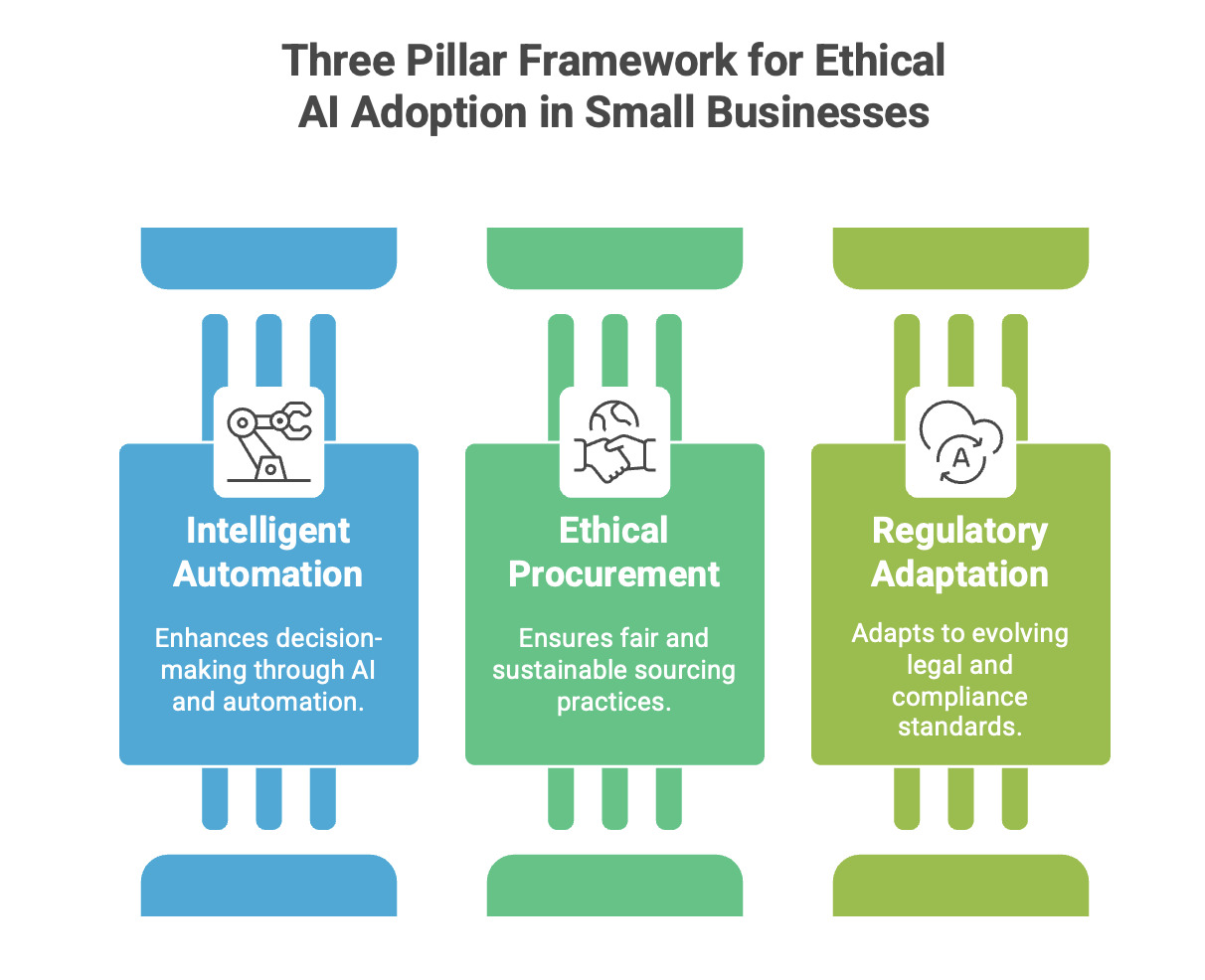
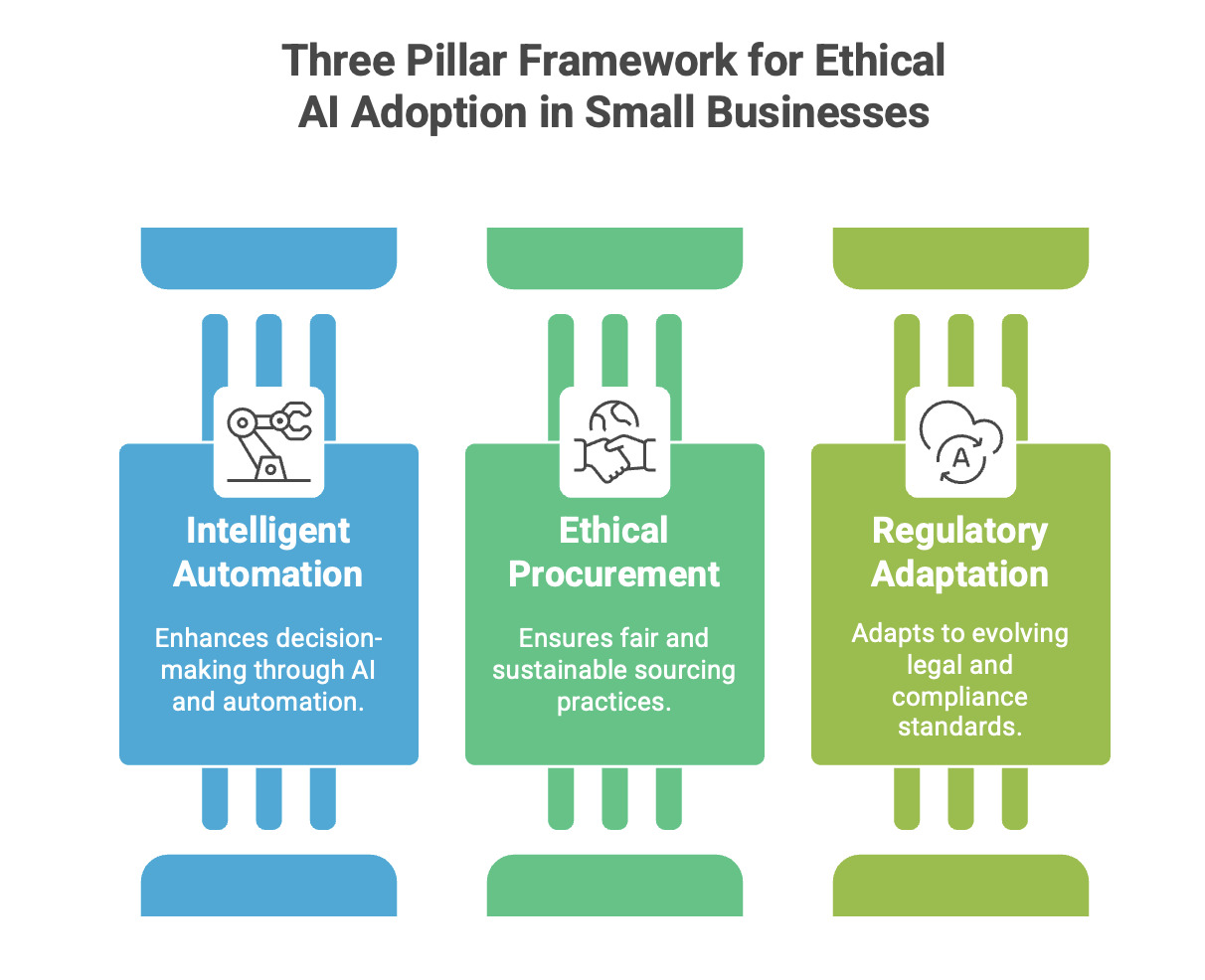
Using AI in procurement is not about replacing humans; rather, it’s about augmenting their capabilities to make smarter, faster decisions. As Dr. Karim Lakhani, Harvard Business School professor, notes, use of AI will not replace humans, but humans who use AI will replace the other humans who do not utilize AI (Ignatius, 2023). Our paper builds on that premise by introducing a framework that can help SMEs harness AI’s potential while navigating its complexities. Drawing insights from the risk-focused Entrepreneurial Innovation Responsibility (EIR) model (Goldsby et al., 2024), our approach emphasizes strategic empowerment through three interconnected pillars: (1) the Intelligent Automation & Decision Augmentation pillar, which addresses how AI can be used to enhance, rather than replace human decision-making in SMEs; (2) the Ethical Procurement Ecosystems pillar, which ensures fairness, transparency, and sustainability in AI-driven supplier networks in SME management; and (3) the Dynamic Regulatory Adaptation pillar, which aligns the use of AI with the current legal and industry standards applicable to SMEs.
Drawing on the Entrepreneurial Innovation Responsibility (EIR) framework (Goldsby et al., 2024), this study conceptualizes ethical AI adoption not as a constraint on innovation, but as a strategic design problem in which risk mitigation, responsibility, and value creation must be jointly addressed. EIR emphasizes that responsible innovation requires anticipatory governance, human accountability, and institutional alignment in contexts characterized by uncertainty and disruption. These principles directly inform the structure of the proposed Three-Pillar Framework. Specifically, Intelligent Automation & Decision Augmentation operationalizes EIR’s emphasis on preserving human agency and accountability in innovation; Ethical Procurement Ecosystems translate EIR’s call for fairness, transparency, and stakeholder responsibility into procurement practice; and Dynamic Regulatory Adaptation reflects EIR’s focus on proactive engagement with evolving institutional and political risk. In this way, the framework extends EIR from an entrepreneurial innovation context to the domain of SME procurement, offering a theoretically grounded approach to responsible AI adoption. Accordingly, the framework’s theoretical contribution is to translate EIR’s responsibility logic into actionable governance design choices specific to procurement decision-making in resource-constrained SMEs.
Literature Review
The State of Procurement in SME Management
SME procurement is fundamentally different from corporate procurement in several key aspects, including limited bargaining power, manual processes, and supplier fragmentation. Small and medium-sized enterprises (SMEs) often face structural disadvantages in procurement negotiations due to their relatively small order volumes, which limit their bargaining power compared to large corporations. This disparity often results in SMEs paying more for identical goods and/or services than their larger counterparts (Nelson, 2018). Research has shown that limited purchasing leverage not only increases costs but can also constrain access to preferred suppliers, potentially reducing quality and delivery reliability (Reynolds et al., 2020). Additionally, Sudirman et al. (2025) note, SMEs’ inability to aggregate demand at scale limits their ability to negotiate favorable contract terms, highlighting the need for collaborative procurement networks or technology-enabled group purchasing arrangements to close the cost gap.
The reliance on manual processes is another key factor that sets SME procurement apart from corporate procurement. A significant proportion of SMEs, approximately 84%, continue to rely on manual, spreadsheet-based, or even paper-based systems to manage procurement activities (Sophy, 2017). These labor-intensive processes are prone to human error, delays, and inefficiencies, and may prevent timely decision-making in dynamic market environments. According to Reynolds et al. (2020), the lack of digital integration in procurement workflows restricts real-time data access, which in turn impedes strategic decision-making. Sudirman et al. (2025) reinforce that SMEs that fail to adopt digital tools risk falling behind in responsiveness, accuracy, and transparency, and these capabilities are increasingly essential in modern supply chains. Transitioning to AI-assisted or automated procurement platforms can enhance operational efficiency, reduce transaction errors, and provide actionable insights for better inventory and supplier management.
Supplier fragmentation is another critical aspect that makes SME procurement different from corporate procurement. Compared to large firms, SMEs typically work with a more fragmented supplier base. While this diversification may offer flexibility and redundancy, it can also complicate relationship management, increase administrative burden, and dilute purchasing power. The extant literature on SME management emphasizes that managing a wide array of suppliers without integrated systems can overwhelm SMEs’ limited managerial capacity, reducing overall procurement effectiveness (Reynolds et al., 2020). Deeper issues like inconsistent quality, variable delivery performance, and difficulty in monitoring compliance with sustainability or ethical sourcing standards may arise. Leveraging AI-enabled supplier management tools can streamline communications, consolidate procurement activities, and enable more strategic supplier segmentation, helping SMEs balance flexibility with efficiency.
AI’s Transformative Potential
Recent advancements have made AI tools more accessible to SMEs with several implications for procurement. Firstly, predictive analytics powered by machine learning has emerged as a transformative capability in SME procurement, offering an increase in accuracy rates by 30% in demand forecasting compared to traditional statistical methods (Boston Institute of Analytics, 2024). By analyzing historical sales data, market trends, and even external variables like weather patterns or macroeconomic indicators, predictive models enable SMEs to optimize inventory levels, reduce stockouts, and minimize overstock-related waste. Sudirman et al. (2025) note that firms adopting digital intelligence frameworks demonstrate greater operational resilience and responsiveness. In procurement contexts, accurate demand forecasting not only cuts costs but also improves supplier relationships by enabling more consistent ordering schedules and negotiated terms based on reliable projections.
Secondly, AI has the potential to transform the supplier screening processes in SMEs. Automated Supplier Screening, where AI can significantly streamline the supplier vetting process, can reduce what previously took weeks of manual review to mere hours (SME News, 2024). AI-powered tools can quickly cross-reference supplier profiles against compliance databases, quality certifications, and historical performance records, freeing up procurement specialists to focus on strategic decision-making instead of getting bogged down by gathering administrative data. Research from Reynolds et al. (2020) highlights that leadership support for such digital adoption directly correlates with procurement efficiency gains. For SMEs, where resources and personnel are limited, automated supplier screening ensures a more consistent application of evaluation criteria, reduces human bias, and enhances the overall transparency of the supplier selection process.
Thirdly, dynamic pricing backed by AI can utilize algorithms to leverage real-time market data to adjust procurement strategies in response to fluctuations in demand, supply, and competitive activity (Sahota, 2024). For SMEs, this capability can level the playing field, enabling them to respond swiftly to price volatility, secure better deals when market conditions are favorable, and avoid excessive costs during peak demand periods. Sudirman et al. (2025) argue that embedding such adaptive mechanisms into procurement strategy strengthens SMEs’ sustainable resilience strategies by reducing cost variability and improving margin stability. In practice, dynamic pricing tools can integrate with predictive analytics and supplier databases to create a fully responsive procurement system, transforming what has historically been a reactive process into a proactive, data-driven competitive advantage.
However, without proper safeguards, automated decision making backed by AI can amplify existing biases in procurement, disadvantaging minority-owned suppliers (Duja Consulting, 2025). Beyond these ethical concerns, SMEs must also monitor evolving regulations around privacy and compliance, especially regarding AI use. These challenges underscore the need for an ethical framework that allows SMEs to safely navigate the use of AI to improve the efficiency of their procurement practices, while avoiding the ‘pitfalls’ that irresponsible use of AI can bring.
AI Capability and Responsible AI as Organizational Foundations
AI adoption in SMEs is increasingly understood as a capability-building process in which performance effects depend on complementary human and organizational resources. AI capability research conceptualizes value realization as the integration of tangible data/technology resources, human technical and managerial skills, and intangible organizational conditions such as inter-departmental coordination and change capacity, capabilities that are especially consequential for SMEs given resource constraints and limited specialized talent (Mikalef & Gupta, 2021). This perspective also clarifies why responsible AI cannot be reduced to “ethics statements.” When data are biased or poorly governed, AI outputs can systematically reproduce inequities and degrade decision quality, making governance and oversight integral to capability development rather than external constraints.
Human-AI Collaboration and the Role of Responsible AI
Human-AI collaboration is best conceptualized as a socio-technical arrangement in which humans and AI coordinate in a mutually beneficial manner through goal alignment, task boundary design, and the integration of human judgment with computational inference (Vann Yaroson et al., 2025). However, this collaboration creates ethical, interpretability, and accountability frictions that can impede outcomes unless responsible AI is embedded. Responsible AI is defined as ensuring AI tools operate ethically, fairly, and accountably; it functions as the governance layer that delivers transparency and accountability, enabling users to understand and trust AI-supported decisions (Vann Yaroson et al., 2025). This socio-technical framing supports the manuscript’s Pillar 1 emphasis that procurement AI should augment, not replace, human decision-making and reinforces why fairness and transparency must be designed into supplier-facing applications.
In synthesis, prior research establishes that AI can improve supply chain decision quality and responsiveness, yet it also shows that organizational and human-technology interface mechanisms determine whether AI becomes a value-creating capability rather than a fragile technical add-on. Empirical evidence from SMEs indicates that leadership-driven skill development, supportive digital culture, and change capacity (Mikalef & Gupta, 2021) are central antecedents of AI adoption and downstream resilience outcomes, underscoring that adoption barriers are not reducible to cost or IT access alone (Dey et al., 2024). At the same time, the supply chain literature emphasizes that human-AI collaboration introduces ethical, interpretability, and accountability frictions that can undermine trust and performance unless responsible AI practices are embedded as a socio-technical governance layer (Vann Yaroson et al., 2025). Finally, evidence on generative AI diffusion highlights that data quality, bias, privacy/security, legacy systems, and legal implications are dominant implementation constraints, requiring regulatory and compliance readiness as a design feature rather than an afterthought (Wamba et al., 2024). These gaps motivate a structured approach in which (i) decision augmentation safeguards human agency, (ii) ethical procurement ecosystems institutionalize fairness and transparency in supplier-facing applications, and (iii) dynamic regulatory adaptation builds compliance agility into procurement workflows.
The Three-Pillar Framework for Responsible Utilization of AI in SME Procurement
We propose a three-pillar framework for AI-driven procurement in SMEs, designed to address both operational inefficiencies and ethical concerns. The framework (see Figure 1) consists of (1) Intelligent Automation & Decision Augmentation, (2) Ethical Procurement Ecosystems, and (3) Dynamic Regulatory Adaptation. Each pillar contains key components and an implementation roadmap to guide SMEs in adopting AI responsibly while improving procurement efficiency and resilience. While this framework is designed to be broadly applicable to small business procurement contexts, its implementation and outcomes are likely to be shaped by contextual and organizational conditions, which we discuss in the future research section.
Pillar 1: Intelligent Automation & Decision Augmentation
Key Components of Pillar 1
Cognitive Procurement Assistants. Cognitive procurement assistants, such as AI-powered chatbots and virtual agents, are transforming how SMEs manage routine procurement communications. These tools can handle common inquiries, such as order status, delivery timelines, and payment confirmations, freeing procurement staff to focus on higher-value strategic activities. When integrated with natural language processing (NLP), they can also assist with contract review by identifying key clauses, detecting inconsistencies, and flagging compliance risks. As Reynolds et al. (2020) note, leadership endorsement of these tools is critical, as executive support accelerates adoption and ensures that AI systems are aligned with organizational goals. For SMEs with limited human resources, cognitive assistants offer a cost-effective way to enhance operational efficiency while maintaining a human-centric decision-making process.
Predictive Inventory Management. Predictive inventory management systems employ machine learning algorithms to forecast stock requirements with high precision, thereby reducing waste, minimizing stockouts, and improving cash flow management. For example, the restaurant industry is using AI-driven demand forecasting to have a better view of potential sales, resulting in lower food waste (Kelso, 2022). Budler and Božič (2024) emphasize that embedding predictive analytics into daily operations not only improves efficiency but also strengthens SMEs’ resilience against supply chain disruptions. By integrating these models with point-of-sale data, seasonality trends, and external market signals, SMEs can anticipate fluctuations and adjust procurement schedules proactively, turning inventory management into a strategic advantage rather than a reactive necessity.
Automated Supplier Performance Tracking. Real-time supplier performance tracking enables SMEs to systematically monitor key metrics such as delivery punctuality, product quality, and contract compliance. AI platforms can aggregate performance data from multiple sources, providing a comprehensive overview of supplier reliability and risk exposure. Such tools can highlight patterns that may go unnoticed in manual reviews, allowing SMEs to make data-informed supplier selections and renegotiations. In the context of SME strategy, Silva et al. (2023) observe that transparency in supplier performance fosters stronger, trust-based partnerships while reducing operational risk. By automating this process, SMEs can maintain consistent quality standards without overburdening procurement staff, ensuring that supplier relationships are both efficient and strategically beneficial.
Implementation Roadmap for Pillar 1
-
Start with low-risk automation (e.g., invoice processing). For SMEs beginning their AI procurement journey, it is wise to begin with low-risk, high-reward applications such as invoice processing and routine data entry. These tasks typically involve structured, repetitive workflows with minimal strategic complexity, making them ideal candidates for early automation trials. According to a blog post by U.S. Small Business Administration (SBA, 2025), starting with non-critical functions allows SMEs to build internal familiarity with AI tools, establish trust among employees, and minimize resistance to change. By demonstrating tangible efficiency gains in a short time frame, early-stage automation projects can serve as proof-of-concept initiatives that justify further investment in advanced AI applications.
-
Gradually introduce predictive analytics. Once initial automation processes are successfully integrated, SMEs can expand their AI usage to include predictive analytics. This phase involves using historical procurement, inventory, and sales data to forecast demand patterns, optimize stock levels, and anticipate supplier performance variations. Incremental adoption, layering predictive capabilities onto an already-automated data environment, can reduce implementation risks while maximizing the accuracy of forecasts. In their study, Bouncken and Schmitt (2022) mention that incremental digital transformation is the better pragmatic approach for SME family firms. Gradual integration ensures that decision-makers have the time and resources to interpret analytic outputs, adjust procurement strategies accordingly, and fine-tune AI models to align with business-specific needs.
-
Maintain human oversight for strategic decisions. While automation and predictive tools can significantly enhance procurement efficiency, final authority for high-impact strategic decisions should remain with experienced human managers. This is particularly important in areas requiring nuanced judgment, ethical considerations, or stakeholder negotiations. As the current literature stresses, technology adoption in SMEs is most successful when it is positioned as augmenting rather than replacing human expertise, since the best automation can rarely outperform the best human (Goldsby et al., 2024). By retaining human oversight, SMEs can balance data-driven insights with contextual knowledge and avoid mistakes caused by algorithmic bias, over-reliance on machine outputs, and potential reputational harm.
Pillar 2: Ethical Procurement Ecosystems
Key Components of Pillar 2
Bias Mitigation. Bias mitigation is essential to ensuring that AI-supported procurement systems do not inadvertently perpetuate or amplify existing inequities in supplier selection. Regular algorithm audits are critical for assessing fairness and identifying any systematic discrimination against certain supplier categories, such as minority-owned or small-scale vendors. These audits should be validated using diverse and representative training datasets that capture the full spectrum of supplier profiles relevant to the SME’s market. Integrity of AI-driven decision-making hinges on the quality and inclusiveness of its underlying data (Moody’s Analytics, 2025). In practice, SMEs can implement third-party bias assessment tools and collaborate with technology vendors committed to transparent auditing practices, thereby reducing reputational risks and fostering equitable market participation.
Supplier Diversity. Promoting supplier diversity goes beyond compliance as it is a strategic lever for innovation, community engagement, and brand differentiation. AI-enabled supplier discovery tools can identify and match SMEs with underrepresented suppliers, such as minority women or veteran-owned businesses, at a scale and speed not possible through manual processes. A case in point is Fiat Chrysler Automobiles that increased contracts with Black-owned suppliers through AI-powered supplier matching (V2Soft Inc., 2020). SMEs that integrate supplier diversity into their procurement strategy not only contribute to broader socioeconomic development but also benefit from greater supply chain resilience through expanded vendor networks (Sharma & Rai, 2023).
Transparency. Transparency in AI-driven procurement decisions is paramount for building trust among stakeholders, including suppliers, customers, and regulatory bodies. Explainable AI (XAI) tools allow procurement teams to interpret and communicate the rationale behind supplier selection decisions, ensuring that these choices can withstand external scrutiny. Public-facing dashboards displaying supplier selection criteria and performance metrics can further enhance accountability and signal the SME’s commitment to ethical practices. Such transparency not only strengthens relationships with suppliers but also positions SMEs as leaders in responsible AI adoption, thereby improving their market reputation and stakeholder confidence (Sharma & Rai, 2023).
Implementation Roadmap for Pillar 2
-
Adopt the guidelines for responsible AI adoption (World Economic Forum, 2023). A foundational step for SMEs seeking to embed ethics in AI-enabled procurement is to adopt established guidelines for responsible AI procurement (World Economic Forum, 2023). These guidelines provide a structured framework for evaluating AI tools based on fairness, transparency, and accountability criteria, ensuring that suppliers are selected using equitable and unbiased processes. Formalizing evaluation criteria mitigates risks associated with ad hoc or opaque decision-making, particularly in environments where resource constraints may otherwise lead to shortcuts in due diligence. Using such standardized assessment tools not only enhances supplier diversity but also strengthens the SME’s reputation as an ethical market participant.
-
Partner with organizations like the Small Business Majority. Collaboration with organizations such as the Small Business Majority, minority business councils, or local chambers of commerce can provide SMEs with both guidance and access to vetted supplier networks. These partnerships can help identify minority-owned, women-owned, and environmentally sustainable suppliers, aligning procurement with broader corporate social responsibility objectives. Research by Sudirman et al. (2025) shows that such alliances can also act as catalysts for technology adoption, offering SMEs resources, training, and benchmarking tools they might otherwise lack. Through ongoing engagement with advocacy groups, SMEs can stay informed on emerging ethical standards and best practices, reinforcing their long-term commitment to fairness and transparency.
-
Integrate tools like XAI for transparency to maintain stakeholder trust among suppliers. By integrating XAI dashboards or audit features, SMEs can provide clear documentation of procurement decisions, making it easier to identify and correct biases, ensure compliance with regulatory standards, and uphold ethical commitments.
Pillar 3: Dynamic Regulatory Adaptation
Key Components of Pillar 3
Data Privacy Regulations. Compliance with data privacy regulations is an increasingly critical consideration for SMEs integrating AI into procurement systems. Legislation such as the California Consumer Privacy Act (CCPA) in the United States and the General Data Protection Regulation (GDPR) in the European Union impose strict requirements on the collection, storage, and processing of personal and transactional data. Failure to adhere to these standards can result in significant legal and financial penalties, as well as reputational damage. SMEs can face unique challenges in compliance due to limited legal expertise and constrained resources. However, embedding privacy-by-design principles into AI procurement tools, such as anonymization, data minimization, and secure encryption, can help ensure ongoing compliance while preserving customer and supplier trust.
AI-Specific Legislation. The regulatory environment for AI is evolving rapidly, with frameworks such as the European Union’s Artificial Intelligence Act introducing specific requirements for transparency, risk management, and human oversight in AI applications. SMEs employing AI-based supplier evaluation systems must assess whether their tools fall under “high-risk” classifications and adjust implementation strategies accordingly. Proactive engagement with emerging AI regulations can position SMEs as early adopters of best practices, giving them a competitive advantage in markets where ethical compliance is valued (OECD.AI, 2025). This requires SMEs to establish continuous monitoring mechanisms to track changes in relevant legislation and adapt procurement processes in real time.
Sustainability Mandates. Sustainability has moved from a voluntary initiative to a regulatory requirement in many jurisdictions, with mandates requiring businesses to track and report on environmental impacts, including carbon emissions across supply chains. AI-enabled procurement platforms can support SMEs in meeting these obligations by automating carbon footprint tracking, analyzing supplier sustainability performance, and integrating environmental metrics into supplier selection criteria (Kannan & Gambetta, 2025). As the extant literature on SME management underscores, aligning procurement decisions with sustainability goals not only enhances compliance but also strengthens brand positioning and stakeholder relations (Kannan & Gambetta, 2025). By integrating sustainability mandates into their AI procurement frameworks, SMEs can ensure that compliance efforts also drive strategic value creation.
Implementation Roadmap for Pillar 3
-
Leverage regulatory technology (RegTech) solutions. SMEs can reduce the complexity and cost of compliance by adopting Regulatory Technology (RegTech) tools designed to monitor, interpret, and implement relevant legislative requirements in real time. RegTech platforms can automate the scanning of government databases, industry bulletins, and legal updates, flagging any changes that might impact procurement operations. According to OECD guidelines, early detection of regulatory changes allows businesses to adjust processes proactively, reducing the risk of non-compliance penalties. This approach is especially valuable for SMEs with limited legal staff, enabling them to maintain compliance without excessive administrative overhead.
-
Join industry consortia for early regulatory insights. Membership in industry consortia, trade associations, or cross-sector working groups gives SMEs early access to information about pending legislation and regulatory trends. Such networks can not only facilitate knowledge-sharing but can also provide SMEs with opportunities to contribute to policy consultations, ensuring that SME perspectives are considered in new regulations. Participation in these forums allows SMEs to benchmark their compliance practices against industry standards, gain access to shared compliance tools, and develop collective responses to regulatory shifts.
-
Integrate future-proofing into AI procurement systems. AI procurement systems should be designed with adaptability in mind, ensuring they can be updated quickly as legal frameworks evolve. This includes building modular systems where compliance rules and data governance protocols can be revised without overhauling the entire platform. Future-proofing strategies may involve using explainable AI models that can be easily audited, adopting data formats that meet global interoperability standards, and implementing automated compliance checks before contract execution. SMEs that embed adaptability into their systems can be better positioned to maintain operational continuity in volatile regulatory environments, reducing both legal and operational risks.
Implementation Challenges & Solutions
Implementation barriers in SME procurement should be interpreted as capability gaps rather than isolated obstacles. AI capability research shows that successful deployment depends on the alignment of data/technology foundations with human skills and intangible organizational conditions such as coordination and change capacity; absent these complements, AI initiatives struggle to scale even when tools are available (Mikalef & Gupta, 2021). Consistent with this view, evidence from generative AI use in operations and supply chains indicates that the dominant constraints are data quality, privacy/security, staff resistance and training, legacy systems, and legal implications, highlighting that organizational and governance readiness are decisive (Wamba et al., 2024).
High Implementation Cost
One of the most frequently cited barriers to AI adoption in SME procurement is the high cost of implementation, including software licensing, customization, integration, and training expenses. These costs can be prohibitive for smaller firms operating on tight budgets. Cloud-based AI solutions with pay-per-use pricing models offer a viable alternative, allowing SMEs to access sophisticated procurement technologies without large upfront capital investments. This approach not only reduces financial risk but also enables scalability, as firms can increase usage in line with growth or demand fluctuations.
Beyond pay-per-use cloud solutions, SMEs can further mitigate cost barriers by adopting phased pilot implementations that target discrete procurement activities before scaling across functions, thereby reducing financial exposure while generating early learning benefits. Additional cost relief can be achieved through vendor consortium pricing arrangements or participation in shared procurement technology platforms, which allow SMEs to access AI capabilities at lower per-firm cost by pooling demand and infrastructure.
Employee Resistance
Employee resistance in SMEs is typically dual-sourced: (1) capability-based reluctance driven by unfamiliarity and low perceived control over AI tools, and (2) identity- and security-based fear associated with job displacement or devaluation of experiential judgment. Evidence from SME AI-adoption research shows that resistance declines when leaders actively build employee skills and competencies, communicate the rationale for change, and create mechanisms for knowledge access and sharing; conditions that increase perceived information and control at the human-technology interface (Dey et al., 2024). Accordingly, gamified training should be positioned as only an entry-point for familiarity; it must be complemented by leadership reassurance, role redesign that clarifies where human judgment remains authoritative, and participatory implementation practices that allow procurement staff to calibrate AI outputs against contextual knowledge. These actions operationalize decision augmentation as a socio-technical arrangement rather than a narrow training intervention.
Complementing training and leadership reassurance, SMEs can reduce resistance by explicitly redesigning procurement roles to emphasize human judgment, exception handling, and relationship management, thereby signaling that AI reallocates work rather than eliminates positions. Involving procurement employees in tool selection, pilot testing, and performance evaluation further strengthens psychological ownership and accelerates acceptance of AI-enabled workflows.
Data Security Concerns
Concerns about data breaches, cyberattacks, and misuse of sensitive supplier or procurement information are significant obstacles to AI adoption. SMEs often lack dedicated IT security teams, making them more vulnerable to such risks. Blockchain-secured procurement platforms can address these challenges by providing immutable transaction records, decentralized verification, and enhanced transparency (World Economic Forum, 2024). Integrating robust security protocols into technology adoption is not only a compliance measure, but it can also become a competitive differentiator in trust-sensitive markets.
In addition to technical safeguards, SMEs can adopt a minimum-viable security controls approach, prioritizing data access controls, encryption, and audit logging aligned with regulatory requirements rather than pursuing comprehensive cybersecurity architectures prematurely. Complementary measures such as vendor due diligence protocols for AI providers and targeted cyber-insurance coverage can further reduce exposure to financial and reputational risk without overwhelming internal capabilities.
Complexity in Integration
Integrating AI procurement solutions with existing enterprise resource planning (ERP) systems, accounting software, and supplier databases can be complex, especially for SMEs using outdated or incompatible technologies. API-first procurement ecosystems, which prioritize interoperability and modularity, can significantly reduce integration time and cost. Ensuring seamless integration is vital for maximizing the efficiency and data utility of AI tools, enabling SMEs to achieve real-time visibility across procurement functions.
Integration challenges can also be mitigated through the use of middleware solutions that act as translation layers between legacy systems and AI procurement tools, reducing the need for extensive system overhauls. Over time, SMEs can transition toward a modular procurement technology stack supported by standardized data schemas, enabling incremental replacement of components while preserving interoperability and future scalability.
Across these challenges, the common failure mode is treating AI as a standalone tool rather than an organizational capability requiring data governance, accountability, and change readiness. AI capability research conceptualizes value realization as the orchestration of tangible infrastructure, human skills, and intangible organizational resources such as coordination and change capacity; without these complements, AI investments routinely stall at adoption or fail to scale (Mikalef & Gupta, 2021). In generative AI deployments, managers consistently rank data quality, privacy/security, staff resistance/training, and legal implications as the most salient constraints, indicating that responsible AI guardrails and regulatory responsiveness must be embedded into procurement system design, not layered on post hoc.
Policy Recommendations
Government Support
Beyond generic incentives, public policy can accelerate responsible AI adoption by using the SBA’s existing delivery channels, especially Small Business Development Centers (SBDCs), as implementation intermediaries. SBDCs can provide (i) subsidized diagnostic assessments of procurement-AI readiness (data quality, process maturity, and compliance exposure), (ii) vendor-neutral procurement toolkits and model clauses for AI-enabled contracting, and (iii) hands-on technical assistance for workflow redesign and employee upskilling. This approach aligns with evidence that SME adoption depends on leadership-enabled skills development and change capacity, not merely technology access (Dey et al., 2024). It also directly targets the most frequently observed barriers in AI deployment, data quality, staff training, and legal implications, through structured guidance rather than one-off workshops (Wamba et al., 2024).
Industry Collaboration
Developing standardized AI procurement frameworks and establishing shared supplier risk databases can promote efficiency and trust across the SME sector. Such collaboration enables small firms to access collective intelligence, align with best practices, and benefit from economies of scale in supplier due diligence.
Education Initiatives
Capacity building is essential for sustainable AI adoption. Programs such as SBA sponsored workshops and community college certifications can equip SME owners and procurement staff with the technical knowledge and managerial skills needed to integrate AI effectively while safeguarding ethical and compliance standards.
As noted by the SBA, AI can help SMEs to do more with less (SBA, 2025). The successful implementation of these policy recommendations has the potential to extend benefits far beyond individual SMEs, fostering more transparent, efficient, and resilient supply chain networks. By enabling SMEs to adopt AI ethically and strategically, the broader supply chain can realize improved coordination, reduced transaction costs, and enhanced supplier diversity, ultimately strengthening competitiveness and adaptability across the entire market ecosystem.
Assessing the Practicality of the Proposed Framework Using AI
To further demonstrate the ethical and transparent integration of Artificial Intelligence within the research process itself, this paper utilized ChatGPT as a reflective analytical assistant to examine the practical robustness of the proposed Three-Pillar Framework for Ethical AI Adoption in SME Procurement. While the conceptualization, theoretical underpinning, fact- finding, and interpretive reasoning originated entirely from the authors, the use of AI was deliberately incorporated as a methodological illustration of responsible AI collaboration, mirroring the ethical practices the framework advocates for.
To test the coherence and adaptability of the model, the following prompt was given to ChatGPT (GPT-5 version, August 2025 build): “Please attempt to apply the proposed Three-Pillar Framework for Ethical AI Adoption in SME Procurement, comprising Intelligent Automation & Decision Augmentation, Ethical Procurement Ecosystems, and Dynamic Regulatory Adaptation to the context of SME procurement operations. Discuss how each pillar could be implemented ethically, ensuring human decision-making remains central and that it is not replaced but augmented, procurement practices remain fair, sustainable and transparent, and compliance remains responsive to evolving regulations.”
The purpose of this exercise was to observe how an advanced language model interprets ethical principles in procurement practice and whether it can operationalize them within a real-world framework. The outputs were carefully reviewed and used as reflective data to assess conceptual clarity and alignment, not as research evidence.
As anticipated, ChatGPT generated structured responses consistent with the framework’s intent. It identified automation opportunities that preserved human oversight, emphasized the importance of fairness in supplier selection, and acknowledged regulatory dynamism as a key ethical consideration. However, as observed in the EIR model testing by Goldsby et al. (2024), ChatGPT’s analysis, while coherent, was inherently limited by its lack of access to real stakeholder contexts and empirical data. It could simulate ethical reasoning but not validate it through actual decision environments or organizational realities, which emphasizes the human oversight and fact finding in the use of AI, just as this study highlights.
This controlled use of AI serves a dual purpose. Methodologically, it demonstrates the replicability and transparency of this research process and the framework; conceptually, it reinforces the paper’s ethical stance that AI should be a partner in cognition, not a substitute for human originality. The author’s use of AI followed the same ethical guardrails proposed in the framework itself: explicit disclosure, contextual validation, and human accountability. By modeling the responsible use of AI within the creation of the research itself, this paper not only advocates but exemplifies ethical AI integration in scholarly and practical domains.
Conclusion
This paper presents a novel framework that moves beyond risk-averse AI adoption to strategic empowerment in SMEs, specifically in the context of procurement. By implementing the proposed three pillars, intelligent automation, ethical ecosystems, and regulatory agility, SMEs can transform procurement from a cost center to a competitive advantage. Our paper provides the actionable roadmap for the adoption of the three-pillar framework, which will serve as the blueprint for ensuring that AI is leveraged in an ethical, responsible manner in the context of procurement practices of SMEs.
Boundary Conditions and Future Research
The proposed three-pillar framework is intended for SMEs facing procurement complexity but limited specialized analytics capacity; accordingly, its effects should vary by industry digitization, supplier base complexity, and managerial digital literacy. Evidence from SME AI-adoption research suggests that leadership-driven skills and change capacity shape whether AI becomes a resilience-enhancing capability, implying that resource constraints and cultural readiness are likely moderators of implementation success (Dey et al., 2024). Hence future research can empirically test (i) which SME types benefit most/least (e.g., service vs manufacturing; stable vs volatile demand), (ii) how responsible AI practices impact the link between human-AI collaboration and procurement outcomes, and (iii) how data quality and regulatory exposure condition performance and ethical risk (Vann Yaroson et al., 2025). Mixed-method designs (surveys plus case-based process tracing) would be particularly useful for observing how decision augmentation is enacted in day-to-day procurement work rather than assumed as a static technology effect (Dey et al., 2024).