Universities face increasing pressure to modernize curricula and equip graduates with market-relevant competencies. Traditional degree structures, while comprehensive, often lack the granularity to demonstrate specific skills to employers. The rise of micro-credentials (MCs) and digital badges (DBs) offers an alternative model for recognizing and verifying learning outcomes and workforce readiness (Chan et al., 2020; Cumberland et al., 2024; Kahle-Piasecki et al., 2024). Supported by global technology vendors and higher education consortia, these alternative credentials certify mastery of targeted, job-relevant skills and have been adopted not only by professional development programs (Cheng et al., 2025) but are gaining traction in higher education institutions as the focus shifts to employability rather than employment (Kušić et al., 2022).
MCs are short, targeted certifications that verify mastery of specific knowledge, skills, or competencies, often aligned with industry or professional standards (Ahsan et al., 2023). They are typically earned through flexible learning experiences and are frequently documented via DBs that provide verifiable evidence of achievement (Chan et al., 2020; Gamrat et al., 2014). Unlike traditional degrees, MCs focus on discrete skills that can be applied immediately in the workplace. When designed as stackable credentials, they can be accumulated or combined to build toward more comprehensive qualifications, such as certificates, diplomas, or degrees (Cheng et al., 2025; Organization for Economic Co-operation and Development (OECD), 2023; Varadarajan et al., 2023). This modular approach to learning supports lifelong education, career mobility, and workforce adaptability (Selvaratnam & Sankey, 2021).
Recent studies reveal that employers are often frustrated when hiring college graduates because traditional degrees do not consistently demonstrate the job-specific and human skills required for workplace success (Cengage Group, 2025; Thelma et al., 2024; Workplace Intelligence & Hult International Business School, 2025). Specifically, concern has been raised that new graduates lack applicable technology skills, digital literacy, and the ability to adapt to rapidly evolving work contexts (Akour & Alenezi, 2022). This means that although the college degree may demonstrate completion of higher education, it does not guarantee readiness for entry-level tasks or workplace demands (Hart & Barratt, 2009). Moreover, degree-holders sometimes require lengthy onboarding, supervision, or additional training before becoming productive, which for small firms with limited resources imposes a significant burden (Garrido-Lopez et al., 2018). The literature therefore suggests that employers increasingly treat the college degree less as a proxy for readiness and more as one indicator among many, preferring credentials or verified learning experiences that more clearly map to the skills they value in their firms (Gallagher, 2022).
Research further indicates that employers, particularly small and medium-sized enterprises (SMEs), increasingly value graduates who possess demonstrable technological competencies aligned with immediate workplace needs (Mer & Virdi, 2024). Surveys show that approximately 95% of employers perceive clear benefits from employees earning MCs, noting that they signal initiative, a willingness to upskill, and more transparent demonstrations of competence (Greenberg, 2023; Varadarajan et al., 2023). For SMEs, these credentials do more than signal readiness; they enable faster integration of skills into daily operations, supporting improvements in productivity, process efficiency, and data-informed decision making. Governments and policy bodies likewise view MCs as promising vehicles for lifelong learning and employability, particularly in technology-intensive sectors undergoing rapid transformation (OECD, 2023). When MCs closely align with job requirements, hiring managers recognize them as credible signals of skills that reduce uncertainty and shorten the time between hiring and value creation (Welsh et al., 2024). Studies also find that learners benefit from shorter, flexible credentials in technical and business domains (Mahlasela & Steyn, 2023), while systematic reviews emphasize that employers, especially Small and Medium Enterprises (SMEs), prioritize clarity regarding which competencies MCs certify (Varadarajan et al., 2023). In sum, MCs and DBs could represent actionable mechanisms through which higher education can support small-business innovation, enhance workforce productivity, and respond to labor-market demands for validated, transferable skills.
Our study draws on Human Capital Theory (HCT) and Signaling Theory (ST) to explore how MCs function as both skill-building mechanisms and market signals of workforce readiness. The analysis is based on data from a Midwestern public university that implemented a campus-wide initiative to advance the adoption of MCs and DBs across its 13 colleges and established a Digital Transformation Center (DTC) as a central hub for campus and community digital initiatives.
Following the theoretical overview, we examine the development of the DTC and its role in implementing a train-the-trainer program designed to strengthen technology skills relevant to small business contexts, including Microsoft Word forms, Power BI analytics, and introductory applications of AI and ChatGPT. The paper concludes with a discussion of implications for higher education institutions seeking to expand workforce readiness and support local employers.
Theoretical Framing
HCT posits that education and training increase individuals’ productivity and economic value by accumulating knowledge and skills (Becker, 1994; Schultz, 1961). Hence, HCT offers a valuable framework for exploring how educational interventions such as MCs and stackable credentials enhance individual and organizational value through skill development and productivity gains. According to Becker (1994), investments in education and training yield measurable returns in employability, income, and innovation potential. Within this framework, MCs function as micro-investments in learning that yield incremental gains in human capital (knowledge, skills, and competencies), social capital (networks and industry recognition), and symbolic capital (credential-based legitimacy) (Bourdieu, 1986; Varadarajan et al., 2023).
Empirical studies have shown that employers increasingly perceive MCs as credible indicators of workforce readiness and adaptability, especially in technology and digital skill domains relevant to small business contexts (Narayanaswamy et al., 2024; World Economic Forum, 2021). From a return on investment perspective, MCs enable learners to achieve measurable career advancement without the cost or time of a full degree, while allowing institutions and employers to rapidly close skill gaps and improve organizational performance (OECD, 2023). Integrating MCs into educational programs aligns with HCT’s premise that targeted, efficient learning investments can maximize both individual and collective economic returns.
While HCT emphasizes the economic value of education, MCs offer a more agile and modular approach to skill acquisition. This aligns with the increasing demand for “just-in-time” learning in rapidly evolving industries. However, critics argue that over-reliance on skill-based credentials may commodify education and neglect broader developmental goals. This tension underscores the need for thoughtful integration of MCs within higher education.
Meanwhile, ST (Spence, 1973) explains how individuals use credentials to convey their competence and reliability to external stakeholders. For entrepreneurs, MCs function as digital signals of credibility to investors, customers, and partners. Similarly, for students and community learners in the DTC model, vendor-branded badges from IBM or Google serve as trusted indicators of skill mastery and employability. However, the signaling power of these credentials is contingent on the degree of employer recognition. When employers understand and value the standards underlying MCs, such as verified skill assessments, alignment with industry frameworks, or endorsements by reputable organizations, their perceived legitimacy and market value increase (Bruguera et al., 2025; Oliver, 2019). Conversely, if employers remain unfamiliar with or skeptical of micro-credentials, their signaling effect weakens, reducing their capacity to influence hiring and promotion decisions. This suggests the signaling value of MCs depends on their recognizability and trustworthiness. Vendor-branded badges (e.g., from IBM or Google) may carry more weight than institution-specific credentials. Therefore, the diffusion of MCs into labor markets depends not only on their design and authenticity but also on the extent to which employers integrate them into recruitment and workforce development systems.
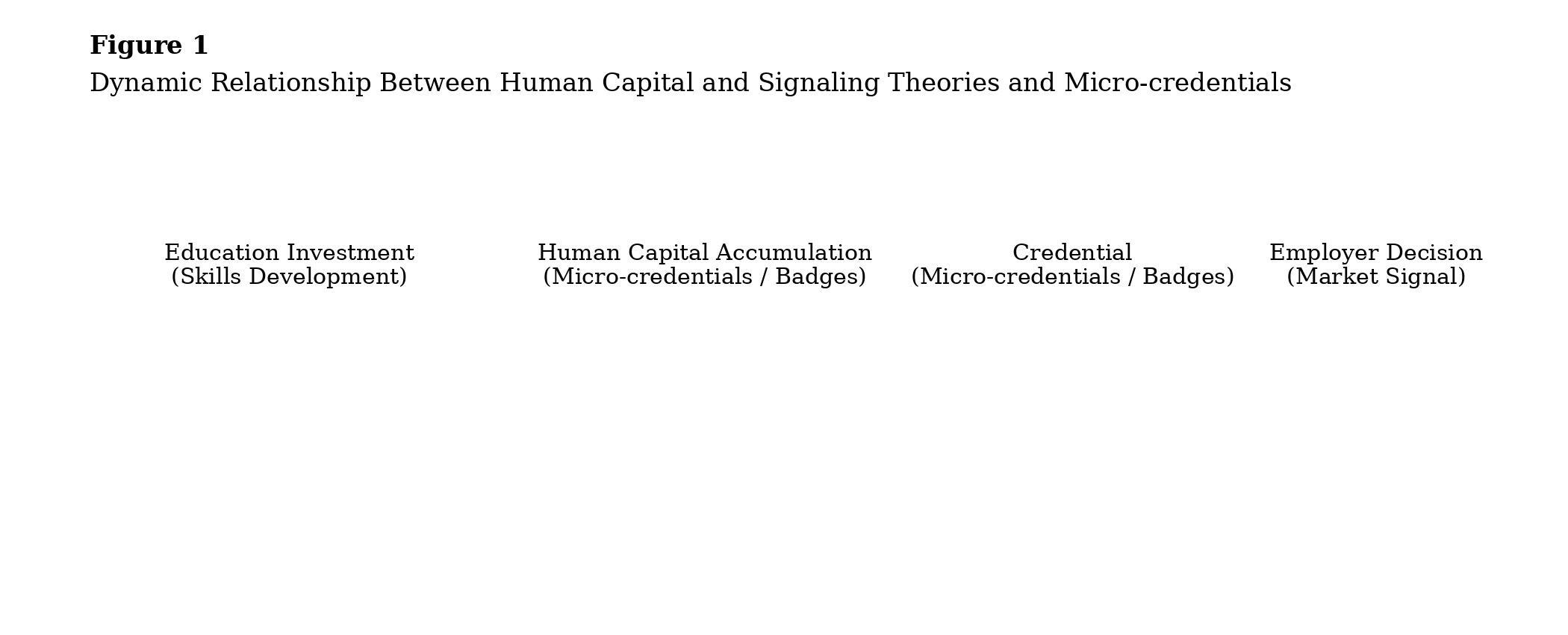
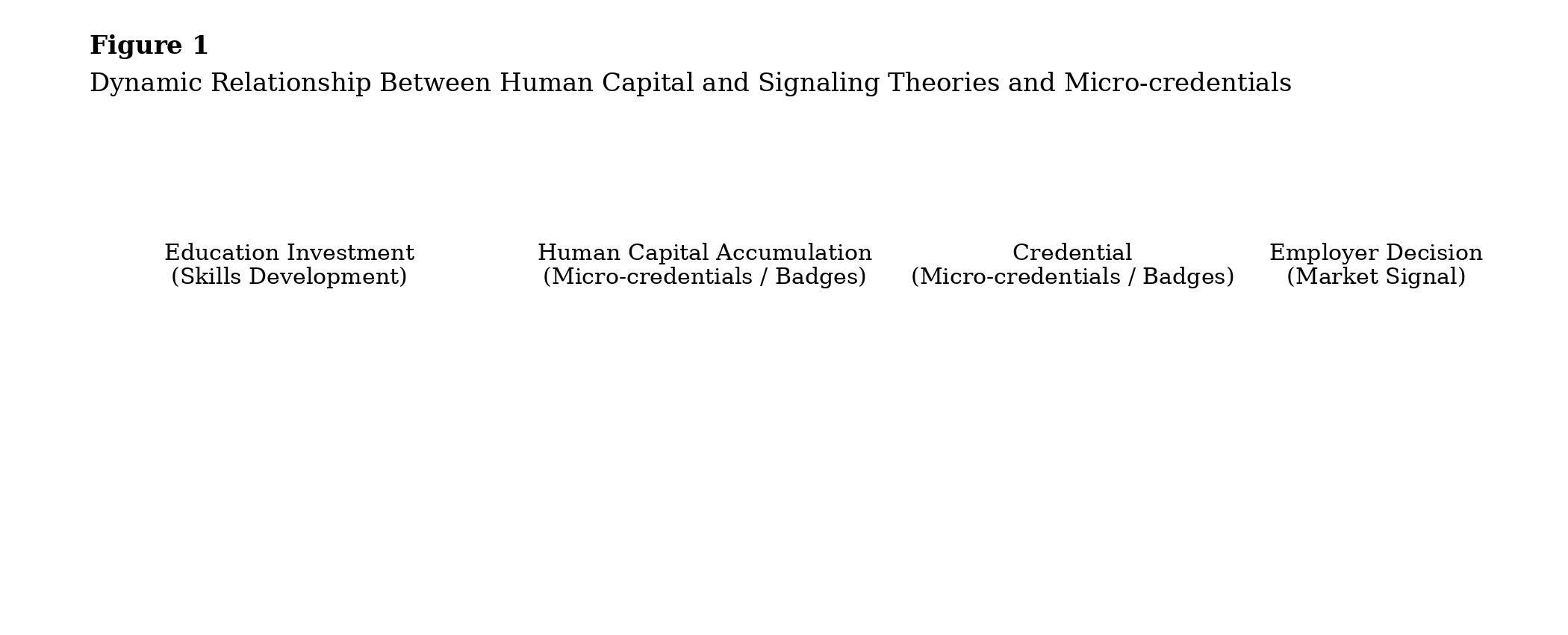
Together, HCT and ST may explain the emergence and adoption of micro-credentialing and digital badging in higher education and workforce development. Figure 1 illustrates our conceptualization of the dynamic and interdependent relationship between HCT and ST. Education investments lead to human capital accumulation, which is operationalized through MCs and DBs. These credentials function as industry-aligned signals that reduce information asymmetry and hiring risk, particularly for SMEs, thereby shaping employer decision-making.
The DTC functions as a cross-campus and community innovation hub, coordinating with career services, accreditation offices, technology training vendors, businesses, and the community at large to serve as a resource for digital skills training. The university’s micro-credential and digital transformation initiatives exemplify how HCT and ST converge in practice to shape educational innovation and workforce transformation. Through the lens of HCT, MCs represent targeted investments in skill development that enhance individual employability and regional productivity. From the perspective of ST, these digital credentials function as trusted indicators of verified competence, allowing learners to communicate their readiness and adaptability to employers in rapidly evolving industries. Through civic partnerships, these emerging credentials are legitimized and embedded into established educational and policy systems. Together, these dynamics illustrate a multidimensional approach to workforce development, one that not only strengthens the economic and social value of education but also reinforces higher education’s role as a catalyst for innovation, workforce development, entrepreneurship, and community advancement. Below, we outline the evolution and the process of establishing the DTC at this Midwestern public university.
Institutional Context and Motivation
As noted earlier, a Midwestern public university adopted a strategic, policy-driven approach to integrating micro-credentials into its academic and community engagement framework. Serving a diverse population of approximately 23,000 students across business, engineering, education, and health sciences, the university positioned digital credentialing as a cornerstone of its innovation agenda. The president articulated a clear institutional goal: that every graduate complete at least one micro-credential before graduation, ensuring alignment between academic preparation and labor-market demands. This vision extended beyond campus boundaries through a collaborative initiative led by the city’s mayor, who sought to expand digital literacy across 26 legislative districts by training community-based instructors. In 2019, IBM became the university’s flagship partner, launching a “train-the-trainer” model that certified faculty in artificial intelligence, data analytics, cybersecurity, and quantum computing. This partnership exemplifies how higher education institutions can leverage industry collaborations to build agile, skills-based learning ecosystems that serve both students and the broader community. Consistent with Botha and Khoza’s (2024) findings, this model reflects an entrepreneurial policy orientation that values practical, accessible, and innovation-driven approaches to lifelong learning.
Identifying Stakeholder Needs
Following the exploratory needs assessment model of Pett et al. (2021), the university engaged city officials, business leaders, and faculty to identify barriers to employability and technology adoption. A series of informal focus groups, structured interviews, and student surveys were conducted with academic leadership, career services, city officials, businesses, and council folks representing each of the city’s districts. Entrepreneurs and community learners expressed a desire for training that was flexible, immediately applicable, and credentialed, reflecting the same preferences identified by Botha and Khoza (2024). Faculty sought instructional support, while employers emphasized digital verification and alignment with industry. Table 1 identifies stakeholders, their needs, and the DTC responses.
Policy and Funding Environment
The DTC’s early success was bolstered by securing funding through workforce development grants and public–private partnerships. These funds were strategically allocated to: develop digital infrastructure for the DTC, train faculty and community trainers, license vendor platforms in collaborations with IBM, Microsoft, Google, Adobe, and support outreach to underserved communities. These partnerships align with the calls by the World Economic Forum (2021) and the OECD (2023) for lifelong, skills-based learning ecosystems that connect academia, industry, and small businesses.
For small businesses, these policies and funding mechanisms translated into tangible benefits: access to no or low-cost technology training, certified instructors within each of their communities/Districts, and pathways to upskill employees without the overhead of traditional degree programs. This aligns with strategic imperatives for small firms seeking to remain competitive in digitally transforming markets. Table 2 identifies the key funding sources, strategic objectives, and impact on small businesses.
Implementation of Framework: Project Management Life Cycle (PMLC)
The Project Management Life Cycle (PMLC) (Project Management Institute, 2021) was not only a tool for organizing implementation but also a strategic framework for aligning institutional resources with community-based small business needs. Each phase was designed to ensure responsiveness, accountability, and sustainability in delivering micro-credentialing solutions. Table 3 presents the formal project management cycle, with strategic action and small business relevance as key components.
The structured use of the PMLC enabled the university to scale its micro-credentialing initiative across 13 colleges and 26 community districts. This model offers a replicable blueprint for other institutions and communities seeking to align academic innovation with small business strategy and regional economic development.
The DTC as a Community Innovation Model
The design of the DTC parallels Botha and Khoza’s (2024) recommendation that HEIs embed MCs into curricula with a focus on flexibility, networking, and practicality. Through the DTC, community businesses can access evening and weekend courses and just-in-time technology training. Below is an example of one DTC program that focused on scaling technology skills.
Scaling Technology Skills
Recognizing inequitable access to emerging technologies, the DTC launched a Digital Literacy technology Train-the-Trainer Program (DLT3), funded by the local Metro Government, to serve its 26 community districts. This initiative equipped community members to become trainers in key technologies, specifically analytics and artificial intelligence, using DTC’s free training resources, and committed the newly trained trainers to train in their communities for a stipend.
All legislative districts participated, and more than 150 community trainers completed the program. Each community trainer then delivered training to at least 10 participants within their respective communities, creating a powerful cascade effect. Of these trainers, 138 reported that the program met or exceeded their expectations.
The program had its most significant impact in the lowest-income districts (Districts 1–4), which trained the highest number of trainers and community members—over 600 individuals in total. All but one of the 26 community districts within the metropolitan area participated, demonstrating broad engagement throughout the city.
Over 1,500 community participants have been trained in Microsoft Word forms, Power BI analytics, and the basics of AI and ChatGPT. There have been over 70,000 engagements with the DTCs’ free resource training website. By equipping trainers rather than individual learners, the program created a multiplier effect, reaching thousands of residents indirectly. As shown in Table 4, the DLT3 model achieved a minimum tenfold training multiplier across all participating districts, demonstrating a low-cost, scalable mechanism for disseminating digital skills relevant to the needs of small businesses and community workforces.
Qualitative feedback underscores the program’s effectiveness. One trainer indicated they would use this at their organization: “I showed my boss the DTC training portal that was free, and we are now hosting our own internal training at our company.” A participant in the program offered the following: “I can’t afford college, so these badges will help me at my job.” Finally, a faculty member highlighted the benefit for students: “By using the training modules on the DTC website, students can earn technology credentials to put on their resumes to enhance their skills and marketability.” Two participants from different districts indicated that they are now starting their own digital literacy training companies.
Beyond improving individual digital literacy, this initiative has strengthened the local business ecosystem. By embedding technology skills within communities, small businesses gain access to a more digitally competent workforce and customer base. Trainers and participants alike are better equipped to leverage analytics and AI for business operations, marketing, and decision-making, critical capabilities for competitiveness in today’s economy. This grassroots approach ensures that even businesses in underserved areas can adopt digital tools, driving innovation and economic resilience statewide. Over 1,500 community participants have been trained, and over 50,000 website visits have occurred on the DTCs’ free training website since it launched in 2020.
Discussion and Implications
This study examined the integration of technology MCs and DBs within a Midwestern public university’s DTC, situating the findings within an integrative framework of HCT (Becker, 1994; Schultz, 1961) and ST (Spence, 1973). The DTC model demonstrates how higher education institutions can function as adaptive intermediaries in the evolving relationship between education, technology, and the labor market. Through this lens, the initiative reveals the multidimensional value of MCs as both economic investments in skill formation and communicative artifacts of professional credibility. However, challenges persist, including uneven credential recognition, signaling saturation, and the risk that poorly designed or weakly governed MCs may fail to convey meaningful skill differentiation. Equity concerns also emerge, as unequal access to high-quality micro-credentialing pathways or employer bias toward traditional degrees may limit the benefits of these credentials for underrepresented learners, underscoring the importance of institutional oversight, transparent standards, and inclusive design.
Theoretical Contributions
From a HCT perspective, the DTC operationalized education as an investment in individual and collective productivity, translating learning into tangible employability outcomes. The “train-the-trainer” framework reflects a recursive process of skill diffusion in which each certified participant amplifies the community’s aggregate stock of human capital. The inclusion of digital skills, particularly analytics, artificial intelligence, and cybersecurity, illustrates the responsiveness of micro-credentialing systems to contemporary labor market demands. Furthermore, the model addresses a key limitation of traditional degree structures by enabling incremental, stackable learning that can be tailored to the specific skill needs of both learners and employers.
From the standpoint of ST, the DTC’s collaboration with globally recognized vendors such as IBM and Microsoft enhanced the signaling power of MCs by associating them with established industry standards. This partnership-based validation process bolsters employer trust in credential authenticity and reliability, addressing a central concern in the literature regarding the recognition and portability of alternative credentials (Oliver, 2019; Varadarajan et al., 2023). The findings underscore that MCs’ legitimacy is not derived solely from skill acquisition but from the institutional and organizational structures that authenticate them. Thus, MCs function simultaneously as indicators of individual competence and as manifestations of institutional credibility within the education-to-employment continuum.
The DTC initiative further extends theoretical discussions by demonstrating the interplay between human capital accumulation and signaling mechanisms within regional innovation ecosystems. By embedding MC programs within municipal workforce development strategies, the university created a policy-aligned infrastructure for inclusive digital transformation. This alignment exemplifies how institutional interventions can translate theoretical constructs into measurable socio-economic impact. Moreover, it suggests that MCs can serve as instruments of institutional isomorphism (DiMaggio & Powell, 1983), in which universities adopt globally recognized credentialing models to maintain legitimacy and competitiveness in an increasingly market-oriented higher education landscape.
Practical Implications
These findings carry important implications for higher education policy and practice. First, the integration of MCs within academic and community programs supports national and global objectives for lifelong learning, digital literacy, and workforce agility (OECD, 2023; World Economic Forum, 2021). Second, the initiative underscores the need for multi-level collaboration among academia, industry, and government to ensure that credentials remain both pedagogically robust and labor-market relevant. Third, governance mechanisms, such as quality assurance, vendor alignment and faculty development are essential for sustaining scalability and trust.
Finally, MCs represent a strategic mechanism for higher education to meet labor-market demands for validated, transferable skills, especially in technology-intensive roles where smaller businesses often struggle to find qualified talent. HEIs can collaborate with Small Business Development Centers and chambers of commerce to deliver co-branded MCs aligned with industry needs. MCs incorporating gamification, peer networking, and recognition of prior learning enhance engagement and perceived value, benefiting both employees and businesses (DeakinCo, 2017; Phelan & Glackin, 2021).
Research Implications
For scholars, the DTC offers a robust empirical context for advancing theory on the intersection of human capital accumulation and signaling mechanisms in higher education innovation. While this study provides rich descriptive insights, future research should integrate more formal assessment methods to strengthen empirical rigor. Approaches such as survey feedback from participants and employers, performance metrics tied to credential use, and longitudinal outcome tracking (e.g., employment advancement, wage growth, or entrepreneurial activity) would enable deeper analysis of MC effectiveness and the persistence of value over time.
Comparative designs could examine heterogeneity in employer and market responses to vendor-branded versus institutionally issued credentials and evaluate how MCs influence social mobility and small-business capability development across different economic contexts. Incorporating these quantitative and mixed-method strategies would elevate the empirical contribution and provide actionable evidence for policy and practice.
Conclusion
This study demonstrates how MCs operate as both skill-building mechanisms and market signals of workforce readiness, analyzed through a dual-theory lens. This perspective reveals how MCs reduce hiring risk and support productivity and innovation within small-business ecosystems. We situated this insight within a university-led initiative that illustrates how higher education can operationalize agile credentialing models aligned with labor-market demands. Looking ahead, research should examine employer recognition dynamics, equity implications, and long-term outcomes to ensure that micro-credentialing fulfills its promise of inclusive workforce development. As digital transformation accelerates, these findings underscore the need for partnership-driven, data-informed strategies that strengthen individual opportunity and regional economic resilience.