Introduction
Digital transformation has created new competitive conditions (Cillo & Verona, 2022; Faraj & Leonardi, 2022) and is even contesting basic economic concepts like firm or industry (Davis & DeWitt, 2022). By accelerating processes, improving quality and enabling new functionalities (Porter & Heppelmann, 2014), digitalization revolutionizes production, marketing, planning, logistics, communication or entire business models (Bresciani et al., 2021; Verhoef et al., 2019) and creates competitive advantages (Vogel & Hultin, 2018). Therefore, most businesses view digitalization as a vital task and an opportunity to achieve superior performance (Hong, 2017).
However, current literature reviews focusing on the success factors of digital transformation (Dörr et al., 2023; Kraus et al., 2022; Nadkarni & Prügl, 2021; Plekhanov et al., 2023) show that due to the far-reaching and multifaceted potential of digitalization in terms of creating competitive advantages for companies, finding one’s own path to successful digital transformation is a complex challenge. External factors (e.g., competition rules, digital ecosystems/platforms, collaboration and interfaces with customers and other stakeholders) and internal factors (e.g., management and organizational resources and capabilities, use of digital tools, organizational culture, strategic responses to digital transformation) interact and determine the success of digital transformation (Dörr et al., 2023; Kraus et al., 2022; Nadkarni & Prügl, 2021; Plekhanov et al., 2023).
The multifaceted nature of digitalization suggests that research into its success factors requires a comprehensive view on and definition of digital transformation, as proposed by Warner and Wäger (2019, p. 344): “Digital transformation is an ongoing process of strategic renewal that uses advances in digital technologies to build capabilities that refresh or replace an organization’s business model, collaborative approach, and culture”.
This complex interplay of potential success factors applies to all types of companies, but small and medium-sized family businesses have some special features in this context that make an examination of the factors contributing to their digitalization success specific and therefore particularly interesting: As family businesses are often particularly careful at accepting new technologies (Hu & Hughes, 2020) successful digital transformation demands changing socio-technical structures through the usage of digital information and communication systems within and across organizational boundaries. On the other hand, they usually have short and informal decision-making processes, which enable them to implement changes quickly and flexibly. Thus, the ability-willingness-paradox that was diagnosed in family business innovation (Chrisman et al., 2015), may also hold true for digitalization. This challenge to successful digitalization is particularly relevant for SME family businesses, which are often characterized by resource constraints, low levels of strategizing, and (therefore) reactive digital transformation (Bouncken & Schmitt, 2022). However, most research on digital transformation in family firms has focused on specific aspects (e.g. selected drivers, digital technologies) in isolation and should therefore be developed in the direction of holistic approaches (Soluk & Kammerlander, 2021).
Consequently, a solid understanding of successful digital transformation as organizational innovation in SME family businesses – which is the research objective of this article – requires a holistic approach to obtain an overall picture of the influencing factors (Dörr et al., 2023). This means taking environment- and business-related factors into consideration – the latter by considering different organizational areas, such as the resource base, the strategy and the organizational culture. To capture organizational culture from a digitalization-focused perspective, we draw on the concept of strategic orientations, which are often conceptualized as culture-related constructs (Hakala, 2011). Specifically, we use digitalization orientation (Kessler et al., 2025; Kindermann et al., 2021; Liu et al., 2024) as a contemporary strategic orientation and fundamental potential success factor.
Based on this background and these assumptions, this article takes a holistic look at the factors that are responsible for successful digitalization in SME family businesses. This also involves measuring the success of digitalization in terms of internal and external success indicators (Pfister & Lehmann, 2023). The sample used for the analysis comprises 255 SME family businesses in the manufacturing sector. The focus on the manufacturing sector was chosen because this is where most opportunities for digitalization exist across the entire value chain, which is particularly suited to the holistic approach.
The paper contributes to research and practice in the following ways: (1) Since digitalization affects multiple organizational levels, its outcomes are difficult to predict. Most studies investigating the success of digitalization in family businesses have focused on specific aspects of digitalization (e.g., digital technologies used, selected drivers of digitalization, budgets for digitalization), viewed these in isolation, and mostly relied on one-dimensional measures of success. Through a comprehensive analysis, this study weighs up potential success factors at various organizational levels and draws a more complete picture of digitalization. (2) A more comprehensive understanding of the factors responsible for digitalization success is of particular interest for practitioners, because isolated single measures may not provide the expected success but rather result in the waste of scarce (financial) resources, which are anyhow a special challenge for many family SMEs. (3) The article uses the concept of digitalization orientation, which is positioned as a fundamental prerequisite for successful digitalization. The measurement scale was conceptualized using qualitative research, shows high reliability, and is suggested for use in further research.
Theoretical background and hypotheses
Since digitalization is a complex management task, understanding its success factors requires a comprehensive view. SMEs are particularly challenged by this because they often pursue a “muddling through” approach. Yet, a planned, coordinated procedure is needed (Cha et al., 2015).
Therefore, we focus on what we consider the key internal and external dimensions of current literature reviews on success factors for digitalization from management and SME research (Dörr et al., 2023; Kraus et al., 2022; Nadkarni & Prügl, 2021; Plekhanov et al., 2023): digitalization measures, digitalization strategy, digitalization resources (financial, human, and social capital), digitalization culture (in the form of digitalization orientation). This selection contains aspects (also in terms of deriving recommendations for practical action) that can be influenced by SMEs, i.e., internal success factors and social capital for optimizing relevant environmental relationships. To give special consideration to SME family businesses, the external influence of the business family on the digitalization of the company was also analyzed.
Digitalization measures
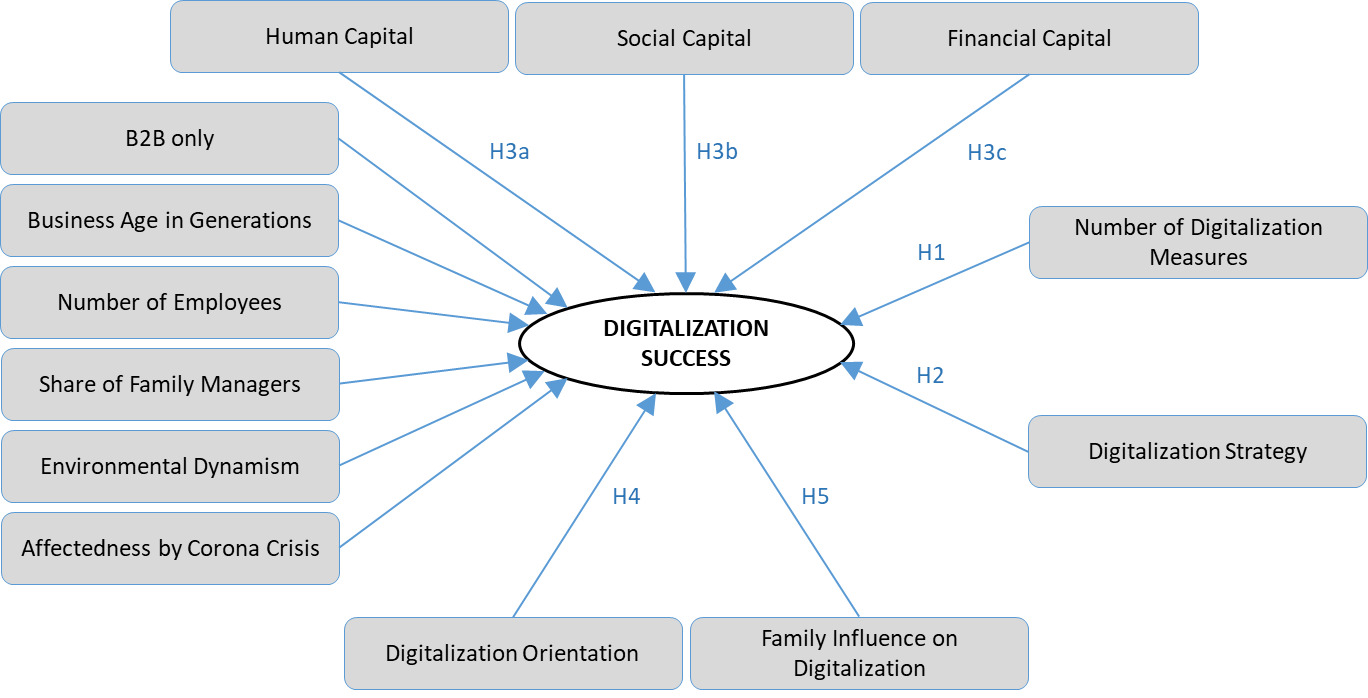
Digitalization measures in the sense of using digital technologies and tools play a central role in literature reviews on the success factors of digitalization (Dörr et al., 2023; Kraus et al., 2022; Plekhanov et al., 2023). They can comprise a vast variety of hardware or software solutions in all areas of operation, ranging from the development of a customer-friendly webshop to the use of data services for the purpose of knowledge management or the creation of data interfaces between different production systems (Dörr et al., 2023; Kraus et al., 2022). As the given examples indicate, apart from production in the narrow sense, potential fields of implementation of digitalization measures in manufacturing SME family businesses are manifold. For instance, these businesses can use digital technologies to support processes in finance and controlling, marketing, customer management, supply chain management, innovation management and human resource management (Hausberg et al., 2019; Schröder et al., 2015). Furthermore, digitalization measures can be implemented at interfaces (within and across organizational borders) to ensure fluent transitions in between processes (Trab et al., 2017). Manufacturing businesses that implement digitalization measures both in the field of production and along the entire value chain were found to achieve higher digitalization success in terms of productivity, availability and customer satisfaction because the flexibility of products and services increases with the degree of digitalization (Bogner et al., 2016). Since the degree of digitalization can be intensified by implementing new digitalization measures, the number of implemented measures will most likely be related to digitalization success. Consequently, we hypothesize that:
H1: A higher number of digitalization measures will have a positive effect on digitalization success.
Digitalization strategy
The higher the number of digitalization measures and involved functional areas, the more vital is it to develop a strategy that guides the business’ digitalization behavior (Bharadwaj et al., 2013). Uncoordinated or unsuitable digitalization measures can produce costly and inefficient insular solutions. Very few businesses have formulated a clear and coherent digitalization strategy (Hong, 2017). However, businesses with a high degree of digitalization usually possess such a strategy, while those that do not have such a strategy are less digitally mature (Kane et al., 2015). Within the taxonomy on influencing factors towards digital transformation in SMEs (Dörr et al., 2023), defining a strategy for digital transformation also plays a central role in providing guidance for digitalization. The digitalization strategy can either be part of the overall strategy of SMEs or it can be an individual digitalization strategy. Thus, we assume that:
H2: Pursuing a well-elaborated digitalization strategy will have a positive effect on digitalization success.
Digitalization resources
Furthermore, family SMEs require resources for the implementation of digitalization measures and the reorganization of the business that they entail (Matt et al., 2015). Human capital, i.e. the knowledge, skills and experiences of the persons working in the business, is not only necessary to develop, implement and apply digital solutions but also plays a central role for the business’ ability to continuously learn and adapt to relevant changes, i.e. to develop digitalization-related managerial and organizational capabilities (Nadkarni & Prügl, 2021). SMEs often lack digital competencies and skills, or there are very different levels of digitalization knowledge within SMEs, as well as a lack of knowledge about how to overcome these hurdles (Dörr et al., 2023). One of the most frequently named challenges of digitalization is a lack of IT knowledge and skills among managers and elderly employees (Hong, 2017). Family SMEs may be able to compensate deficits in human capital with social capital. Social capital are rewarding values, norms and resources that result from formal and informal relationships (Nahapiet & Ghoshal, 1998). Similar to its role for innovation, it may also facilitate digitalization measures via trust, mutual understanding and long-term orientation (Sanchez-Famoso et al., 2014). Cooperation with customers and other external stakeholders represents a key interface between digital transformation within the company and external digital developments, enabling joint digitization solutions that can be particularly efficient and effective (Nadkarni & Prügl, 2021; Plekhanov et al., 2023). Since in family businesses family and business relationships usually overlap (Seaman et al., 2014), their social capital is potentially very strong. Ultimately, digitalization is very cost intensive. Financial resources are needed for the acquisition of new machines and software as well as services from external IT specialists and training for employees (Parviainen et al., 2017). However, a lack of financial resources is one of the main barriers to digital transformation in SMEs (Dörr et al., 2023). Thus, we hypothesize that:
H3a: The availability of human capital resources for digitalization will have a positive effect on digitalization success.
H3b: The availability of social capital resources for digitalization will have a positive effect on digitalization success.
H3c: The availability of financial capital resources for digitalization will have a positive effect on digitalization success.
Digitalization culture
Since the values, norms and traditions of a business, i.e. its organizational culture (Schein, 2004) can affect its behavior in an informal and unplanned way (Kühl, 2018), the basic attitude of the SME family business towards digitalization, i.e. its digitalization orientation (Kessler et al., 2025; Kindermann et al., 2021; Liu et al., 2024), may be a fundamentally critical factor for the successful implementation of digitalization measures. Digitalization orientation has its roots in the concept of strategic postures: Building on this concept, authors classified businesses into archetypes (Miles & Snow, 1986) or identified strategic orientations, such as market orientation, learning orientation or entrepreneurial orientation and linked them to performance (Deutscher et al., 2016). Strategic orientations are often conceptualized as culture-related constructs (e.g., Hakala, 2011; Theodosiou et al., 2012) and have proven very useful in management research when it comes to fundamental organizational conditions for specific development and success dynamics (Deutscher et al., 2016). Regarding digital transformation in SMEs, e.g. the effect of entrepreneurial orientation on digital technology adoption was recently investigated (Sudirman et al., 2025). Given the comprehensive, far-reaching, and long-term changes brought about by digital transformation, we assume that companies must develop a specific strategic orientation to achieve outstanding performance. This article therefore uses the recently developed and conceptualized digitalization orientation (Kessler et al., 2025) as a contemporary extension of the spectrum of strategic orientations as an important potential success factor. Consequently, we suggest that:
H4: Digitalization orientation has a positive effect on digitalization success.
Family Influence
Since in family businesses the organizational culture is strongly affected by the family members’ values, norms and traditions (“familiness” of family businesses; Frank et al., 2010; Habbershon & Williams, 1999), the efforts and resources invested in digitalization may increase, when the business family is strongly oriented towards digital technologies and solutions and digitalization is a high priority when weighing the expectations of the family and the company (Frank et al., 2023). Thus, we assume that:
H5: The family’s influence on digitalization will positively influence digitalization success.
Well-managed digitalization potentially increases the efficiency of the value chain, improves the quality of products and product-related services, improves stakeholder relations, communication and satisfaction, creates new products and functionalities, facilitates knowledge management, etc. (Bresciani et al., 2021; Verhoef et al., 2019). Successful digitalization most likely depends on the combination and alignment of the digitalization measures, digitalization strategy, resource base, business family’s influence on digitalization and organizational culture respectively digitalization orientation. Implementing a great number of digitalization measures without carefully considering these factors, will most likely not be successful. Wasting scarce resources is a no-go in most family SMEs. Consequently, this type of company, in particular, requires a well-considered and coordinated set of elements for successful digital transformation and development.
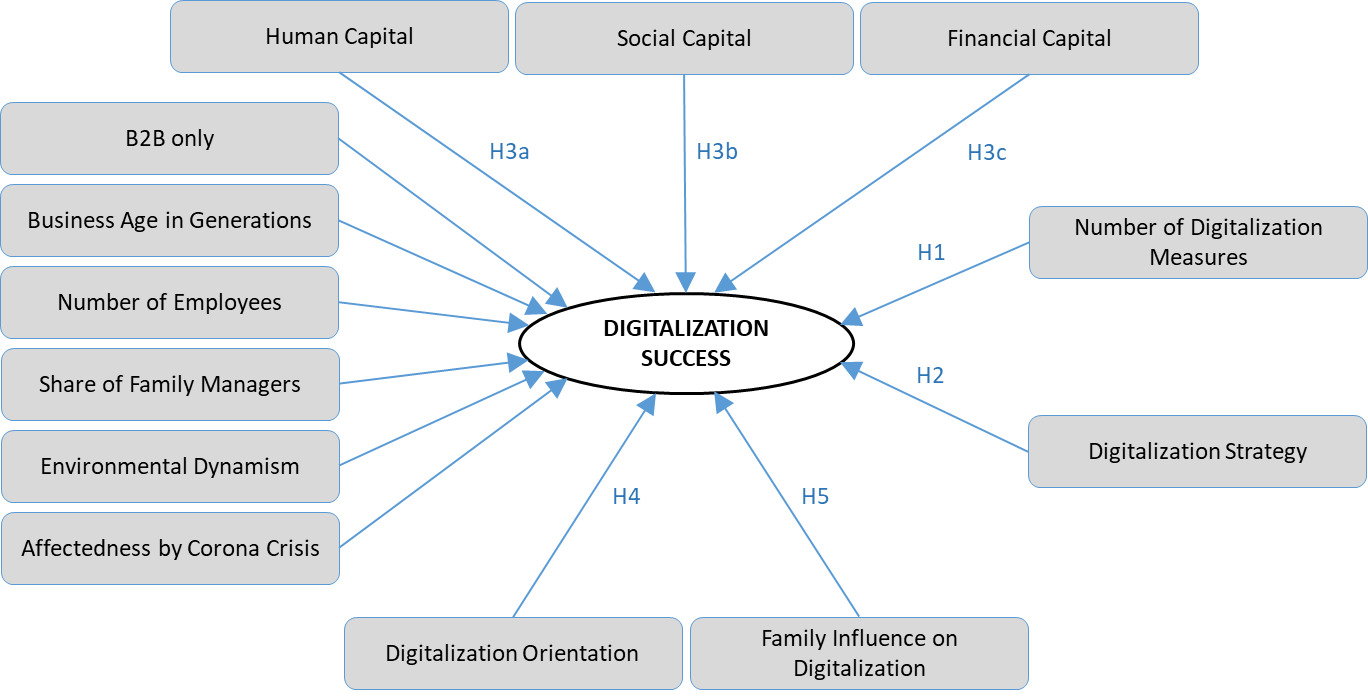
Figure 1 summarizes the research model and hypotheses including control variables such as e.g. firm size (number of employees), business age, share of family managers relative to the total number of managers or environmental dynamism.
Method
This paper takes a holistic approach by testing the five hypotheses and using linear regression analysis to identify the significant influence factors of digitalization success.
Data collection
In order to generate the sample, all businesses meeting the following four criteria were selected from the Aurelia Neo database[1]: (1) the businesses employ 5 to 150 employees, (2) they are manufacturing businesses in a broader sense, i.e. categorized into the ÖNACE 2008 code B (mining and quarrying) or C (manufacturing), (3) they are located in Lower Austria, a province of Austria, and (4) they are family businesses. Family businesses are defined as businesses (a) which are either managed by at least one of their owners or where at least two family members are involved in management or ownership and (b) where the majority of stakes belongs to one or more families. The 1414 businesses resulting from the search were invited telephonically to take part in the survey, 961 of which agreed. Telephonic pre-contact has been shown to increase the response rate (Dillman et al., 2014).
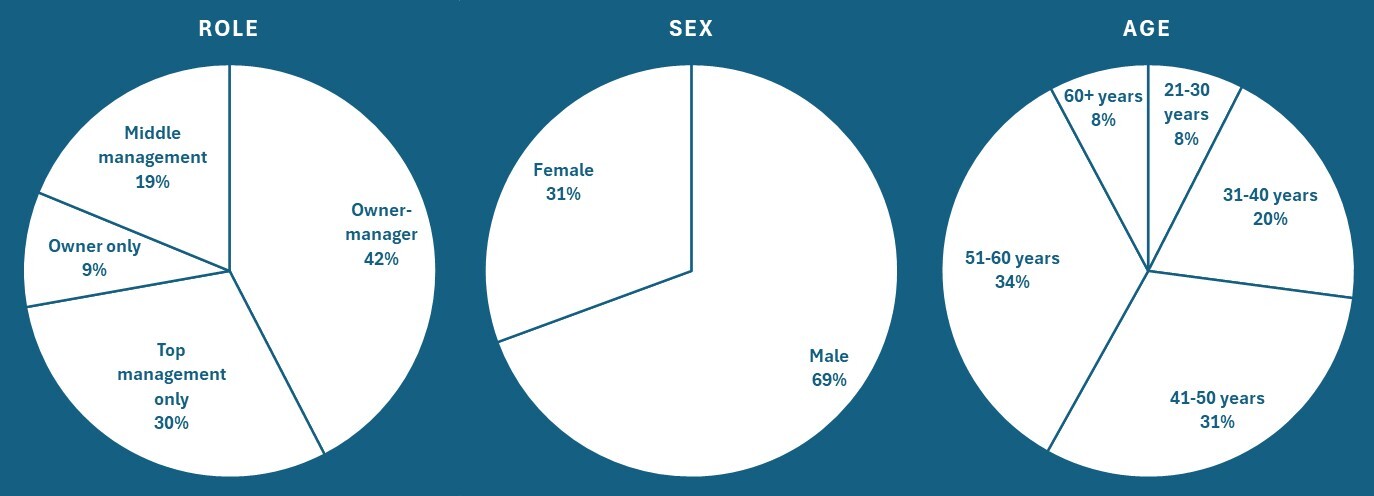
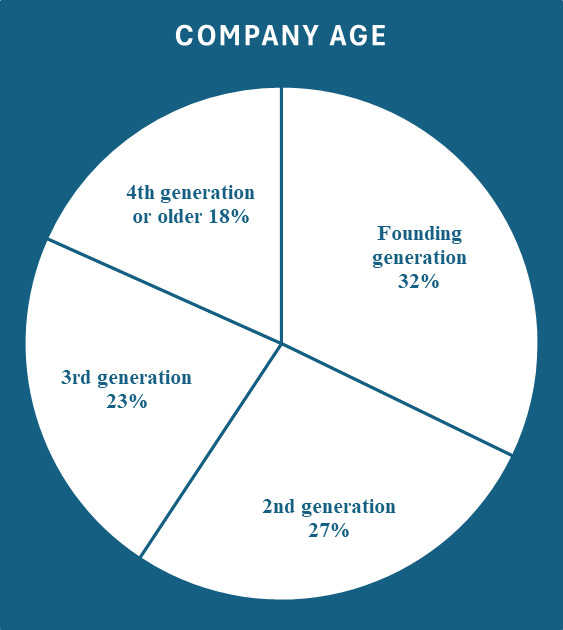
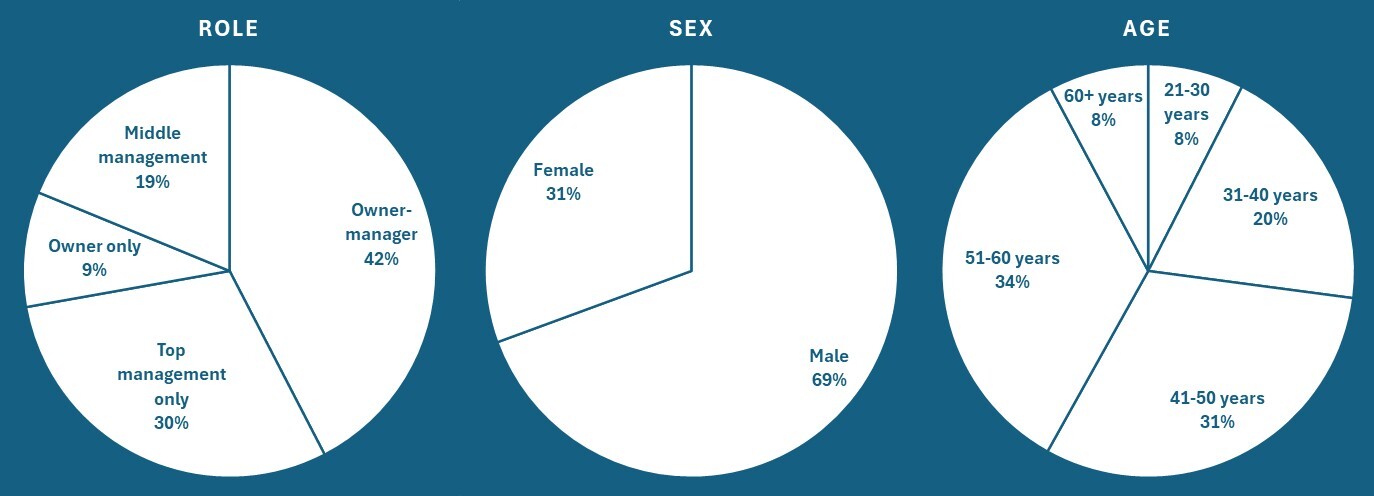
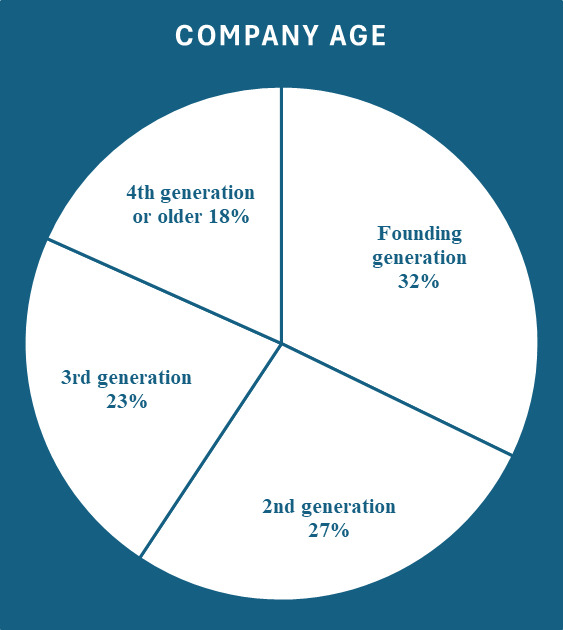
The data collection was split in two phases: the pretest and the main study. The aim of the pretest was to test and improve the online questionnaire if necessary. The first 30 participations in the survey showed that the questionnaire was well comprehensible and adequate for the research purpose. Only few adaptions were made regarding orthography. In the main study, 245 family businesses filled out the slightly adapted questionnaire from the beginning to the end. Since the changes in the questionnaire between the pretest and the main study were minor, both samples were accumulated for the analysis. Finally, the sample was checked once again regarding the above defined criteria and implausible answers. In order to increase the sample size, the range of the business size was extended to four to 220 employees. This range in sizes complies with our considerations to examine only businesses underlying a certain complexity as regards collaborative processes and divided responsibilities (at least the owner-manager or managing director and four employees – in total five persons) and to query within the group of small and medium-sized enterprises according to the headcount criterion of the European Commission. In total, 20 questionnaires were excluded resulting in a final sample of 255 completed questionnaires. The survey approached directly the top management of the family businesses and requested that one person who is very familiar with strategic issues relating to digitalization and its consequences completed the questionnaire. The final sample consisted of respondents, the majority of which (88%) were members of the business family. Figure 2 shows the variety of their personal characteristics, Figure 3 the characteristics of their companies in terms of company age.
To best possibly avoid common method and social desirability bias, the following measures were taken: (1) The cover letter of the survey ensured respondents anonymity and informed them that there were no right or wrong answers. (2) The independent and dependent variables were positioned in different sections of the questionnaire. (3) Particular attention was paid to clear and precise (non-judgmental) wording of the items, which were extensively pre-tested. To test for common method bias, we performed Harman’s single-factor test, entering all items from the success factor scales into an exploratory factor analysis. The results showed that a single factor explained only 22.6% of the total variance, which is well below the 50% threshold, suggesting that common method bias is not a significant concern in this study. To check for non-response bias and whether the questionnaire was easy to understand and answer for different groups of people or businesses, the completed and incomplete questionnaires were compared in terms of company size, company age, age of the participant, and gender of the participant. No significant differences were found between the abandoned and completed surveys in terms of company size (T=.848; p=.397), company age in generations (Chi2=2.852; p=.415), age of participants (T=.553; p=.581), and gender (Chi2=3.339; p=.084). Therefore, there should not have been any group-specific difficulties in completing the questionnaire that led to systematic discontinuation of the survey. In addition, early respondents (the first 25%) and late respondents (the last 25%) were analyzed comparatively. No significant differences were found with regard to company age in generations (Chi2=5.784; p=.123), age of participants (T =1.157; p=.249), gender (Chi2 =.003; p=.954), and digitalization success as the key dependent variable (T=1.045; p=.298). Only company size was found to be significantly lower among late respondents than among early respondents (T=3.283; p=.002).
Measurement
The measurement for the number of digitalization measures was adapted from two existent measuring instruments. The operationalization of digitalization strategy, digitalization orientation, family influence on digitalization and the three types of digitalization resources is based on the results of five qualitative case studies and a focus group discussion with digitalization experts. The following description of the individual survey dimensions contains sample items; a complete list of the survey items can be found in the appendix.
The number of digitalization measures is operationalized as a sum score ranging from 0 to 17. The respondents were asked to indicate which measures, e.g. updated website, own online shop of the company, social media marketing, cloud computing, ERP systems, big data/smart data, artificial intelligence they use in their business based on a 16-item list (adapted from Quarato et al., 2020 and European Commission, 2020) and a text input field for non-listed measures.
Digitalization strategy reflects a business’ middle- to long-term planning, communication, acceptance and control of digitalization. The scale consists of five items, such as “In our company, we have a long-term plan for the development and implementation of digitalization measures”. Respondents were asked to agree or disagree with the statements on a 7-point Likert scale. Cronbach’s alpha of 0.88 suggests very good reliability (Hair et al., 2007).
The newly developed concept of digitalization orientation comprises four dimensions expressing (A) a business’ openness towards digitalization, (B) its awareness of data as a valuable resource, (C) its urge to find customized digital solutions and (D) its perseverance regarding the implementation of digitalization plans. After excluding items with excessive inter-item correlations (> .7), digitalization orientation is measured with 16 items (five for openness towards digitalization, three for awareness of data as a valuable resource, four for urge to find customized digital solutions and 4 for perseverance regarding the implementation of digitalization plans). Sample items for the four dimensions read as follows: “In our company, we regard digitalization as an opportunity, not a risk” (openness for digitalization), “In our company, we record data and knowledge systematically” (awareness of data as a valuable resource), “In our company, we regularly improve external digital interfaces to suppliers, customers and cooperation partners” (urge to find customized digital solutions) and “In our company, we are very persistent with overcoming of digitalization barriers” (perseverance regarding the implementation of digitalization plans). The respondents rated these statements on a 7-point Likert scale, which exhibits a Cronbach’s alpha of 0.92 suggesting excellent reliability (Hair et al., 2007).
Family influence on digitalization is a specificity of family businesses and measures the role the business family and its interests play for digitalization decisions. Respondents were asked to rate the degree of their agreement with three statements on a 7-point Likert scale. An example item is the following: “In our company, initiatives for digitalization mainly come from the business family”. The scale exhibits a Cronbach’s alpha of 0.81, which suggests very good reliability (Hair et al., 2007).
The queried digitalization resources comprise digitalization specific aspects of human, social and financial capital. Human capital expresses the entirety of IT know how of the persons working in and cooperating with the business. It was operationalized using a formative 7-point Likert scale consisting of three items. An example item is as follows: “In our company, our employees possess very good IT knowledge and skills”. Social capital expresses the quality of actual and potential (on short call available) cooperation relationships with external IT experts. It was also measured using a formative 7-point Likert scale with three items, such as the following: “In our company, external IT experts are available for us on short call if necessary”. Financial capital measures the financial means that are available for digitalization projects, again using a formative 7-point Likert scale with three items, such as: “In our company, we are able to mobilize sufficient financial means for digitalization projects”.
Digitalization success is measured via the perceived improvement through digitalization over 15 criteria using a 7-point Likert scale. Given its holistic approach, the article uses a broad and multidimensional performance measurement in line with the internal and external advantages of digital value creation according to Pfister and Lehmann (2023). These criteria comprise five specific internal aspects of improvement (decision-making speed, efficiency of processes, reduction of production stops, attractiveness as an employer, employee satisfaction), five specific market related aspects of improvement (new customer acquisition, product quality, customized products and services, customer satisfaction, explicit competitive advantages) and five general assessments regarding the satisfaction with the digitalization progress so far (satisfaction with digitalization process, being a forerunner regarding digitalization in the industry, attainment of digitalization goals, organizational learning through digitalization, finding an appropriate extent of digitalization for the company). The Cronbach’s alpha of the 15 items scale amounts to 0.93, which suggests excellent reliability (Hair et al., 2007).
To also account for context factors that may be relevant for digitalization success, we controlled for the market segment the business operates in (i.e. specialization on B2B or not), the business age in generations, the business size based on the number of employees, the share of family managers relative to the total number of managers, the sector’s environmental dynamism according to the developments in growth opportunities and technology in the sector (roughly based on Miller, 1987) and the business’ affectedness by the Corona crisis estimated according to changes in revenue (ranging from very negatively to very positively affected).
Table 1 provides an overview of the measures and their descriptive results.
Findings
The correlation matrix (Table 2) shows high positive correlations between most of the main variables (except family influence on digitalization) and digitalization success. Among the control variables, only environmental dynamism and the affectedness by the Corona crises display significant positive correlations with digitalization success. Regarding the rest of the correlation matrix, some statistically significant moderate positive correlations (from .50 to 0.70) between the main variables are apparent. Three of them concern digitalization orientation, which is positively correlated with digitalization strategy (.65), the number of digitalization measures (.52) and human capital for digitalization (.51). The last moderate positive correlation (.53) is between human capital and social capital for digitalization. All other statistically significant correlations between the main variables respectively the control variables and the main variables are low (< .50).
To rule out multicollinearity problems, the variance inflation factors (VIFs) were calculated. All VIFs are below 2.4, indicating no problems (Hair et al., 2010).
The linear regression analysis was executed in a hierarchical manner, testing only the control variables in Model 1 and adding the main variables in Model 2. Both models are highly significant (p = .000). Model 1 shows an adjusted R² of 0.182. The adjusted R² of Model 2 is 0.631, signifying that the control and main variables together explain 63.1% of the dependent variable’s variance. This high value suggests that the tested final model includes the main influence factors of digitalization success, which confirms the adequacy of the chosen holistic approach.
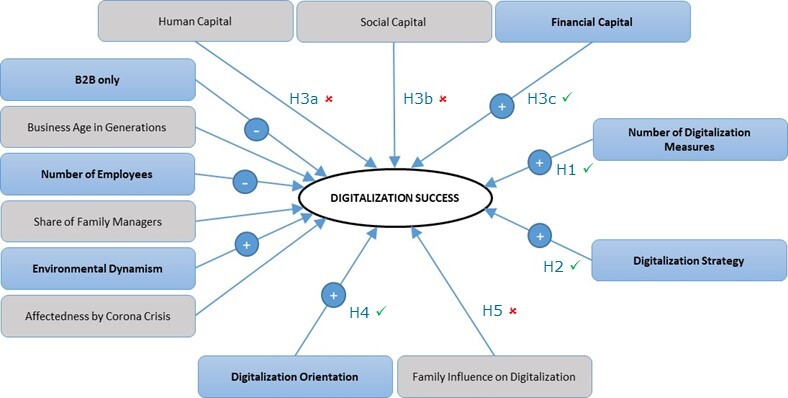
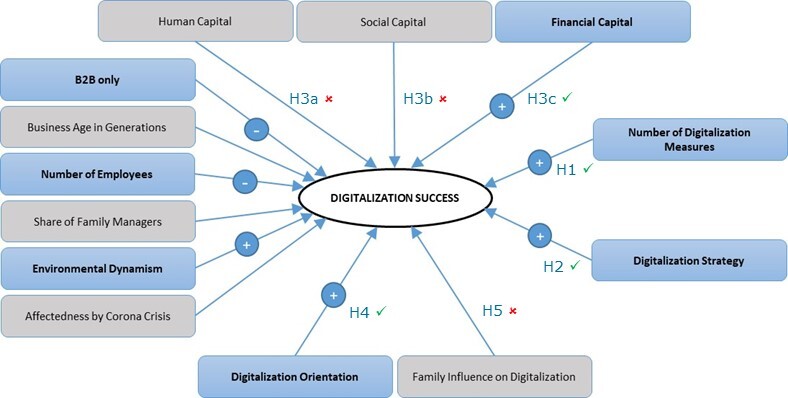
The results of the linear regression analysis (Table 3) including all variables (Model 2) show that a specialization on the B2B segment (β = -.110, p = .006) and a high number of employees (β = -.091, p = .040) hamper digitalization success. Businesses in highly dynamic environments (β = .169, p = .000), however, exhibit higher digitalization success. Regarding the main effects, the number of digitalization measures (β = .157, p = .002), digitalization strategy (β = .210, p = .000), financial capital (β = .171, p = .001) and digitalization orientation (β = .345, p = .000) are significant success factors. It is also interesting to note that neither human and social capital nor family influence on digitalization have proven influential for digitalization success.
Figure 4 summarizes the results graphically. All significant variables are depicted in blue shapes.
Discussion
Summary and Interpretation of the Results
The results show that SME family businesses with a higher number of digitalization measures in place achieve higher digitalization success. The fact that a comprehensive digitalization strategy also contributes to digitalization success suggests that a coordinated approach to the implementation of digitalization measures with due regard to possible synergies is especially promising. It is a necessary means to coordinate the digitalization measures and align them with superior goals of the business (Clauß & Scheffler, 2021). As business goals, processes and technological possibilities change, the digitalization strategy needs to be adapted from time to time (Chanias et al., 2019). Relying only on a “muddling through” approach is not expedient, whereas a coordinated approach can help to recognize and exploit further opportunities for digitalization. Muddling through is not an atypical strategic behavior for SME family businesses. However, large scale digitalization projects quickly force these companies to professionalize their strategy development. A development process like this does not only require conceptual and analytical skills but also challenges the flexibility of the actors’ minds as it might be perceived as a major intervention in the self-image of the top management team of SME family businesses. Consequently, a massive learning process has to take place which might require the support of consultants. The findings call into question the understanding of SME strategy development as an emergent and reactive process (Mintzberg et al., 2009). There is much to be gained by a comprehensive strategic approach including strategic planning, goal setting and financial analysis which is generally known to lead to better performance outcomes in SMEs (Williams et al., 2025).
Financial capital is the most important resource category for digitalization success. Since digital technologies develop at a fast pace, digitalization does not only require high initial but also continuous investments to keep up with competitive standards. Another reason for continuous expenditures is that – even if a digitalization strategy exists – digitalization processes are often not a straight way forward but include certain trial and error phases to find good solutions. This is a challenge in view of financial capital and risk management. Compared to larger businesses with comparatively more strategic business units, small businesses make fewer strategic decisions. Fewer strategic decisions hence correlate with fewer opportunities to compensate worse decisions. Thus, a high degree of the quality of decisions is needed.
On the one hand, it is surprising that human capital and social capital do not prove to be significant influences; on the other hand, financial capital is the pre-condition for the constant advancement of all other necessary resources, such as IT know-how. Furthermore, digitalization often entails indirect costs for process adaptations, e.g. the preparation of digital data (Joppen et al., 2019). In family SMEs, resources are often limited. Leasing and cloud computing solutions may help to avoid large-scale investments while staying up to date with the latest technological developments (Assante et al., 2016). The findings also underline the significance of financial subsidies and the role of public authorities who design subsidies.
Other than the family influence on digitalization, digitalization orientation plays a significantly positive role for digitalization success. This indicates that the orientation of the organization as a whole is more important than the family’s attitude towards digitalization. Above all, it seems to be more difficult for larger family businesses to successfully digitize if they are not innovation- and change-oriented. However, developing a digitalization orientation is difficult because it needs to be anchored in an organizational culture that is open to innovation and can ultimately lead to the establishment of a new organizational identity (Moldovan & Macarie, 2014). Furthermore, the findings call for a closer look at the cultural traits of openness towards digitalization, awareness of data as a valuable resource, urge to find customized digital solutions and perseverance regarding the implementation of digitalization plans.
Based on these findings, suggestions for SME family business managers and consultants are derived, which can help to improve digitalization success. In this respect, it is important to differentiate between variables (1) that management has direct access to through decisions (e.g. product prices, employee dismissals, digitalization measures such as cloud computing or ERP systems) and (2) variables that can only be influenced indirectly. The latter include, e.g., organizational innovation strength, the organizational culture (Groth, 2017) or the digitalization orientation.
Practical Implications for SME family business managers and consultants
As already mentioned, strategic orientations and decisions are closely linked to the organizational culture. The well-known statement “Culture eats strategy for breakfast” expresses the importance of cultural aspects of organizations. A digitalization project that contradicts the cultural preconditions will most likely not succeed. Our findings clearly and concretely demonstrate the significant importance of digitalization orientation (the variable with the greatest impact in the regression model) as a set of characteristics embedded in an organization’s corporate culture. From the practical point of view, it is important to remember that organizational culture is about the unwritten and often implicit rules of an organization that reduce management’s ability to exert direct influence. A long-established and proven cultural practice cannot simply be changed by a decision (Kühl, 2018). Based on our findings the following steps should be considered.
1. Analyze the strengths and weaknesses of the organizational culture for digitalization
It is a central requirement for the management of SME family businesses to consider the organizational culture in digitalization projects. Due to its formal competence, the management team has the task of initiating a cultural change process if significant elements of the organizational culture hinder digital transformation. In this respect, it is important to provide a description of the organizational culture that includes as many relevant facets as possible. The four dimensions of digitalization orientation identified as important in our analysis (openness toward digitalization, awareness of data as a valuable resource, the drive to find customized digital solutions, and perseverance in implementing digitalization plans) can serve as a good starting point for analysis and description. The reason for the need for this detailed description is that only those cultural characteristics that have been identified through communication can also be processed and changed through communication. That implies that the management team steers the process, but not only the management team is involved. When diagnosing organizational culture, it is particularly advisable to involve external consultants, as an outside perspective can reveal the blind spots of self-observation and -analysis. At the same time, teams and departments with different interests can be better integrated, and potential conflicts can be better managed by external consultants.
2. Communicate the digitalization project(s) early on to avoid rumors
A second management task is to communicate the new challenges and the reasons for the digitalization-offensive and to address the strengths and weaknesses of the existing organizational culture in this regard. Important questions to be addressed are: What is the state of readiness for change and which values and mindsets hinder and/or promote change, i.e. digital transformation and digitalization success? How strong is the prevailing organizational culture and how homogeneously is it anchored across the various organizational units in the company? To what extent is the digital transformation changing collaboration and power structures within the company as well as the significance of certain activities in the value chain? This extensive communication and organization-wide coordination takes into account the importance, identified in our analysis, of a strategic, coordinated approach to the implementation of digitalization measures for the success of digitalization. Digitalization can diminish the significance of classical manual skills in the manufacturing sector, which may demotivate affected managers and employees to make and support digitalization decisions. Being aware of this destructive potential and developing counter-strategies can support a business’ digitalization orientation. Internal communication regarding digitalization projects should be handled by the management and, if necessary, in collaboration with consultants. In principle, it makes sense to be open to critical feedback from those affected during this phase and to take constructive objections into account. This helps to better address resistance to digitalization.
Team coaching for affected employees may be a possible measure to offset the perceived loss of meaning and fear of job loss. The diagnosis offers starting points for necessary changes that need to be tackled in advance of or together with the digital transformation process. At the same time, it is the task of the management team to deal with resistance in an appreciative manner, as resistance can reveal weaknesses in the digitalization strategy (Richter & Groth, 2023).
3. Encourage constructive feedback from those affected and sanction destructive behavior
A third key management task is to install a “standing committee” that discusses cultural and digitalization matters on a regular basis so that this process does not fizzle out in the event of resistance. This underscores once again the importance, as identified in our analysis, of a long-term strategic approach to promising digitalization initiatives, in which perseverance and the ability to successfully overcome resistance are crucial. The committee should consist of internal and external experts such as digitalization consultants or research and technology organizations. They can support SMEs in the innovation process (Roessl et al., 2010) and the business family with a multi-perspective approach. An important, albeit unpleasant, task of the management is to sanction behaviors in the course of the implementation process that are purely destructive. As a last consequence, this may even result in dismissals. In this specific context but also in general, it is of utmost importance to establish consensus among the team of owners and managers and to seek support from consultants if necessary.
4. Address the familiness – digitalization relation
Digitalization may also have a negative effect on the familiness of SME family businesses. Although digitalization can, if successful, boost employees’ perceived self-esteem, it can also distress and unsettle them. It may weaken family-employee bonds or alter the perception of the family business identity (Frank et al., 2017) as a traditional manufacturing business.
The task of the family business owners and managers is to explain the change and its necessity for the success and continued existence of the family business, and in particular, to communicate their appreciation for those who may feel they are losing out. Measures such as anniversary celebrations for long-time employees, regular open house presentations of the business and an internal reflection of the business’ self-conception can help to counteract the loss of significance of this potential strength of family businesses through digitalization. Especially in small businesses, success stories and storytelling can be incredibly helpful in overcoming resistance: For example, when an older employee shares how a digital tool has made their work easier, that can be more persuasive than any presentation. Ultimately, these interventions will contribute to a change of the organizational culture and the organization’s ability to handle the changes digitalization brings about.
5. Prepare financially and develop a business plan before implementing digitalization measures
Our analysis has also highlighted the particular importance of financial resources for the success of digitalization. Digitalization measures can be costly. In order to bring their implementation to a successful end, businesses should draw up business plans that ensure a proper preparation of all relevant aspects. What is the necessary budget, which other resources apart from financial ones are required, which uncertainties are there and what is the expected outcome? Oftentimes, the implementation of digitalization measures does not run smoothly, so one has to be prepared for several trial-and-error rounds. Thus, the available financial and time budgets should be planed accordingly and include buffers. Although family SMEs are generally known for a hesitance to raise debt capital due to specific risk and control preferences, digitalization projects might not be realized without it. Certain family SME-specific factors such as long-term orientation, strong embeddedness in the region or focus on social relationships may improve their access to and the conditions for bank loans (Vekemans et al., 2025). These should be used as an advantage. Since the investments necessary can be high, businesses also need to be certain that they pay off in the long run. This makes a detailed examination and rigorous planning in advance of digitalization projects all the more important.
Limitations and Future Research
Although this study was conducted conceptually and methodically rigorously, a few limitations and unanswered questions remain. First, the generalizability of the findings must be addressed. The behaviors described above are rooted in the German-speaking cultural and regulatory context and, like all findings from management research in specific cultural circles, should be critically examined to determine whether they can also be applied elsewhere. Against this background, cross-country studies on this topic represent an attractive and necessary option for future research. Furthermore, it makes sense to examine potential differences between service companies and industrial companies, even though many industrial companies are increasingly offering services for their strategic positioning, thereby blurring industry boundaries. Second, although the measure of digitalization success includes objective and subjective criteria, the respondents’ answers are bound to their subjective assessments. Yet, since achieved success measured in “real” objective terms (e.g. cost reductions, increases in revenue etc.) are realistically not clearly attributable to digitalization measures, a full objectification measurement of digitalization success is not possible. Thus, bearing this deficit in mind, when evaluating the findings of the study, is important. For instance, it is likely that smaller family SMEs tend to overestimate the degree of their digitalization (Icks et al., 2017), because they use their own means and goals, which are probably less and lower than in larger businesses, as a reference point. This relativizes the negative effect of the number of employees and businesses specializing on B2B (which tend to be larger) on digitalization success.
Third, family influence on digitalization did not prove significant for digitalization success. However, family influence may affect the coordination of the different digitalization aspects, i.e. digitalization measures, digitalization resources, digitalization strategy and digitalization orientation. Investigating the distinctive “way of digitalization” in family businesses through qualitative studies, may thus be an insightful avenue for future practice-oriented research.
Fourth, it could be interesting to include selected control variables from this study as moderators in future analyses – especially those that proved to be significant (B2B only, number of employees, environmental dynamism). Thereby the effect of the examined influences on digitalization success could be explained in an even more differentiated way. This could be particularly insightful with regard to the influence of the newly conceptualized and operationalized construct of digitalization orientation on various factors.
Funding
This work was supported by the Federal Government of Lower Austria.