Introduction
The dissemination and use of AI have increased substantially, particularly in recent years (Maslej et al., 2025). Thereby AI also offers great potential and encompasses a wide range of applications for enterprises (Scaife, 2023; Singh & Desai, 2023; Wang & Li, 2024). At the same time, however, this potential carries the risk of competitive disadvantages for companies that either forgo AI utilization or address the topic only in the medium term. The importance of AI is also underlined by Garrel and Jahn (2023), who identified AI as a key technology in the coming years, and by Barton et al. (2022) who also regard AI as the most critical component of Industry 4.0 for enterprises.
Despite the great potential of AI, particularly smaller companies are hesitant to engage with this technology. A recent study by Oldemeyer et al. (2025b) highlighted that there are various reasons for this. In addition to the already widely discussed reasons such as lack of initial prerequisites and lack of knowledge (Weiss et al., 2025), a key factor is concern about employees’ acceptance of AI, which often causes SMEs in particular to hesitate (Badghish & Soomro, 2024; Oldemeyer et al., 2025b; Wahed et al., 2025). Despite its importance, the investigation into end-user acceptance still represents a research gap in the academic literature (Kelly et al., 2023). Hence, this study investigates the acceptance of operational employees regarding AI implementation in SMEs. This involves examining which determinants have the greatest impact on their acceptance.
Managers will gain practical insights into ways they can actively influence employee acceptance of AI implementation within their organizations, alongside a prioritization of which factors should be given particular attention. This leads to more SMEs initiating AI, thereby contributing to the increasing prevalence of this technology within smaller companies. The study also aims to help reduce implementation failures that result from a lack of employee acceptance. The end-users benefit from the study, as it highlights the importance of their acceptance for successful utilization and identifies measures that can positively influence their satisfaction.
In addition, the identified influencing determinants of acceptance were associated with the AI experience of the companies. Analyzing the correlation between the AI experience and the assessment of the determinants is important, as it is often argued that many enterprises fully recognize the potential and impact of AI only after implementing the technology themselves (Husson et al., 2021; Oldemeyer et al., 2025b). For this reason, the conducted study also examined whether there are statistically significant correlations between the assessment of the influencing factors and the AI experience of the companies. Are the determinants perceived differently based on how extensively a company has engaged with the topic of AI? Does initial experience with AI lead to a more positive evaluation of these factors and thereby contribute to greater acceptance within companies? The results could emphasize the importance for companies to engage with AI in a timely manner while also alleviating concerns that the implementation of AI may heighten employees’ perceptions of job insecurity. This would be particularly relevant for SMEs, as they are often lagging behind larger companies in AI implementation (Garrel & Jahn, 2023).
In summary, the relevance of this study arises from the following aspects: First, the investigation focuses specifically on SMEs, thereby distinguishing it from prior research, which primarily examines large companies (Lu et al., 2022; Oldemeyer et al., 2025a). Second, the study addresses a relatively under-researched challenge in AI implementation, namely employee acceptance (Dabbous et al., 2022; Kelly et al., 2023). Third, the empirical survey is based on the perspective of the end-users, rather than, as is often the case, on management assessments (Merhi & Harfouche, 2024; Pillai et al., 2022). Fourth, the study also examines the correlation of prior AI experience with the assessment of acceptance determinants.
Literature Review and Hypothesis Development
In addition to providing an overview of the current state of research on SMEs and AI acceptance, the analysis of the existing literature provided the basis for identifying key AI determinants and investigating their relationship with both AI experiences and employee acceptance. This led to the formulation of twelve hypotheses.
SME and AI Acceptance
Despite its relevance, there is still no uniform definition of the term SMEs (Hoppe et al., 2021). This often differs between individual countries and organizations in terms of the maximum number of employees or maximum annual turnover (Cunningham & Rowley, 2008). Due to its widespread use, this study therefore relies on the thresholds of the European Union (2003). The EU’s interpretation includes all companies that have fewer than 250 employees and either less than 50 million annual turnover or less than 43 million in total balance sheet.
Various studies have already identified employee acceptance as a major obstacle to the implementation of AI applications (Badghish & Soomro, 2024; Bauer et al., 2020; Wahed et al., 2025). This challenge is influenced by various factors, which are outlined individually in the following sections. The concern regarding a lack of acceptance is more pronounced among SMEs than in larger enterprises, as the research by Dabbous et al. (2022) has shown. The reasons commonly include closer personal relationships with their employees in SMEs, greater difficulties in recruiting new people, and insufficient training opportunities for employees (Barton et al., 2022; Dabbous et al., 2022; Hansen & Bøgh, 2021).
Perceived Usefulness
One important factor with regard to the acceptance of a new technology is the perceived usefulness. The greater the perceived usefulness among employees, the higher their level of acceptance (Chatterjee et al., 2021; Kelly et al., 2023). This has already been proven in the past for different innovative technologies (Davis et al., 1989). However, no study has yet been conducted on this correlation in the context of AI implementation in SMEs from the perspective of end-users. Such contextual differentiation is particularly important for perceived usefulness, as variations in AI competence and evaluative criteria may lead to divergent assessments (Benlian & Pinski, 2025).
Furthermore, the determinant of perceived usefulness is correlated with the AI experience, as end-users often recognize the benefits of AI only when they utilize the new technology themselves. At the beginning, end-users often struggle to correctly assess the potential of this technology and imagine how these applications can make their work easier. Although the research in this area is still in its early stages, some further publications have already confirmed the connection (Giering, 2022; Rahman, 2024). Based on this, the first two hypotheses are formulated as follows:
-
H1a: The more experience a company has with AI, the more positively its employees perceive the general usefulness of AI applications.
-
H2a: The higher the perceived usefulness of AI applications, the greater the general acceptance of AI among employees.
Perceived Ease of Use
Another important factor is the perceived ease of use, a fundamental driver of successful technology implementation (Davis et al., 1989). The impact of ease of use on the acceptance of new technologies has been well established in numerous studies, although the intensity of this influence can vary depending on the research context (Chatterjee et al., 2021; Dörr et al., 2023; Susanto & Aljoza, 2015). This is also evident in the context of AI (Agarwal et al., 2020; Falebita & Kok, 2025). In this context, an end-user-focused approach is particularly beneficial, as end-users often require a simplified introduction to new AI applications owing to their limited prior knowledge (Long & Magerko, 2020).
Furthermore, studies have shown positive correlations between experience with a new technology and its perceived ease of use (Lacerda & Wangenheim, 2018; Rogers, 2003). Such a relationship can also be observed specifically in relation to AI (Falebita & Kok, 2025). The reasons are multifaceted, including the overestimated complexity of AI solutions in advance, and the learning effects gained from previous AI implementations (Neumann et al., 2024). These findings form the basis for the following hypotheses:
-
H1b: The more experience a company has with AI, the more positively its employees perceive the general ease of use of AI applications.
-
H2b: The higher the perceived ease of use of AI applications, the greater the general acceptance of AI among employees.
Job Insecurity
Job insecurity is a substantial issue in the context of AI (Schlögl et al., 2019). Thereby, the company’s AI experience also influences employees’ perceptions of job insecurity (Gębczyńska, 2023; Metzger, 2024). Although some scholars assume that the introduction of AI may heighten job insecurity (Schlögl et al., 2019; Uygungil-Erdogan et al., 2025) — since employees only then become aware of AI’s full potential and partial superiority (Doshi & Hauser, 2024; Plesner et al., 2024) — initial research by Metzger (2024) and Gębczyńska (2023) found the opposite effect. According to their findings, employees in companies with more extensive AI integration tend to report lower levels of job insecurity. A key explanation is that these employees often develop a more realistic understanding of AI’s impact. Many have experienced firsthand that AI implementation does not necessarily lead to job displacement, but rather supports and enhances existing work processes (Metzger, 2024).
Furthermore, the job insecurities also have a direct impact on the acceptance of new AI applications in companies. Dabbous et al. (2022) identified a negative correlation between job insecurity and acceptance of AI in SMEs and Vu and Lim (2022) highlighted this relationship for various countries and found that the influence is significant. However, it remains unclear whether and how strong the influence is on employees in SMEs. This leads to two further hypotheses:
-
H1c: The more experience a company has with AI, the lower the job insecurity associated with AI among employees.
-
H2c: The lower the job insecurity associated with AI, the greater the general acceptance of AI among employees.
Productivity
However, implementing AI affects not only the employees who utilize the technology but also the organization as a whole. One main aspect is thereby the productivity, which encompasses improved adherence to delivery schedules, enhanced product quality, and increased output with the same level of input (Javaid et al., 2022). Several studies have already established a positive correlation between the increased use of AI within a company and the resultant perceived productivity gains (Gao & Feng, 2023; Waltersmann et al., 2021). Additionally, the increase in productivity has a positive impact on acceptance (Sudirman et al., 2025). Rane et al. (2024) identified productivity growth as one of the key indicators of acceptance in construction enterprises. Other studies have indicated that productivity increases from AI, both in their own workplace and across company operations, have a similarly positive impact on employee acceptance (AL-Shboul, 2024; Zhuo et al., 2021). Based on these findings, we propose the following hypotheses:
-
H1d: The more experience a company has with AI, the more positively its employees perceive the productivity gains from AI applications.
-
H2d: The higher the perceived productivity gains from AI applications, the greater the general acceptance of AI among employees.
Environmental Sustainability
Previous technologies, particularly in the context of Industry 4.0, have shown that environmental sustainability is a further factor for a successful implementation (Müller et al., 2018). The systematic literature review conducted by Salvador et al. (2023), specifically focusing on SMEs, reveals that there are already several publications examining the relationship between AI experience and sustainability. One reason is that end-users often only perceive the impact of AI solutions on environmental sustainability when they encounter it in their daily work (Nishant et al., 2020; Salvador et al., 2023). Moreover, several examinations have already explored the connection between the perceptions of environmental sustainability and the employee acceptance of technological innovations (Al-Emran, 2023; Müller et al., 2018). In this context, Al-Emran (2023) emphasizes the importance of considering the sustainability aspects in acceptance models. Given these considerations, the following two hypotheses can be formulated:
-
H1e: The more experience a company has with AI, the more positively its employees perceive the environmental sustainability of AI applications.
-
H2e: The higher the perceived environmental sustainability of AI applications, the greater the general acceptance of AI among employees.
Business Culture
Business culture is also an important aspect of innovation and the use of new technologies in companies (Levenburg et al., 2005; Naranjo-Valencia et al., 2016). Therefore it is crucial to take these into account in connection with AI (Alasmri & Basahel, 2022; Duan et al., 2019). Although a uniform definition of “business culture” does not exist, this paper adopts the widely accepted definition proposed by Schein (1985, p. 9): “a pattern of basic assumptions — invented, discovered, or developed by a given group as it learns to cope with its problems of external adaptation and internal integration — that has worked well enough to be considered valid and, therefore, to be taught to new members as the correct way to perceive, think, and feel in relation to those problems”.
In current research, the relationship between business culture and companies’ technological AI experiences has been explored only to a limited extent. Nevertheless, findings from Schuh and Frank (2020) and Berrada and Herrou (2023) indicate a positive correlation between these two factors. In contrast, the relationship between the business culture and employee acceptance regarding new technologies has been much more researched. Thereby, a positive correlation has been observed across various technologies and in different study settings (Dabbous et al., 2022; Duan et al., 2019). Possible reasons for this include the tendency of companies with a strong corporate culture to communicate changes more transparently to employees, the greater trust employees generally have in management’s decisions, and the assurance that end-users will receive the necessary training (Akyazı, 2023; Maddula, 2018). This emerges the last two hypotheses:
-
H1f: The more experience a company has with AI, the more positively its employees perceive the company’s business culture.
-
H2f: The better the perceived company business culture, the greater the general acceptance of AI among employees.
Research Methods
Building on the existing literature, we initially identified key factors influencing the end-user’s acceptance of AI. Due to the research design, no established model — such as TAM, TOE, or UTAUT — was deliberately used; instead, the influencing factors were derived directly from the literature review conducted in this study. This enabled the development of an AI- and SME-specific model that is oriented toward the influencing factors relevant to end-users. As a result of this focus, factors such as existing regulatory frameworks — which are more critical for managerial decision-making than for end-users — or the existing IT infrastructure — given that SMEs increasingly rely on standardized solutions with lower infrastructural requirements — are of lesser relevance. However, this approach did not preclude the incorporation of determinants from established models if these were found to be relevant and widespread in the articles reviewed. For instance, the factors perceived usefulness and perceived ease of use from the TAM model were also integrated into the new model. In contrast, other factors were newly introduced or modified from existing models. Instead of integrating social influences from the UTAUT model (Venkatesh et al., 2003), the developed model includes corporate culture as another determinant to better reflect the literature review findings and the SME-specific focus. Given the AI focus of the research model, job insecurity — a widely discussed factor — was considered particularly important and thus incorporated into the model. Additionally, productivity gains, sustainability considerations, and corporate culture were identified as further components affecting employees’ acceptance of AI. While productivity gains are primarily AI-specific, sustainability and corporate culture are largely shaped by the SME context. In SMEs, closer interpersonal contact typically enhances the influence of organizational culture. Similarly, sustainability aspects tend to be more strongly perceived in SMEs, as associated savings are often more tangible.
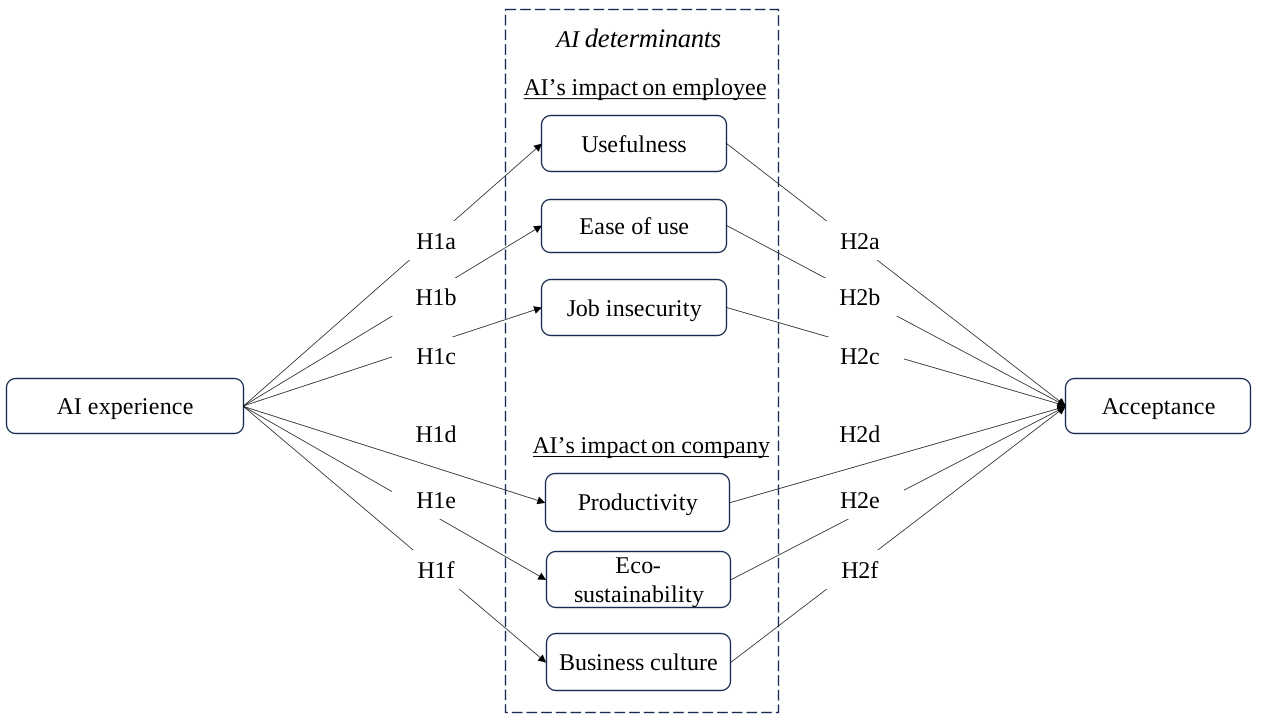
Subsequently, we related the identified determinants to the acceptance and AI experiences to develop our hypotheses (outlined in Section “Literature Review and Hypothesis Development”). To collect data, a survey was conducted targeting operating employees in SMEs (see Section “Survey”). The results were finally analysed using SEM with a focus on both the measurement and structural models. Based on the hypotheses, the developed research model is illustrated in Figure 1. This can be divided into three areas: AI experience, AI determinants, and acceptance. The AI determinants consist of six different constructs, with three influencing the employees and three affecting the company as a whole. Our 12 hypotheses represent the correlations between the areas.
Survey
In developing our survey, we formulated four to six items for each construct, drawing upon previous research (see Table 1). These items were integrated into the questionnaire with the following overarching question: “On a scale ranging from (1) strongly disagree to (5) strongly agree, how do you rate the following statements?” For the AI experience, however, the companies assessed themselves on a scale ranging from “The topic of AI has not yet been addressed” to “Various AI applications are used substantially in almost all business areas.” The scale is based on the research findings of Lichtenthaler (2020). In addition, the survey includes a section capturing demographic and organizational characteristics of the participants and their companies, such as age and company size (see Table 2). To evaluate and refine the clarity and accuracy of the terminology, items, and the survey questions, a pretest was employed.
In the study, we employed the umbrella term “artificial intelligence”, which included all the different subfields of AI. This broad term is especially suitable for research focusing on SMEs, as shown by publications in Q1 journals (Drydakis, 2022; Lada et al., 2023). The reason is that the use of this term allows for broader acceptance and access to a larger target group for the survey. In this way, enterprises can also be reached that have not yet dealt with the topic of AI or have done so only in a rudimentary way (Maslej et al., 2025). In addition, smaller enterprises use standardized AI applications that require no programming effort more frequently (Lu et al., 2022; Oldemeyer et al., 2025b), which reduces the importance of focusing on the distinct subfields of AI.
Since the study investigates the perceptions and acceptance of employees regarding AI implementation, the survey was distributed directly to those working in SMEs. For this purpose, we initially searched for companies of this size on the networking platforms Xing and LinkedIn. In the second step, active employees were identified by accessing the “Employees” section of each company’s profile. One eligible participant per company was subsequently contacted. To select the individual companies and employees, the results from the networking platforms were exported to Excel and randomized using the formula “=RAND()”. Companies and employees with the lowest assigned random numbers were then contacted, resulting in a total sample of 2,100 individuals.
The survey resulted in 182 responses, yielding a response rate of 8.7%. After assessing the responses for completeness and verifying the control questions, 145 responses were used for the final analysis. The control questions verified the employees’ understanding of AI, the size of the company as an SME, and the current area of responsibility of the employees surveyed. The number of responses thereby satisfies the PLS analysis requirement that the sample size should be at least ten times the maximum number of items for a construct, as well as ten times the maximum number of paths leading to a construct (Chin et al., 2003). A complete overview of the characteristics of the participants can be found in following table:
Before the main analysis, we conducted a preliminary test to assess potential non-response bias. Specifically, we did a non-parametric Mann-Whitney U-Test to compare responses from the first and last thirds of the sample (Mann & Whitney, 1947). The absence of significant differences between these groups indicates that non-response bias was not a substantial concern in this study. This test has already been used for this purpose in other studies (Jede & Teuteberg, 2015). In addition, the Harman’s single-factor test was conducted and did not indicate substantial common method bias (Podsakoff et al., 2003).
Research Model
Subsequently, a SEM was employed utilizing the partial least squares (PLS) approach. This method is particularly well-suited for smaller sample sizes and is effective in identifying explanations for dependent variables (Sarstedt et al., 2016). For the execution, we used the SmartPLS4 software, which is commonly applied in such analyses. To test and evaluate our models, we adhered to the procedure outlined by Hair et al. (2011), which involves initially dividing the process into two steps: a) testing the measurement model, b) assessing the structural model.
Our model includes formative and reflective measurements. The items of the six determinants — usefulness, ease of use, job insecurity, productivity, environmental sustainability, and business culture — were modelled as formative constructs. In this approach, the items determine the construct. For instance, transparent and open communication by the team leader (item) influences the construct of business culture, while approaches such as reducing energy consumption (item) contribute to the construct of environmental sustainability. According to Hair et al. (2011), the validation for formative constructs is assessed by examining multicollinearity and the outer loadings for the individual items (see Table 3). In the initial step, we therefore investigate multicollinearity by calculating the variance inflation factors (VIF). In our model, this factor range from 1.264 to 1.833, which is below the critical threshold of 5 for all items (Hair et al., 2011). This indicates that multicollinearity is not a concern in the research. In addition, we determined the outer loading for the items. According to Hair et al. (2017), items should have an outer loading greater than 0.5 and need be significant. In our model, only item J2 (AI increases company closure risks) did not satisfy these criteria and was thus removed from the model.
In contrast, acceptance is conceptualized as a reflective construct, in which the measured items represent outcomes of an individual’s underlying acceptance. The reliability and validity of the reflective construct were evaluated through the measures of indicator reliability, internal consistency reliability, convergent validity, and discriminant validity (Hair et al., 2011; Henseler et al., 2016; Sarstedt et al., 2016). To confirm indicator reliability, item loadings should surpass the threshold of Chin (1998). To assess internal consistency reliability, we examined both Cronbach’s alpha (CA) and CR, with the metrics required to exceed 0.7 (Nunnally & Bernstein, 1994). In our construct, CA is 0.790 and CR is 0.856, meeting these criteria. With regard to validity, we first examined the AVE, which according to Hair et al. (2011) should be above 0.5. The convergent validity is given with a value of 0.544. Finally, we assessed discriminant validity. The heterotrait-monotrait ratio (HTMT) was 0.094, well below the critical threshold of 0.85 (Henseler et al., 2016), indicating that discriminant validity is not a concern in our model.
In analyzing the structural model, we first assessed the relationships between independent and dependent variables. This approach allowed us to calculate the individual path coefficients and evaluate their significance. These coefficients indicate the strength of the influence of an independent variable on a dependent variable. Additionally, we calculated the explained variance (R²) of the dependent variable. Falk and Miller (1992) establish a minimum acceptable threshold of 0.1 for this statistic. In conjunction with the structural model analysis, we also calculated the t-values and effect sizes. Based on these parameters, we were able to evaluate our hypotheses and determine which ones should be supported and which should be rejected.
Results
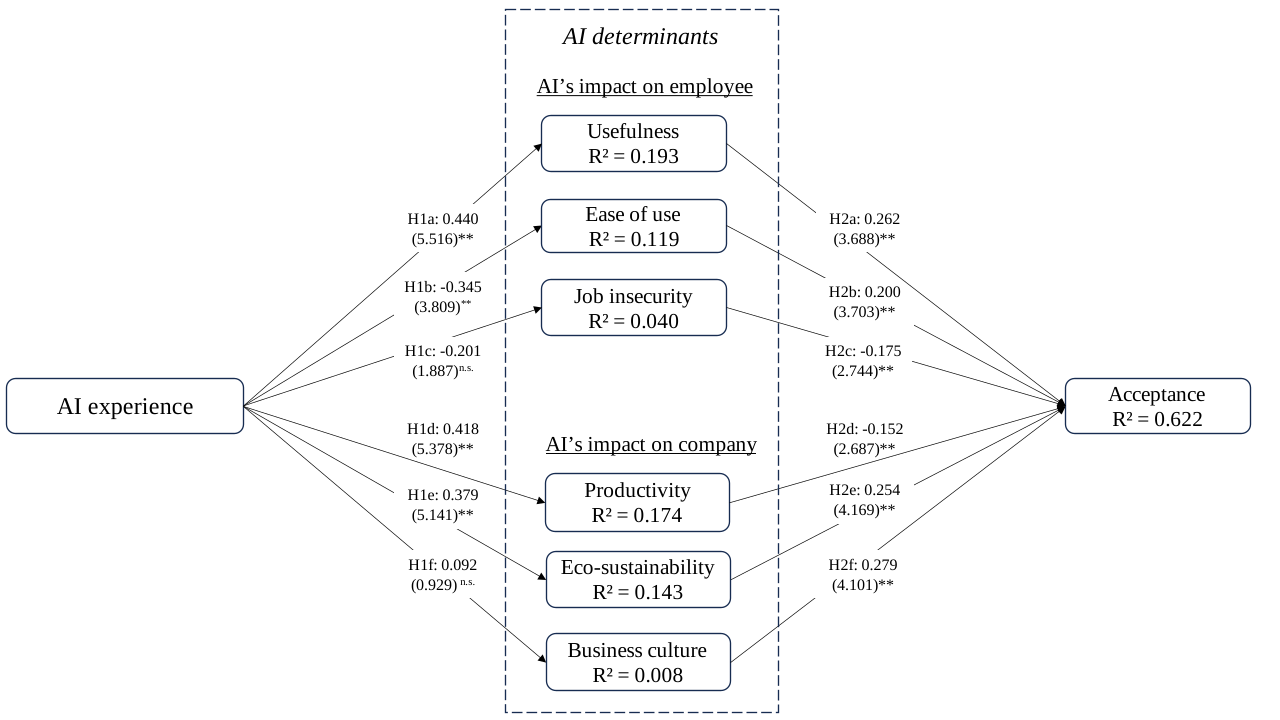
The results of our research are highlighted in Figure 2, which illustrates the relationships among the constructs.
Thereby, the results can be considered in two parts: the impact of the AI experience on the influencing factors and additionally the effect of these factors on the acceptance of employees in SMEs. First of all, it is noticeable that the explained variance (R²) is considerably higher for the construct of acceptance compared to the individual influencing factors. While only between 0.8% and 19.3% of the variance in the assessment of the influencing factors can be explained by the AI experience of the enterprises, 62.2% of the variance in the acceptance of the employees is explained by these six specific factors. In contrast, when comparing the path correlations, the paths between the AI experience and the influencing factors are predominantly higher (between −0.345 and 0.440) than the paths between the influencing factors and acceptance (between −0.175 and 0.279), but which are more closely grouped. This is also supported by the observation that both the three highest and two lowest path correlations pertain to the connection with the AI experience.
A more detailed examination of the left side of the model, which illustrates the correlations between the AI experience and the influencing factors, reveals particularly low R² values for the job insecurity factor (0.040) and the business culture factor (0.008). In conjunction with the lack of significance of the path correlation to the AI experience, both hypothesis H1c and hypothesis H1f must therefore be rejected. Consequently, we could not establish a significant relationship for SMEs between a company’s AI experience and how employees perceive the impact of AI implementation on their job security and the business culture.
Conversely, the remaining four hypotheses (H1a, H1b, H1d, H1e) demonstrate both adequate R² values and significant path correlations. Therefore, we were able to show that a company’s AI experience significantly influences employees’ evaluations among the factors of perceived usefulness, ease of use, productivity enhancement, and improvements in environmental sustainability. Notably, in contrast to the other three factors, the ease of use factor exhibits a negative path correlation. This indicates that the more a company engages with AI, the lower the employees rate the ease of use of AI applications. This finding contradicts our hypothesis H1b, which posited that employees would rate the ease of use more favourably as AI usage in the company increases and positive experiences are gained. Consequently, this also leads to the rejection of hypothesis H1b.
Among the three factors where we identified a significant positive correlation, the AI experience of a company has the greatest influence on the assessment of perceived usefulness (0.440, t-value: 5.516). Given that this factor exhibits the highest path correlation, it indicates that employees, in particular, increasingly recognize their personal benefits as the level of AI maturity advances. Nonetheless, the influence on the perceived increase in productivity for the company (0.418, t-value: 5.378) and the improvement in environmental sustainability (0.379, t-value: 5.141) is also quite strongly influenced by the AI experience of SMEs. Given that the significant path correlations are evenly distributed between the influencing factors affecting employees and those impacting the entire company, the existing AI experience is a decisive factor for both the employees and the company. This indicates that employees evaluate AI applications not only in terms of their direct personal consequences but also consider their impact on the company as a whole.
A detailed examination of the right side of the model, which illustrates the correlations between the influencing factors and the acceptance of employees, reveals a notably higher explained variance (R²) for the acceptance at 62.2%. While this suggests that the acceptance of employees can be largely explained by the six influencing factors, there are still other factors and circumstances that also have an impact on acceptance.
The path correlations range from −0.175 to 0.279, while the t-values vary between 2.687 and 4.169. Four factors have a significant positive correlation with acceptance, whereas two factors exhibit a negative correlation. The business culture exhibits the highest path correlation (0.279, t-value: 4.101), indicating it has the most substantial influence on AI acceptance within a company. The culture also surpasses the two widely used factors perceived usefulness (0.262, t-value: 3.688) and ease of use (0.200, t-value: 3.703).
The influencing factor of environmental sustainability (0.254, t-value: 4.169) also has a greater impact on employees in SMEs, at least compared to ease of use, and is relatively comparable to the perceived usefulness factor. Nevertheless, all four factors mentioned are closely aligned. In contrast, the constructs of job insecurity (−0.175, t-value: 2.744) and productivity (−0.152, t-value: 2.687) exert a negative influence on employees’ acceptance of AI. However, their impact is less pronounced compared to the four positive factors.
Discussion
The research highlights several implications regarding the influence of a company’s AI experience on key AI determinants, as well as the impact of these determinants on the acceptance of AI among operational employees in SMEs. Different findings are directly applicable to practitioners, policymakers, and future research.
AI Experience and AI Determinants
First of all, it was noticeable that the strongest significant path correlations exist between the AI experience and the determinants of perceived usefulness (0.440, t-value: 5.516), increase in company productivity (0.418, t-value: 5.378), and increase in environmental sustainability (0.379, t-value: 5.141). The finding indicates the importance for SMEs to actively engage with AI and gain their own experience. This aligns with the findings of Santos and Neumeyer (2023), who found that end-users’ hands-on application significantly influences acceptance of new technologies more than theoretical training. The focus should thereby be on small, standardized AI applications that can be implemented quickly and easily, rather than on complex, self-programmed AI solutions. Neumeyer et al. (2021) already highlighted in their study that acceptance is a gradual process, implying that more complex applications require a higher degree of user acceptance. In terms of political measures, we also see potential in the dissemination and use of AI living labs. In these settings, employees can experience exemplary AI applications and their benefits in real-world scenarios. Consistent with Alexandrakis et al. (2022) and Son et al. (2024), the conducted study highlighted the importance of these practical experiences. Besides, we recommend fostering more intensive knowledge exchange on this topic among SMEs. Academic institutions could facilitate networks or exchange forums specifically tailored for employees, for example.
A surprising finding from the study is the significant negative correlation between the increasing AI experience and the ease of use ratings given by employees. This indicates that many users are dissatisfied with the usability of the practiced applications. This deviation from other studies, which typically report positive ease of use ratings with increasing experience (Mohr & Kühl, 2021), can be attributed to the unique characteristics of SMEs. Many of these firms lack experts, such as an IT department, and often rely on standardized AI applications, which often limit their ability to optimize the ease of use. Another important factor is the level of AI literacy among end-users, which tends to be lower in SMEs. Consequently, SMEs often require simpler AI applications during the initial stages, as presented by Long and Magerko (2020). However, the negative correlation between AI experience and the perceived ease of use observed in this study indicates that this factor is currently insufficiently considered in AI implementations within SMEs. The combination of low AI literacy and the implementation of complex AI applications can lead to frustration and a reduced perception of ease of use among end-users. Therefore, enterprises should give greater consideration to this aspect when selecting AI solutions. This can be achieved by ranking ease of use in a scoring model and allowing employees to test the applications in advance. Additionally, there is a great need for more standardized AI applications explicitly designed to meet the specific requirements of SMEs.
Another reason for the negative path correlation regarding the ease of use can be an insufficient introduction of employees to the new AI applications. Given the characteristics of AI, it is crucial to provide a comprehensive initiation period, enabling employees to explore and become familiar with the tool. This is important, because new technologies are often adopted only if the end-users recognize immediate and tangible benefits (Santos & Neumeyer, 2023).
Finally, the negative assessment of the ease of use could be attributed to overly high expectations. Media coverage often creates the impression that the implementation of a single AI tool will lead to immediate and substantial savings. Indeed, the implementation of AI is often a trial-and-error process. Enterprises should therefore not give up too quickly, a conclusion supported by Oldemeyer et al. (2025b). This highlights the need to raise awareness among companies and their employees on this topic. This is particularly relevant for SMEs. Due to their typically lower AI literacy, they may be more likely to rely on the perceived notion of quick and easy implementation with substantial savings.
In the research conducted, there was no significant relationship between AI experience and job insecurity. This highlights that there is not a linear relationship between these two factors. In our view, the job insecurity among operational workers is therefore increasingly driven by fears related to specific AI applications rather than by general concerns about AI as a whole. It is important for companies to address the usefulness and potential impact on the job security of employees for any new AI solution before implementation.
AI Determinants and Acceptance
The literature review identified six key determinants — perceived usefulness, perceived ease of use, job insecurity, productivity, environmental sustainability, and business culture — which together explained more than 62% of the variance. This represents a substantial proportion, exceeding the results reported in previous studies on AI acceptance (Falk & Miller, 1992; Popa et al., 2025; C. Qu & Kim, 2025). This finding underscores the relevance of the identified factors for future research and highlights their added value for companies compared to established technology acceptance models. In this context, the interplay of individual (usefulness, ease of use, job insecurity) and organizational (productivity, environmental sustainability, business culture) determinants positively influences the explainability of AI acceptance. Although this requires further investigation, the approach represents a valuable contribution to the academic literature.
Among the various AI determinants affecting acceptance, business culture shows the strongest path correlation (0.279, t-value: 4.101) and therefore indicates the greatest influence on the acceptance of AI among employees. This importance is surprising, as it surpasses the often-discussed factors of perceived usefulness (0.262, t-value: 3.688) and ease of use (0.200, t-value: 3.703). This finding could be attributed to the explicit focus on SMEs in the study. Due to their smaller size, SMEs are generally closer to their management (S. Qu et al., 2021), but are often less open to using technologies (Manmohan & Shalij, 2022). Both factors influence acceptance.
Additionally, the high complexity of AI compared to previous technologies contributes to the strong importance of corporate culture in this context. Employees often struggle to understand how this technology works and its effects (Bauer et al., 2020), necessitating a greater reliance on the business culture. Therefore, SMEs should consider their own culture before implementing AI. With a positive workplace atmosphere, the company can be less concerned about the acceptance of the new application. Otherwise, enterprises have various possibilities to enhance acceptance by improving their corporate culture. Although SMEs often have limited resources and must carefully consider the cost–benefit effect of their policies, they can achieve this through several established strategies, such as fostering open communication (Al-Abyadh et al., 2024), promoting a positive error culture (Kaiser & Schulz, 2020), and encouraging supportive management (Rajagopal et al., 2022). In this context, Solberg et al. (2020) highlighted that business culture has a particularly strong influence on the acceptance of new technologies, especially when it addresses two specific employee needs. On the one hand, it is important to help end-users recognize that they can expand their skills to include new technologies; on the other hand, it is necessary to show that these technologies create new opportunities rather than threatening their jobs.
In addition to the culture, environmental sustainability is another factor that has received insufficient attention in the investigation of AI acceptance in SMEs. Sustainability could be particularly important for employees in SMEs, as smaller companies often have limited focus on this topic, partly due to legal requirements (European Commission, 2022). Entrepreneurs could therefore prioritize AI applications that offer the greatest benefits for the company’s sustainability or incorporate sustainability considerations into their evaluation of potential AI applications.
Another important finding of the research is that four determinants are particularly necessary for achieving a high level of explained variance among employees: perceived usefulness, ease of use, environmental sustainability, and business culture. These factors must be considered holistically. This implies that special attention should be given to these four factors when selecting the appropriate AI tool, while also ensuring that the positive impacts of these determinants should be communicated transparently to employees in advance. Another, albeit less essential, factor is the perceived job security. In this regard, enterprises should clarify the effects of AI implementation on employees and highlight the potential consequences of not using AI in the medium term, such as competitive disadvantages.
Finally, we found a negative significant correlation between the increase in productivity and acceptance. This contrasts with other studies that have identified an increase in productivity through AI as a positive factor influencing the acceptance (Rane et al., 2024). We attribute this productivity paradox to our specific focus on SMEs in this study. Smaller companies typically experience lower employee turnover and tend to be less technologically oriented (Manmohan & Shalij, 2022). This could result in greater employee fears concerning job displacement as a consequence of AI implementation. Consequently, productivity gains achieved through AI may be met with greater scepticism. For enterprises, this implies that the focus of communication with employees should not be on possible productivity increases through AI, but rather on the remaining influencing factors of our model, for instance, on increasing environmental sustainability. However, the robustness of the identified productivity paradox must be further investigated to establish its generalizability and reliability. This could, for example, be achieved through moderating analyses.
Nevertheless, the findings also have important theoretical relevance. They indicate that acceptance models should be more closely adapted to the specific research context. In this regard, the focus of the present study on SMEs highlights the added value of placing greater emphasis on corporate culture, usefulness, environmental sustainability, literacy, and capability.
Limitation and Future Research
The following limitations should be considered with regard to this study. Firstly, the broad term AI was used in the survey. Consequently, a more detailed differentiation of AI subfields, such as machine learning, was not undertaken. This results in a conflict of objectives. In addition to the advantages outlined in the section “Survey” that support the use of the umbrella term in studies on SMEs, there are, on the other hand, risks of measurement inaccuracy for determinants and potential misspecification. For instance, perceptions of ease of use can differ substantially between chatbots and custom ML models. Therefore, the generalizability of the results should be investigated in further studies.
Secondly, the research methods used have certain limitations. The survey is limited by the selection of companies and participants, as responses are based on their subjective assessments. The overrepresentation of men may introduce bias into the results. Since only one participant per company was selected to avoid overrepresenting company-specific characteristics such as business culture, intra-organizational differences among employees could not be captured. Since participants were recruited via networking platforms, only companies and employees with corresponding accounts could be reached. This may introduce a bias, particularly with respect to openness to technology. Moreover, SEM can assess the presence of significant correlations but cannot establish causality. Although existing research indicates causal connections, further investigation is required to confirm these assumptions. Furthermore, the literature review conducted in this study and the resulting subjective selection of model determinants also constitute a limitation, as they cannot fully ensure comprehensiveness. Nevertheless, future research may build upon the model developed in this study and refine it further.
In addition, the study focused on operational employees when selecting end-users. A promising avenue for future research is to examine the generalizability of the findings, for instance, by assessing whether they differ significantly across occupational groups. This consideration also applies to the identified training and familiarization requirements for new AI applications. Do different occupational groups require varying levels of training intensity or distinct approaches? It is also important to further validate the findings on the negative correlation between AI experience and perceived ease of use, as well as between productivity gains and acceptance, by employing additional research methods and larger sample sizes. Besides, future research should place greater emphasis on the role of business culture, particularly concerning the acceptance of AI in SMEs. In our point of view, this factor is currently underestimated and not sufficiently addressed in the existing studies. Future case studies ought to give greater attention to environmental sustainability as well.
Conclusion
Around 62% of the variance of the acceptance of employees in SMEs with regard to the implementation of AI can be explained by the six determinants examined in the study. Notably, contrary to current discussions suggesting, it is not perceived job insecurity, but rather the corporate culture that shows the strongest correlation with acceptance. The perceived effect of an AI application on the environmental sustainability of the company also has a similarly strong, but previously underestimated, effect on acceptance. As a valuable guideline, the study provides entrepreneurs with insights into which influencing factors are important and which have the greatest impact. The study highlights that SMEs can largely impact the acceptance of an AI application within their organizations themself. So, SMEs should pay particular attention to their business culture. Furthermore, entrepreneurs should consider not only the usefulness and ease of use of an AI application when making a selection, but also its potential to positively impact the company’s environmental footprint. In SMEs, this leads to a significant increase in acceptance.
In addition to the relative weighting of the factors, the negative correlations between AI experience and perceived ease of use (H1b), and between perceived productivity gains and acceptance (H2d), were particularly noteworthy. While the latter can be explained by the focus on SMEs, the significant negative correlation between AI experience and ease of use can be attributed to three factors: a) AI applications in SMEs are often not user-friendly enough, b) employees are often inadequately trained for new AI applications, c) unrealistically high expectations.